Tarangire National Park Seasons, Elephants and Wildlife Movement
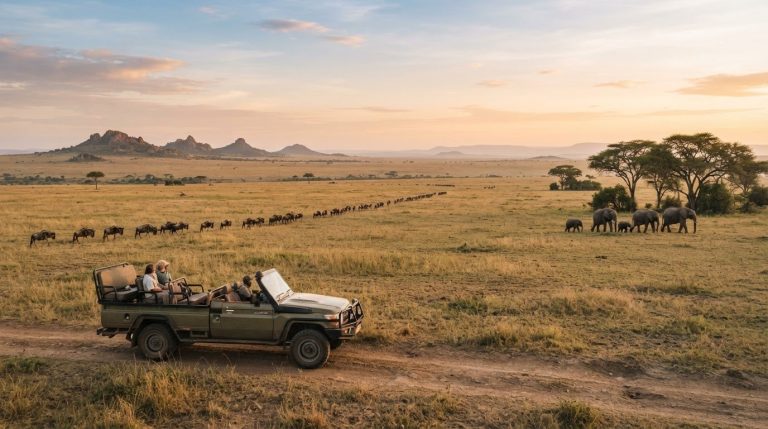
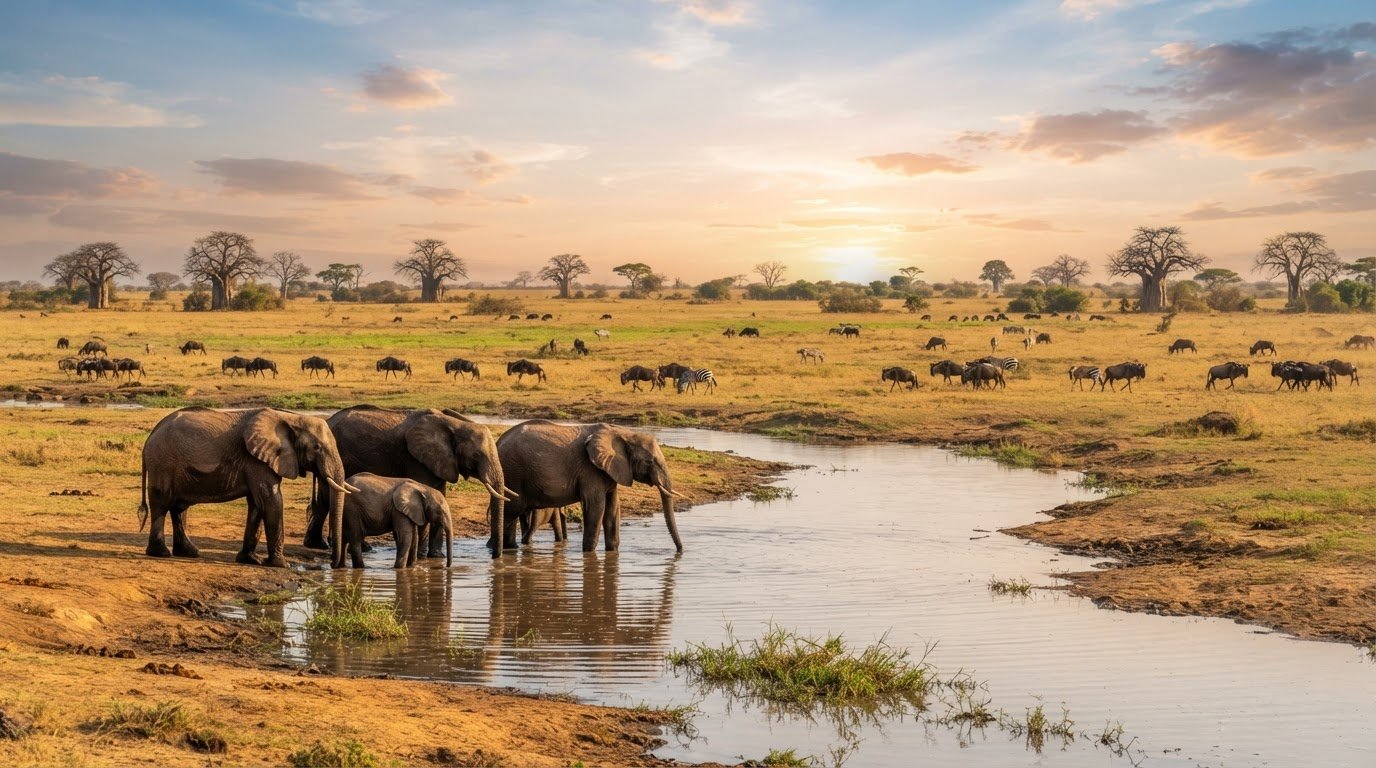
At Tarangire National Park, the dry season runs from June to November, bringing large herds of zebra, wildebeest, and Cape buffalo into view. From July onward, elephant herds gather along the Tarangire River, where wildlife comes to drink.
The changing seasons shape more than the scenery: they influence where animals roam and where a safari may reveal them. Tarangire’s immense baobabs also give the landscape a character all its own.
Discover how seasonal movement unfolds, where elephants and baobabs become part of the journey, and how Tarangire became a protected wilderness. This guide explores the park’s natural rhythms, defining sights, and the history behind its name.
Key Takeaways
- Use the seasonal cycle to understand why wildlife sightings shift between the dry months and greener periods.
- Learn what makes Tarangire’s elephants and ancient baobabs defining features of the landscape.
- Follow the wider movement of wildlife beyond the park to see how seasonal migration connects the ecosystem.
- Get a sense of the park’s scale, setting, and history, then consider a Tarangire and Lake Manyara safari to experience them firsthand.
Dry, green, calving, and shoulder seasons
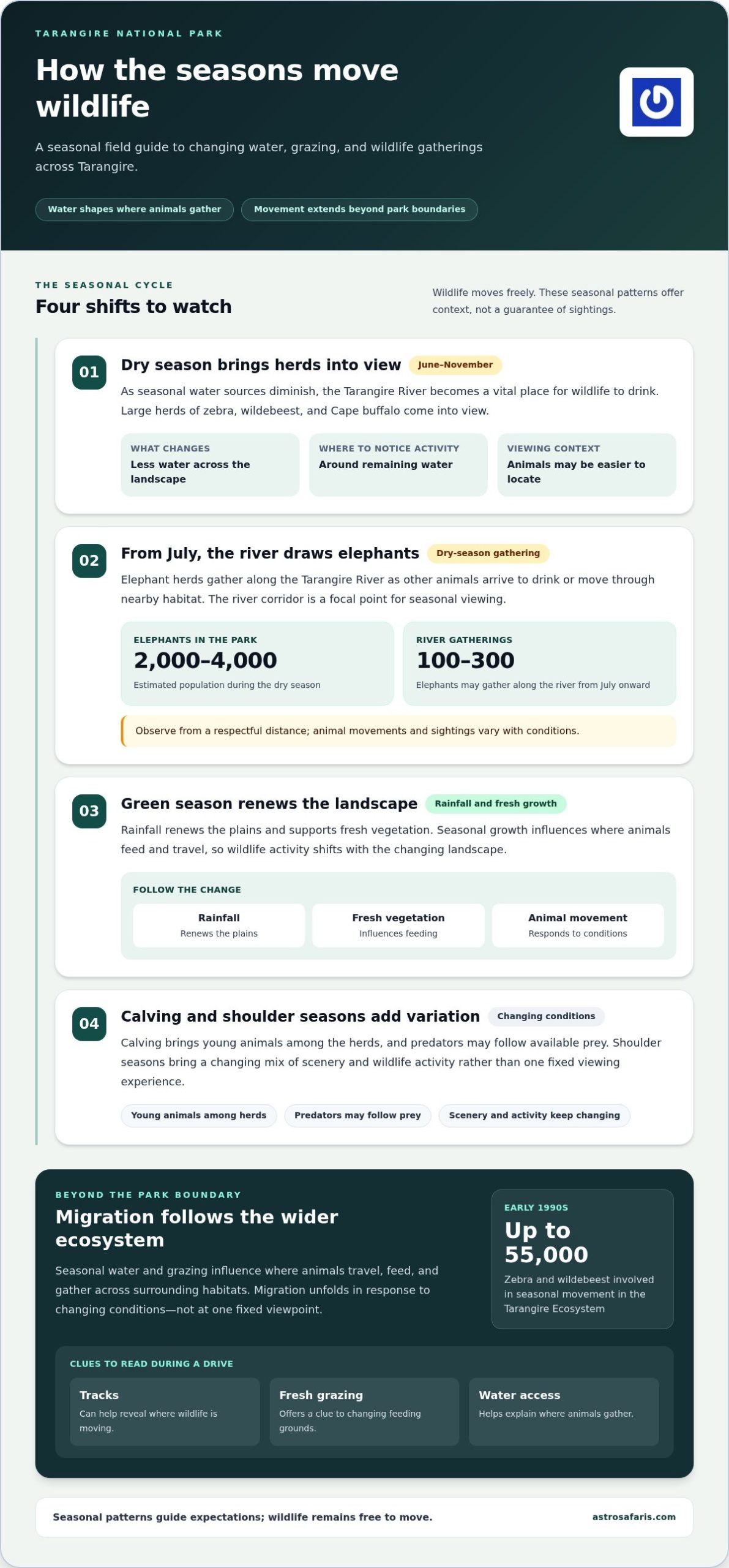
Tarangire’s seasons change the landscape and the places wildlife gathers. From June to November, the dry season brings large herds of zebra, wildebeest, and Cape buffalo. As seasonal water sources diminish, the Tarangire River becomes a vital place to watch animals come to drink. This shift can make wildlife easier to locate near remaining water.
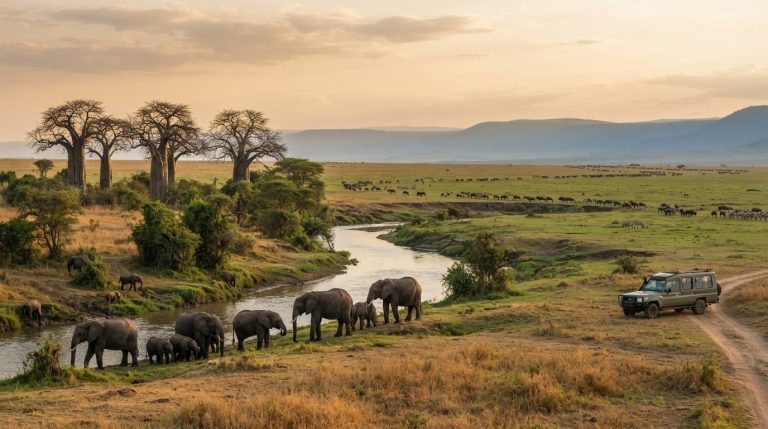
The river is central to dry-season viewing. From July onward, elephant herds gather along its banks as other animals arrive to drink or move through nearby habitat. Look for activity around the water, but remember that wildlife moves freely and sightings vary with conditions. The dry months offer a different experience from greener periods, when vegetation transforms the landscape.
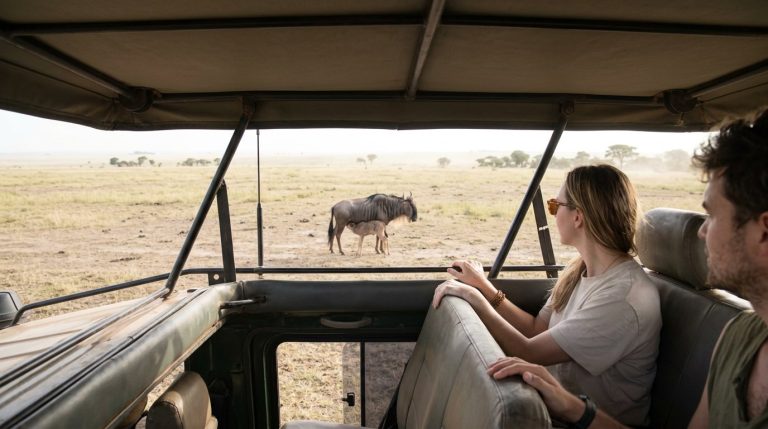
In the green season, rainfall renews the plains and supports fresh vegetation. The landscape can feel lush, and seasonal growth influences where animals feed and travel. Calving adds another dimension, with young animals appearing among herds and predators potentially following the available prey. Between the more pronounced dry and green patterns, shoulder seasons bring a changing mix of scenery and wildlife activity rather than one fixed viewing experience.
Compared with the Serengeti’s broad plains and Ngorongoro’s crater landscape, Tarangire is known for its river corridors, baobabs, and elephant encounters. Choose Tarangire for the seasonal pull of the river and wildlife movement; Serengeti and Ngorongoro offer different landscapes and viewing experiences. Combining destinations adds variety, while a Tarangire-focused visit gives more time to explore the park’s distinct seasonal rhythms. For guidance on Tanzania safari park selection, consider how your available time and travel season shape the right combination of destinations.
Plan health precautions before departure. Tarangire lies below 1,800 meters and is in a malaria-risk zone; see a travel clinic four to eight weeks before your trip for health advice. Use that appointment to discuss the destination and your travel plans. The seasons also affect road and viewing conditions, so pack for changing weather and follow your guide’s instructions while watching wildlife near the Tarangire River.
Elephants and baobab trees
Elephants are among Tarangire’s defining encounters. During the dry season, the park’s elephant population is estimated at 2,000 to 4,000. Watch their movements from a respectful distance as family groups cross open ground, browse, and gather near water. One Tarangire elephant is also known for giving birth to twins, an unusual detail that adds another thread to the park’s wildlife story.
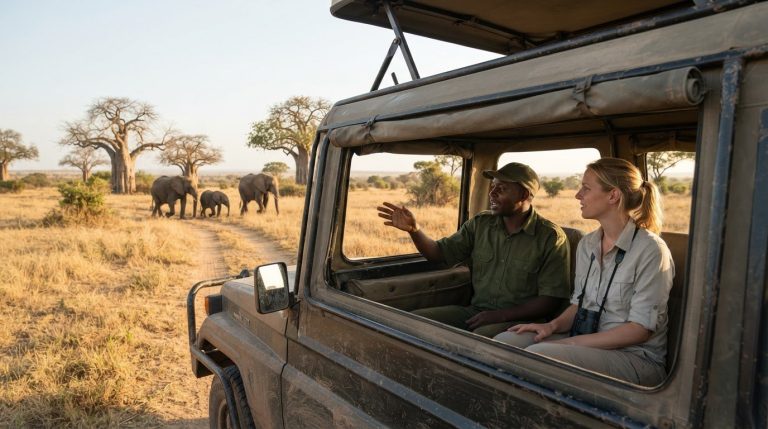
Baobabs shape the scenery with immense trunks and high, branching silhouettes. Tarangire’s baobabs can reach 25 meters tall, with trunks up to 12 meters across. Some can live about 2,500 years, making them enduring landmarks across a landscape that changes with the seasons. Pause to notice their scale beside passing elephants; the contrast makes clear why these trees are as memorable as the wildlife.
The park also rewards birdwatchers. Tarangire is home to more than 550 bird species, so take time to scan trees, open ground, and the areas around water. Bring binoculars and observe quietly, looking for movement and listening for calls. The baobabs offer striking perches and silhouettes, while varied habitats create opportunities to notice different birds during a drive.
Prioritize game drives around the Tarangire River and baobab-dotted scenery. These outings can combine elephant viewing, landscape photography, and birdwatching. Rather than treating any route as a guarantee of sightings, let the season and recent animal movement guide where you spend time.
To shape these interests into a wider Tanzania journey, explore safari planning in Tanzania. A considered itinerary can make room for unhurried elephant viewing, time beneath the baobabs, and careful birdwatching, while keeping the experience centered on the landscapes and wildlife you most want to encounter.
From July onward, elephant herds of 100 to 300 gather along the Tarangire River, offering another opportunity to watch their seasonal movements from a respectful distance.
Seasonal wildlife movement and migration
Tarangire’s wildlife moves across an ecosystem, not just within the park boundary. Seasonal changes in water and grazing influence where animals travel, feed, and gather. This wider pattern links Tarangire National Park with surrounding landscapes, making migration a story of movement between habitats. Read the season alongside the terrain: fresh vegetation, changing water access, and animal tracks can all offer clues to where wildlife is moving.
The scale of this movement is striking. In the early 1990s, seasonal movement in the Tarangire Ecosystem involved up to 55,000 zebra and wildebeest. These herds shift in response to changing conditions, seeking grazing and water as resources vary across the landscape. Their journeys also shape predator activity, since carnivores follow available prey. Migration is not a single spectacle at one fixed viewpoint; it unfolds as wildlife responds to the ecosystem around it.
For safari-goers, a memorable sighting depends partly on timing and location. Animal concentrations can shift as water and forage change, making another habitat more appealing. Ask your guide to interpret tracks, fresh grazing, and movement observed during the drive. These details can explain why herds appear in one place and vanish from another, turning each stop into a closer reading of Tarangire’s living landscape.
Plan with flexibility. Rather than expecting the same animals in the same place each day, use the season to shape what you hope to see. In dry months, water availability influences animal movement; after rainfall, renewed grazing can draw herds toward different feeding grounds. Look beyond the park’s central landmarks to the wider ecosystem. This view reveals how zebra and wildebeest connect habitats, and why Tarangire’s seasonal rhythm matters beyond any single game drive.
Tarangire’s location, size, and history
Tarangire lies in northern Tanzania, within a landscape of open country and wildlife habitats. Travel between Tarangire and neighboring Lake Manyara National Park can be considered when planning a northern Tanzania route. That proximity makes it practical to consider both parks on one northern Tanzania route, with travel time and game-drive priorities shaping the itinerary.
Established in 1970, Tarangire is classified as IUCN category II. Its coordinates are 3°50′S 36°0′E, placing the park within Tanzania’s northern safari circuit. The protected landscape is extensive, so planning drives around habitat and seasonal movement helps visitors make better use of their time rather than focusing on one landmark.
Entry permits are single-entry and valid for 24 hours. Nonresident adults aged 16 and older pay $50 in peak season or $45 in low season, which runs from mid-March to mid-May, before tax. Check the applicable entry-fee details when planning your visit. Follow park rules and your guide’s instructions; the permit’s validity helps structure a visit, while park access arrangements determine the day’s schedule. Safari costs depend on itinerary, accommodation, transport, and inclusions.
How long to spend depends on whether Tarangire is your main destination or one stop on a wider route. Leave time to explore different habitats and adapt game drives to wildlife movement. Pairing the park with Lake Manyara means planning for the drive between parks, while a longer northern Tanzania itinerary needs to balance each destination with travel connections.
To plan a route that connects Tarangire with nearby landscapes, consider a northern Tanzania safari including Lake Manyara or Ngorongoro Crater. The route can shape how much time you spend in each park and how the journey unfolds.
Tarangire National Park can also be reached by paved road from Arusha in under two hours, offering a direct approach from the city. It is about 120 kilometers from Arusha, a drive of roughly two to two and a half hours on tarred road. Visitors can use these road details when allowing for the transfer from Arusha in a wider itinerary.
Astro Safaris and Tours: Tarangire and Lake Manyara National Park
Astro Safaris and Tours Ltd can help shape a Tanzania safari around the landscapes and wildlife experiences that matter most to you. Its Tarangire and Lake Manyara National Park offering brings two northern Tanzania destinations together in one journey.
Choose a pairing that combines Tarangire with Lake Manyara, or add Ngorongoro Crater for a broader northern Tanzania route. Share your interests and preferred travel style to shape a journey around the places you most want to explore.
Contact Astro Safaris and Tours Ltd or visit astrosafaris.com to start planning.
Let the Landscape Shape Your Journey
Let what draws you to Tanzania guide your journey: close wildlife encounters, quiet hours beneath baobabs, or changing scenery between parks. A thoughtful route gives each landscape room to make its own impression instead of turning the trip into a checklist. Tarangire National Park can begin a wider northern Tanzania adventure shaped around the places you most want to experience.
Astro Safaris and Tours offers Tarangire and Lake Manyara National Park, Serengeti and Ngorongoro, and a route combining Tarangire, Lake Manyara, and Ngorongoro Crater. These itineraries let you explore how Tarangire fits alongside other destinations and choose the journey that suits you.
Share your interests and start shaping a safari that reflects them. Contact Astro Safaris and Tours to explore your Tanzania plans, and take the first step toward a journey worth remembering.
Frequently Asked Questions
Where is Tarangire National Park, and how do you get there?
Tarangire National Park is in northern Tanzania, and visitors commonly reach it by road as part of a northern safari itinerary. A drive from another park can be planned as a transfer between wildlife stops, leaving time for game viewing along the way. Build the route around your arrival point, chosen parks, and the time you want to spend exploring.
What is the best time of year to visit?
The best season depends on what you want from Tarangire. Dry months concentrate wildlife near water, while greener periods bring renewed vegetation and changing scenery. Consider your wildlife interests and other destinations on your itinerary when choosing travel dates. Leave room for seasonal movement to shape the journey rather than planning around a single expected sighting.
What animals and birds can you see?
Elephants, zebra, wildebeest, Cape buffalo, and many bird species are among the wildlife you may encounter. Bring binoculars if birdwatching is part of your plans, and scan trees and habitat edges as well as open ground. A guide can help identify calls and explain animal behavior, making quieter moments on a game drive rewarding too.
Where can you stay near or inside the park?
Accommodation can be arranged inside the park or in the surrounding area, depending on your route and preferred style of stay. Compare locations with your planned game drives and how you want each day to unfold in mind. Astro Safaris and Tours Ltd offers guided safari itineraries with accommodation arrangements, helping connect your stay with the wider Tanzania journey.
What are the park’s opening hours and visitor rules?
Entry permits are single-entry and valid for 24 hours. Follow park rules and your guide’s instructions, and watch elephants from a respectful distance.