Tanzania safari selection by circuit, season and package cost
The right Tanzania safari park selection starts with the time you have: 5-6 days allows a general overview of Tanzania’s parks, while 7-11 days gives you time to explore the northern circuit, including the Serengeti, Ngorongoro, Tarangire and Lake Manyara. Your best itinerary also depends on the season and the wildlife experiences you most want to see.
It’s natural to want memorable wildlife viewing and a trip that fits your schedule and budget. The season influences which parks make sense, while trip length and accommodation shape the package and its inclusions. This guide explains how Tanzania’s northern and southern circuits differ, when to visit key parks, how much time to plan, and which costs to compare, helping you build a safari that feels balanced from the first drive to the last sunset.
Key Takeaways
- Choose a safari circuit around the landscapes and wildlife encounters you most want, then shape the route to match your available time.
- Use seasonal patterns to guide park choices, especially when planning around Tarangire’s elephant gatherings or the Serengeti migration.
- Compare package inclusions as well as headline prices, paying attention to park fees, accommodation and optional activities.
- Explore itineraries that pair Tarangire and Lake Manyara, or combine Serengeti and Ngorongoro, to find a route that suits your priorities.
What are the best times of year to see wildlife in Tanzania’s national parks?
Season shapes what you may see, from elephants near Tarangire’s river to migrating herds on the Serengeti plains. A thoughtful Tanzania safari park selection matches seasonal wildlife patterns with the landscapes and experiences you value most.
Tarangire and Lake Manyara Viewing
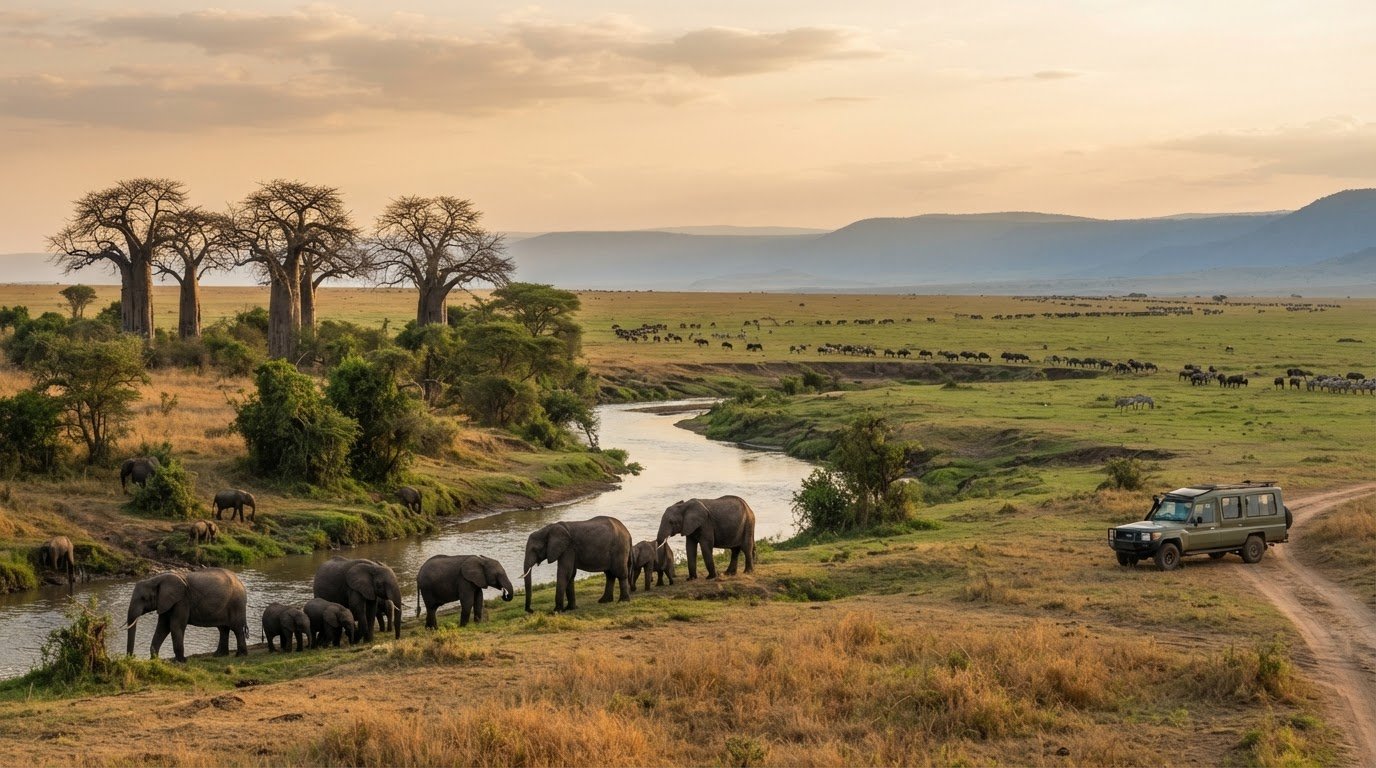
Tarangire’s dry season runs from June to November, concentrating wildlife near the Tarangire River as other water sources diminish. From June to October, as many as 3,000 elephants gather near the river; herds can reach 300 animals. The park’s baobabs give game drives an iconic backdrop, while seasonal concentrations make wildlife easier to spot around water.
Lake Manyara offers a contrasting stop, with around 400 bird species recorded along its shores. Compare Tarangire’s elephant gatherings and open dry-season viewing with Lake Manyara’s birdlife and varied scenery. Combining both parks creates a change of pace within the northern circuit.
Wildlife Viewing and Big Five Chances
For Big Five viewing, Serengeti and Ngorongoro Crater are prominent choices, while Tarangire is known for elephant viewing during the dry season. The Big Five are lion, leopard, elephant, buffalo and rhinoceros. Each park offers a distinct setting, so prioritize the species and landscapes you most want to experience rather than expecting every sighting on a single drive.
For health and safety, prepare for sun and heat, follow your guide’s instructions, and keep a respectful distance from wildlife. Stay inside the vehicle unless your guide indicates it’s safe to leave, and never feed animals. Pack personal medicines and discuss travel-health preparations with a qualified healthcare professional before departure.
The Serengeti’s seasons can help narrow your travel dates. June to October and December to March are listed as visitor seasons; wildebeest are drawn to the southern plains from December through March. The northern Serengeti attracts wildlife viewers from June through September, while river crossings are generally associated with July through October.
Tanzania’s long rains fall in April and May, and its short rains occur in November and December. Use these seasonal patterns to narrow your dates, then let your priorities shape the route: elephant gatherings, birdlife, migration, or a mix of landscapes. Choose the experience first, then match parks and dates to it. For practical preparation, see this Tanzania safari for first timers packing and trip planning guide.
Tanzania’s northern and southern safari circuits
The northern and southern circuits offer distinct landscapes, park combinations and travel rhythms. Compare the wildlife you hope to see with the distances and variety you want from your route.
Northern Circuit Parks and Itineraries
The northern circuit links Serengeti National Park, Ngorongoro Crater, Tarangire and Lake Manyara. Each stop offers a different landscape, from open plains to crater floor and baobab country. Combining these parks gives first-time visitors a broad introduction to Tanzania’s wildlife. Set your priorities, then allow enough time for game drives rather than rushing between destinations.
Northern and Southern Circuit Choices
The southern circuit suits travelers drawn to expansive landscapes and a less familiar route. Nyerere National Park stretches over 19,000 square miles, while Ruaha covers 20,226 square kilometers. Ruaha is home to an estimated 10 to 15% of the world’s lion population. Mikumi is another southern option. In contrast, the northern circuit brings together the Serengeti, Ngorongoro, Tarangire and Lake Manyara. Compare park scale, route length and the crowds you prefer when deciding between circuits.
Choosing Parks for Your Travel Group
For first-time visitors, the northern circuit’s combination of Serengeti, Ngorongoro Crater and Tarangire brings varied wildlife and landscapes together in one itinerary. Families may prefer fewer parks, with less time spent transferring and more time for game drives. Photographers can choose parks for the scenes they want, such as Serengeti plains or Ruaha’s broad wilderness. For a quieter experience, consider a southern route through Ruaha or Nyerere instead of centering the trip on the best-known northern stops.
Start with your group’s priorities, then shape the route around them. A custom Tanzania safari itinerary can bring together selected parks and travel preferences without adding stops that dilute the experience.
Recommended seasons for visiting each park
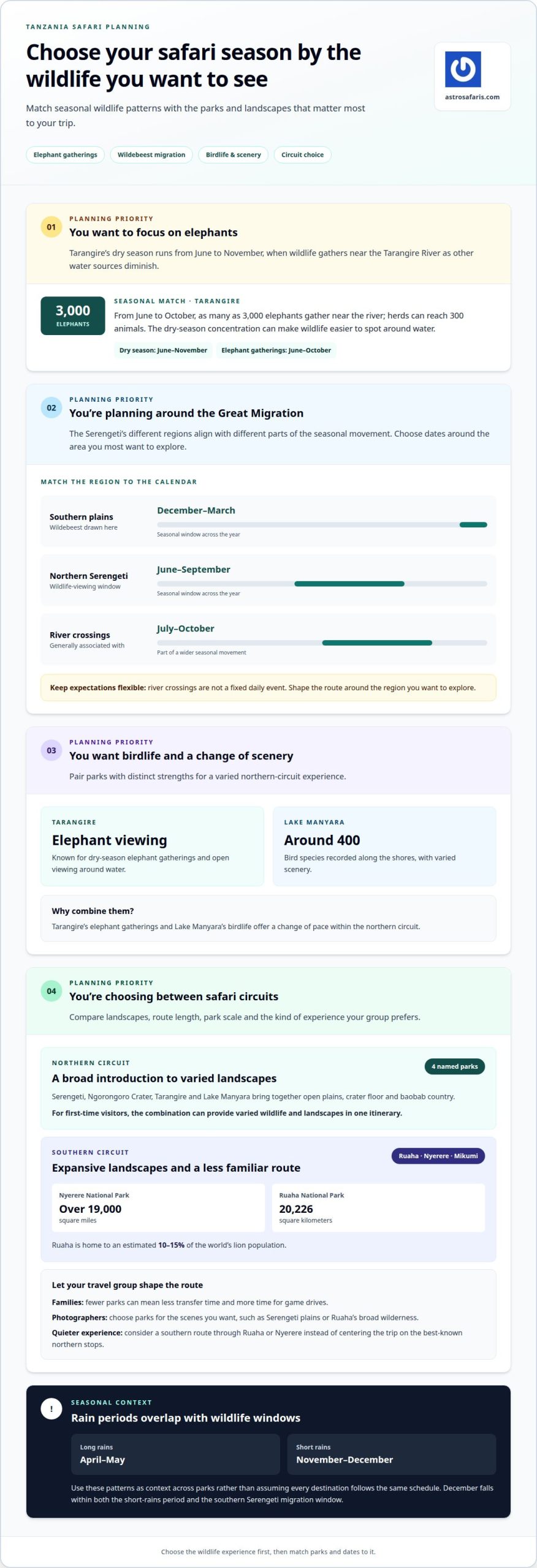
Choose travel dates around the wildlife and landscapes you want to experience. For the Great Migration, focus on Serengeti National Park: wildebeest are drawn to the southern plains from December through March, while the northern Serengeti is strongest for viewing from June through September.
River crossings in the Serengeti are generally associated with July through October. They are part of a wider seasonal movement, not a fixed daily event, so shape your route around the region you want to explore. The southern plains suit travelers prioritizing migration herds, while the northern reaches suit those planning around the later dry-season window.
Tarangire’s dry season runs from June to November, making it a useful seasonal choice. Ngorongoro Conservation Area is commonly visited from June to October and December to February. These windows can help you pair Ngorongoro with a Serengeti itinerary while experiencing the contrast between crater scenery and wildlife in one area and expansive plains in another.
Tanzania’s long rains occur in April and May, and the short rains fall in November and December. Use these periods as context when choosing dates across parks rather than assuming every destination follows the same pattern. December, for example, falls within both the short-rains period and the southern Serengeti’s migration window, so the southern plains may still suit a migration-focused trip.
For permits and park regulations, treat access arrangements and visitor conduct as separate planning considerations for each national park. Keep travel documents organized, follow your guide’s instructions, and respect posted park guidance. On game drives, remain with your vehicle unless your guide directs otherwise, avoid disturbing wildlife, and keep a respectful distance from animals.
To compare seasons, start with your priority: migration herds, Tarangire’s dry-season wildlife, or Ngorongoro’s crater landscapes. Match the relevant park and seasonal window to your travel dates. This keeps the itinerary focused, especially when a trip combines several northern-circuit destinations.
Safari package prices and included costs
Safari package costs depend on the route, trip length, accommodation and activities. Compare the full inclusions, particularly when you’re planning around a Serengeti migration adventure or a Maasai village visit.
Safari Package Pricing
The package price depends on the itinerary and is provided after a quote request. Key cost factors include the parks on your route, accommodation, transport, meals, trip length and any additional activities. A Serengeti itinerary focused on wildebeest migration differs from one built around varied landscapes and wildlife.
Compare package inclusions before weighing the headline price. Look for clear details on accommodation, meals, transport, guiding, park access and planned activities. Note what is excluded, such as optional experiences or personal expenses. A balloon safari or Maasai village visit may be a separate activity within your Tanzania adventure.
Travel style also shapes the comparison. A private itinerary differs from a group safari, while budget, mid-range and luxury accommodation offer different levels of comfort. Consider whether you prioritize extended game drives, a particular migration area, or time to look for animals such as buffalo.
Entry Fees and Conservation Charges
Park access is a separate cost component to understand within the total. Ask how park entry and conservation charges are treated in the package price rather than assuming they are included.
Review the route park by park. A journey combining Serengeti, Ngorongoro and Tarangire includes different destinations, so the number of park days and the itinerary affect overall access costs. Compare the stated inclusions with every planned stop, and distinguish required park charges from optional activities.
For a clear comparison, set the itinerary beside its inclusions: parks and days, accommodation, meals, transport, guiding, park fees and optional experiences. This helps you judge whether a package fits your priorities, from watching wildebeest on the plains to spending more time among Tanzania’s wildlife.
Astro Safaris and Tours: Tarangire and Lake Manyara National Park
Astro Safaris and Tours Ltd helps travelers match northern Tanzania’s parks to the wildlife experiences and landscapes they want to prioritize. Its Tarangire and Lake Manyara National Park itinerary suits travelers drawn to Tarangire’s elephant country and Lake Manyara’s varied habitats, while Serengeti and Ngorongoro pairs open plains with crater scenery.
For a broader route, Tarangire, Lake Manyara and Ngorongoro Crater brings together three distinct settings. Travelers planning around the southern Serengeti migration can consider the Ndutu and Ngorongoro safari. Compare your travel dates, preferred parks and pace, then choose the itinerary that best reflects your priorities.
Contact Astro Safaris and Tours Ltd to discuss a safari route that fits your plans.
Shape a Safari Around the Moment You Want to Remember
Your Tanzania safari park selection can start with a personal question: what do you want to remember most? Perhaps it’s the hush before sunrise, a close wildlife encounter, or changing light across an immense landscape. Let that image guide your choices about pace, comfort and the balance between game drives and time to take in each place.
Before settling on an itinerary, write down your priorities and the trade-offs you’re comfortable making. A focused route gives one experience room to unfold, while a broader journey offers more variety. The right choice is the one that suits your travel style, not simply the one with the most stops.
Give those priorities a route of their own. Explore safari itineraries and imagine the story you’d like your journey to tell. A remarkable adventure begins with a choice that feels unmistakably yours.
Frequently Asked Questions
How many days should I plan for a Tanzania safari tour?
Plan enough time for the parks and pace you want, with 5-6 days offering a general overview and 7-11 days allowing a fuller northern circuit. Add time when you want slower game drives or more stops. For example, a route linking Serengeti and Ngorongoro needs time for both wildlife viewing and the journeys between them, not just nights at camp.
Questions about Tanzania?
Start by deciding what matters most: migration, elephants, varied scenery, or a particular level of comfort. Then align your travel dates, route and accommodation with those priorities. Consider how much time you want to spend in the vehicle, whether you prefer a focused or multi-park itinerary, and what you want included in the package. These decisions make planning more specific.
What wildlife can I expect to see during a Tanzania safari?
Tanzania’s parks offer opportunities to see elephants, lions, leopards, buffalo, rhinoceroses, wildebeest, zebras and gazelles. Birdlife adds another dimension, from lakeshores to open country. The wildlife mix changes with habitat and route: a migration-focused Serengeti journey differs from game drives among Tarangire’s elephants or Ngorongoro’s crater wildlife.
Which Trip Should I Book?
Choose the itinerary that matches your main priority and available time. The 3 Days / 2 Nights Tarangire and Lake Manyara National Park trip suits travelers seeking those parks together; the 3 Days / 2 Nights Serengeti and Ngorongoro focuses on those destinations. For three parks, consider the 4 Days / 3 Nights Tarangire, Lake Manyara and Ngorongoro Crater itinerary. Ndutu & Ngorongoro Luxury Tour is another option.
How do Serengeti, Ngorongoro, Tarangire, and Lake Manyara compare?
The Serengeti is known for vast plains and a sense of open wilderness. Ngorongoro offers a dramatic crater setting, while Tarangire is known for elephant country and baobabs. Lake Manyara brings contrasting lakeside scenery and birdlife. For variety, combine parks with different landscapes; for a more focused trip, choose the setting and wildlife experience you most want.
How much does a Tanzania safari cost by park, season, and accommodation level?
The price depends on the route, season, trip length, accommodation level, transport and group arrangement, and is provided after a quote request. A multi-park itinerary differs from a stay focused on one destination, while accommodation choices shape the overall package. Compare inclusions such as lodging, meals, guiding, transport and park access, along with any optional activities.