Tanzania Big Cats Safari Locations and Tailor-Made Trips
A Tanzania big cats safari can bring you within sight of lions, leopards and cheetahs across the country’s great wilderness. The Serengeti, Ngorongoro and other parks offer different habitats to explore, while January to March and June to October provide seasonal opportunities to search for predators. Open plains, woodland and rocky terrain each influence where cats may be found and how your itinerary unfolds.
It’s natural to hope for memorable wildlife encounters while remembering that each day in the bush has its own rhythm. This guide explains which big cats you may see, where to look and how migration timing can influence your route. You’ll also find practical guidance for shaping a tailor-made trip around the places and experiences that matter most, from the Serengeti’s classic plains to the distinctive habitats of Tarangire and Ngorongoro.
Key Takeaways
- Recognize how open plains, rocky outcrops and woodland shape the chances of spotting different big cats.
- See how Tanzania’s northern parks offer distinct wildlife settings, helping you choose a route with variety.
- Understand how your preferred pace, park choices and wildlife priorities can shape a tailor-made itinerary.
- Explore how migration movements influence predator encounters and why timing can guide where your safari travels.
Cheetah characteristics and safari viewing locations
Open plains, rocky kopjes and woodland reveal different big-cat behavior. On a Tanzania big cats safari, habitat and season help guides decide where to focus their search.
Cheetah, Leopard, and Lion Characteristics
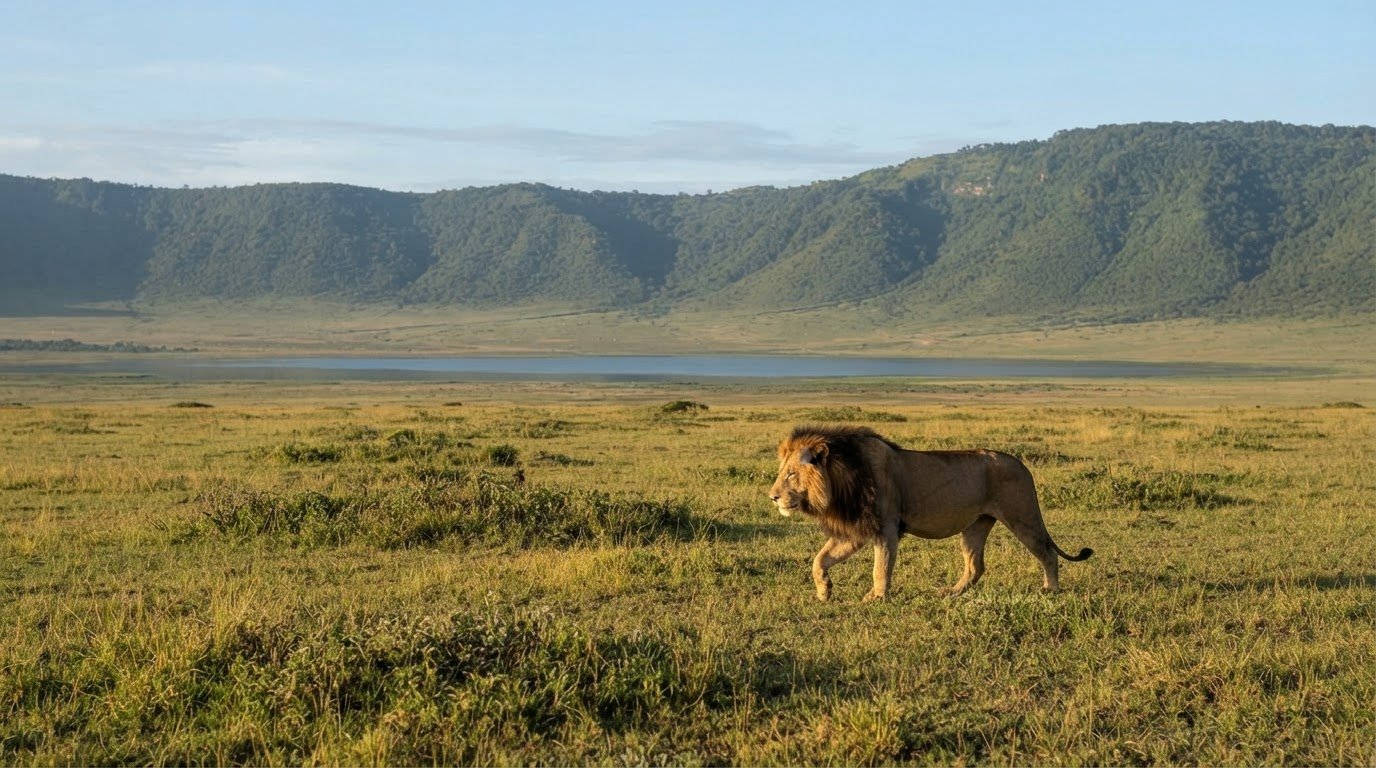
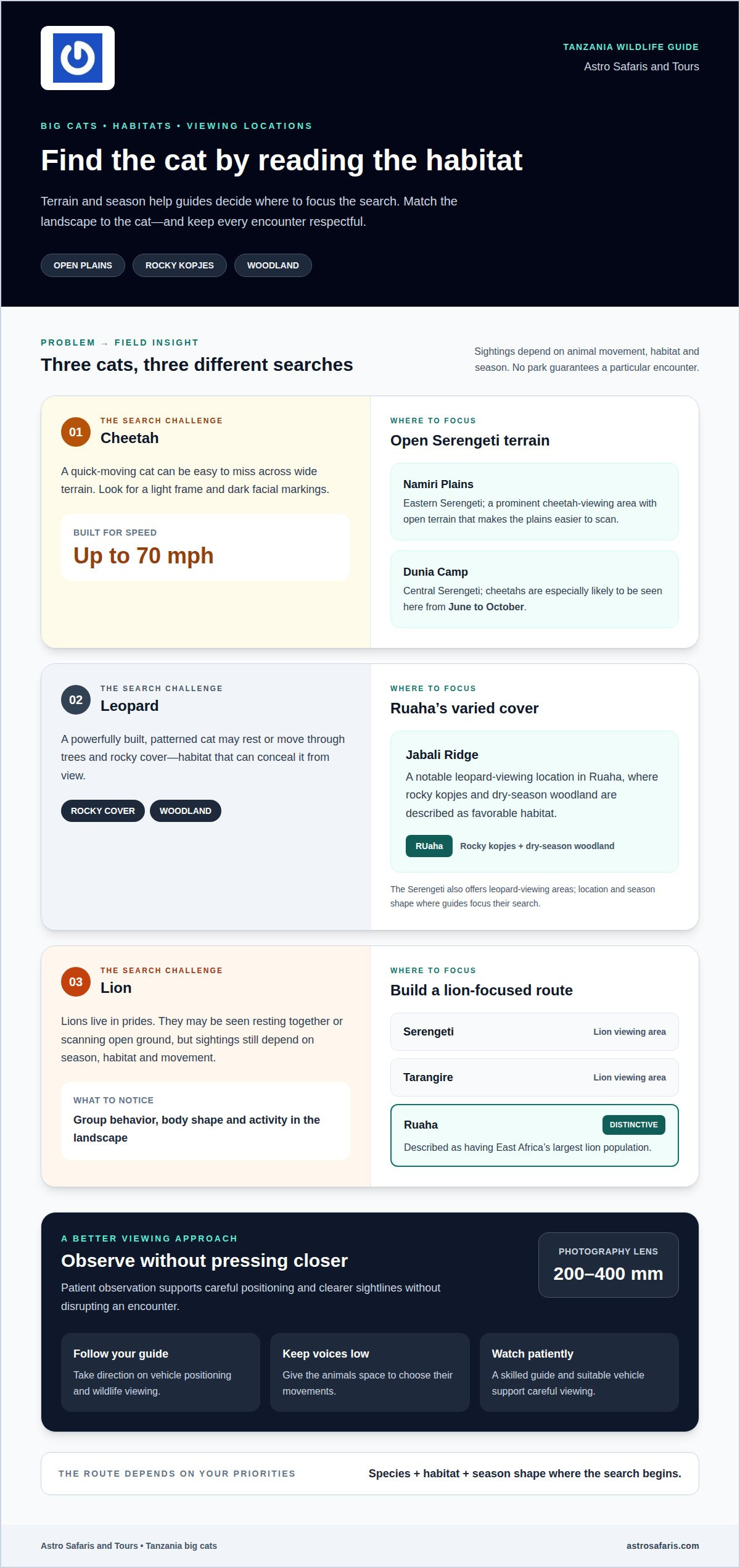
Cheetahs are built for speed, with a light frame and dark facial markings; they can reach up to 70 mph. Leopards are powerfully built, patterned cats that often rest or move through trees and rocky cover. Lions are social, living in prides, and may be seen resting together or scanning open ground. Look for body shape, markings and behavior, not just distance. Those details help distinguish a quick glimpse of a leopard from a cheetah crossing the plains.
Big Cat Viewing Locations
For cheetahs, the open terrain of Namiri Plains in the eastern Serengeti is a prominent viewing area. In the central Serengeti, cheetahs are especially likely to be seen at Dunia Camp from June to October. Jabali Ridge in Ruaha is known for leopard viewing around rocky kopjes and dry-season woodland. Ruaha is also described as having East Africa’s largest lion population. These locations are strong candidates, but the best fit depends on which species and habitats you want to prioritize.
For cheetahs in the eastern Serengeti, consider Namiri Plains; Dunia Camp offers central Serengeti viewing, while Jabali Ridge is a notable leopard location in Ruaha. A private conservancy may suit travelers seeking lower-density game viewing. Your safari planner can weigh that preference against the habitats and parks on your route.
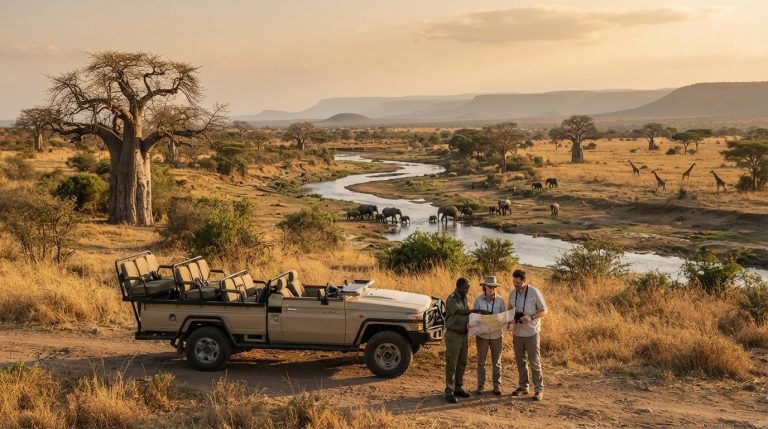
Viewing etiquette matters. Follow your guide’s directions, keep voices low, and let animals choose their movements rather than pressing closer. For photography, a zoom lens in the 200-400 mm range can help frame cats from the vehicle. A skilled guide and suitable wildlife-viewing vehicle support careful positioning, patient observation and clear sightlines, creating better moments without disrupting an encounter.
Serengeti, Arusha, Ngorongoro Crater, Tarangire, and Lake Manyara
Consider the Serengeti, Ruaha and Tarangire for lions. The Serengeti and Ruaha also offer leopard and cheetah viewing areas. Sightings in the Serengeti, Ngorongoro and Tarangire depend on season, habitat and animal movement.
Cheetah Viewing in the Serengeti
Namiri Plains, in the eastern Serengeti, is a prominent destination for cheetah viewing, with open terrain that makes it easier to scan the plains. In the central Serengeti, cheetahs are especially likely to be seen at Dunia Camp from June to October. These areas can help shape a cheetah-focused route, while the season influences when central Serengeti viewing may be most rewarding.
Lion Viewing Across Safari Areas
The Serengeti, Ruaha and Tarangire each suit a lion-focused itinerary, but offer different settings across a wide-ranging trip. Ruaha is described as having East Africa’s largest lion population. In Tarangire and the Serengeti, route planning should account for time in suitable wildlife areas and seasonal conditions. A planner can balance these destinations with Ngorongoro Crater or Lake Manyara.
Big Cat Sightings by Destination
The Serengeti has named cheetah-viewing areas in both its eastern and central regions, while Ngorongoro and Tarangire add variety to a northern circuit. No park guarantees a particular encounter. Wildlife movement, habitat and season all influence what guides may find on game drives, so combining different landscapes can broaden your viewing opportunities.
Leopard viewing adds another reason to consider Ruaha and the Serengeti. Jabali Ridge in Ruaha is a notable leopard location, with rocky kopjes and dry-season woodland described as favorable habitat. Across the Serengeti, location and season also shape where a guide focuses a search. Arusha and Lake Manyara can round out a northern route, while Ngorongoro Crater brings a distinct landscape into the journey. The best park mix depends on whether cheetahs, lions, leopards or varied scenery lead your priorities.
Tailor-made Tanzania safari itineraries
A tailor-made route connects your wildlife priorities with travel pace, park choices and preferred comfort. Your planner can shape the journey around the Serengeti, Ngorongoro, Tarangire or other destinations, then consider whether Kilimanjaro or Zanzibar belongs in the wider trip.
Start with three decisions: which cats matter most, which landscapes appeal, and how much time you want at each stop. A cheetah-focused plan might prioritize the Serengeti, while a broader northern circuit can combine several parks. The order of destinations also affects how travel days, wildlife viewing and lodge stays fit together.
Safari and Maasai Hiking Itinerary
A Tanzania safari and Maasai hiking itinerary can pair game drives with time on foot alongside Maasai hosts. One example is a 10-day trip that includes a three-day trek to meet the Maasai. This style suits travelers seeking cultural encounters as well as wildlife, with the walking portion forming a distinct part of the overall journey.
Your planner balances time on the trail with safari activities and overnight stops. The parks, hiking priorities and pace you prefer all influence the itinerary. Kilimanjaro trekking adds a separate mountain journey rather than replacing wildlife-focused days.
Safari Durations and Itinerary Examples
Trip length changes the balance between traveling through parks and spending time in each landscape. A six-day safari plan, for example, included visits to three parks. This shows how a compact itinerary can combine destinations, while a longer trip can allow more time for additional regions or a slower pace.
For a first draft, your planner can map the journey from arrival, select priority parks and arrange transfers between wildlife areas. The itinerary can then include a cultural experience, Kilimanjaro or a Zanzibar beach stay if those experiences matter to you. Each choice changes the balance of game drives, travel and rest, so the final route should reflect your priorities.
Wildlife encounters bring you close to wild animals, so follow your professional guide’s directions during game drives and stay attentive around viewing areas. Your safari planner also considers route and pace together, helping you understand how park choices and transfers shape each day.
Great Migration predator encounters
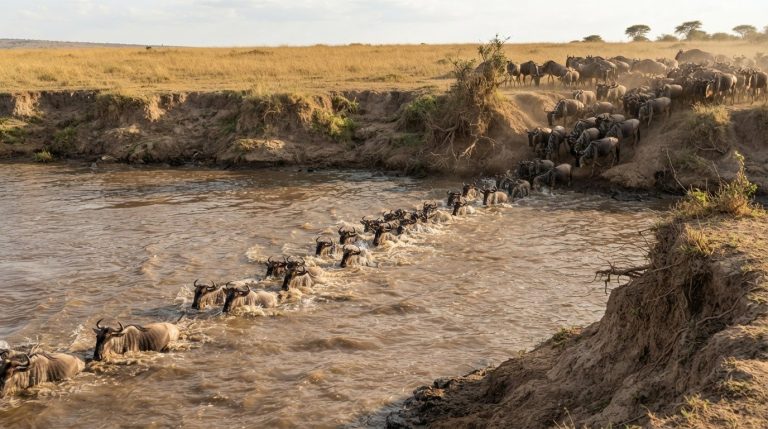
The Great Migration moves herds across the Serengeti, drawing predators into a changing landscape. The route matters: guides shape game drives around wildlife movement, habitat and season rather than treating every stop as the same kind of viewing ground. A migration-focused itinerary can make predator encounters part of a wider journey through Tanzania’s open country.
January to March is a period for spotting big cats in Tanzania. June to October is the dry season and another useful window for searching, as changing conditions influence where animals gather. These periods offer different seasonal contexts, so your planner can align the route with your travel dates and priorities. If you want to follow the migration, the Serengeti provides a natural anchor for your itinerary.
Predator moments unfold at their own pace. A lion pride may rest near herds, while a cheetah scans open ground or a leopard remains partly concealed. One safari group reported seeing a pride of 11 lions, an example of the encounters that can make a journey memorable, not a promise of what every drive will reveal. Patient observation gives guides time to interpret animal behavior without rushing from one sighting to another.
For a more purposeful plan, start by choosing whether migration movement, a particular cat, or varied landscapes matters most. Then set the travel season and build the Serengeti route around those priorities, leaving room for wildlife viewing rather than filling each day with transfers. The choice of parks and pace also shapes the kind of comfort and time available at each stop. Plan a migration-focused safari around the encounters and landscapes you most want to experience.
Astro Safaris and Tours: Big Cats Tour
Astro Safaris and Tours Ltd can shape a Big Cats Tour around the parks and wildlife encounters that matter most to you. When you’re ready to turn your interest in Tanzania’s lions, leopards and cheetahs into a considered safari route, get in touch to start planning.
Choose a northern circuit through the Serengeti and Ngorongoro, or include Tarangire and Lake Manyara for a broader mix of landscapes. Your route can reflect your priorities, whether you want to focus on particular wildlife areas or balance big-cat viewing with varied park experiences. Share your preferred travel season, interests and pace to guide the itinerary planning.
Contact Astro Safaris and Tours Ltd to discuss your big cat safari plans.
Shape the Journey Around What Moves You
First, decide what you want your safari to feel like: the vastness of open plains, the quiet drama of a crater or a changing landscape that invites you to linger. A Tanzania big cats safari becomes more personal when its route reflects your priorities, preferred pace and the encounters you hope to seek.
Astro Safaris and Tours Ltd offers routes through the Serengeti and Ngorongoro, Tarangire and Lake Manyara National Park, and Tarangire, Lake Manyara and Ngorongoro Crater. Each route creates a different way to experience Tanzania’s wilderness. Share what matters most, and let that vision guide the shape of your trip.
Contact Astro Safaris and Tours Ltd to begin planning your journey. The plains are waiting, and your own story of Tanzania can start with a thoughtful first conversation.
Frequently Asked Questions
What wildlife can I expect to see on safari in East Africa?
East African safaris can bring encounters with big cats alongside elephants, giraffes, zebras, wildebeest and many other animals. The wildlife mix changes with the destination and habitat: open grasslands feel different from woodland or crater landscapes. In Tanzania, a game drive might shift from watching herds on the plains to observing birds or smaller wildlife near water, adding variety beyond predator sightings.
Which Tanzania national parks are best for big cat sightings?
The strongest park choice depends on which cats and landscapes you want to prioritize. The Serengeti suits travelers hoping to combine expansive plains with varied predator habitats; Ruaha may appeal to those especially interested in lions and leopards. For a northern circuit, pairing the Serengeti with Ngorongoro or Tarangire creates a wider range of settings. Astro Safaris and Tours Ltd offers routes that include these parks.
What Tanzania safari itinerary offers the best big cat viewing?
A route built around your preferred species and travel season is a useful starting point. Astro Safaris and Tours Ltd offers a Big Cats Tour lasting 8 Days | 7 Nights, as well as custom safaris that can be shaped around destination preferences. For a Tanzania big cats safari, share whether you’re most drawn to cheetahs, lions or leopards, then let those priorities guide the park mix and pace.
Are private or shared game drives better for spotting big cats in Tanzania?
Private and group game drives offer different travel styles, and neither guarantees a sighting. A private safari includes a dedicated vehicle, giving your party a more exclusive setting for the drive. Group safaris suit travelers who are comfortable sharing the experience. In either format, the guide’s interpretation and time spent in suitable habitats help shape the outing. Astro Safaris and Tours Ltd offers both private and group game drives.
What safety risks should travelers know on a big cat safari in Tanzania?
Big cats are wild animals, so follow your professional guide’s directions, keep voices low and do not move closer or interfere with their movements. Stay attentive around viewing areas.