Tarangire Safari Planning Guide: Build Your 2026 Safari
What makes the right Tarangire safari depends on what you want from the journey: time in varied habitats, seasonal wildlife viewing, or a route that links Tarangire with other Northern Tanzania parks. This Tarangire safari planning guide helps you weigh travel dates, wildlife expectations and itinerary options so you can make practical choices before arranging your trip.
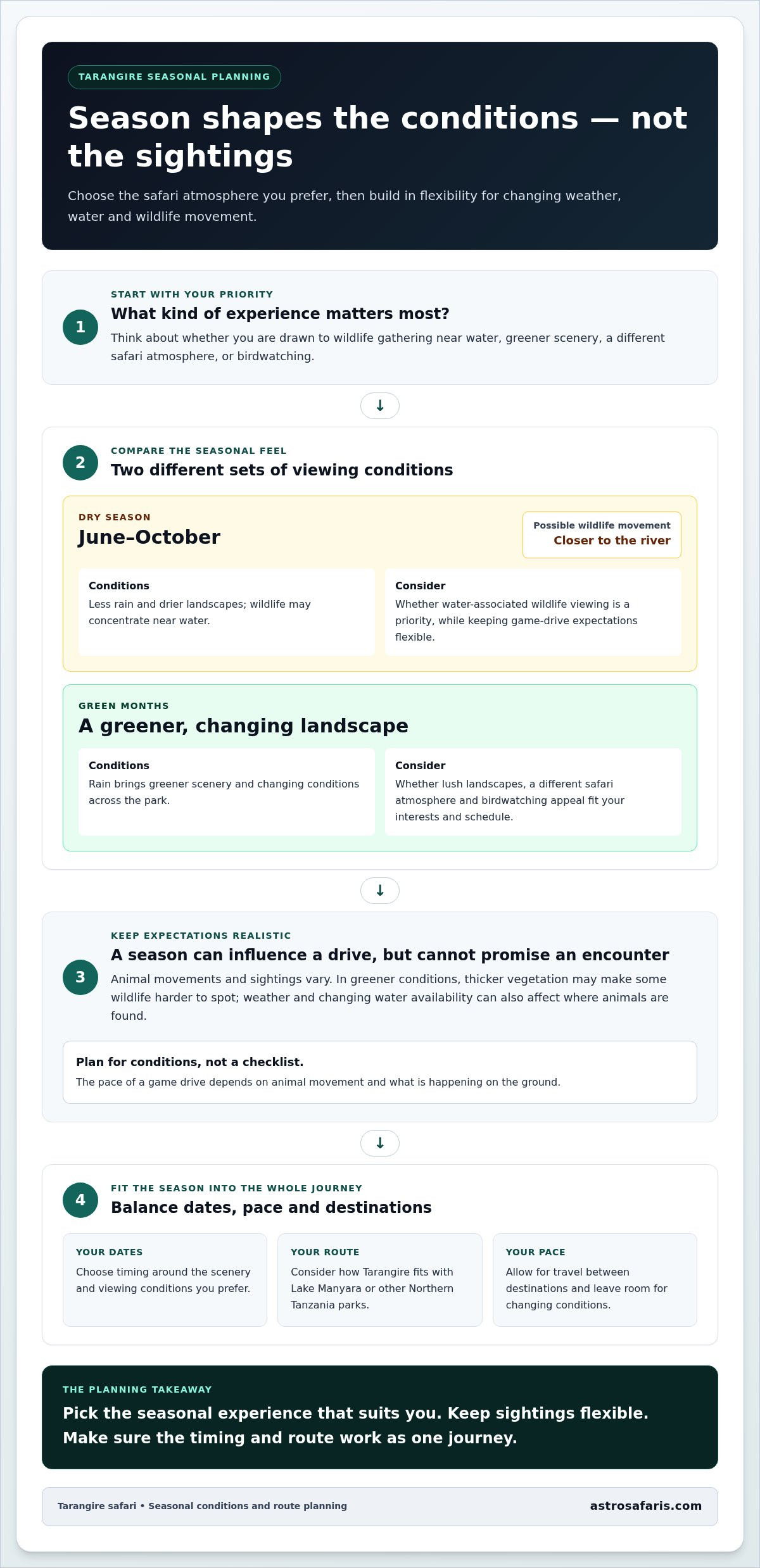
The dry season, from June to October, often brings wildlife closer to the Tarangire River, while the greener months offer a different atmosphere and appeal for birdwatching. Neither season guarantees a particular sighting. Choose your timing based on the scenery and viewing conditions you prefer, then decide how much time to give Tarangire and which other destinations belong in your route.
Below, you’ll find guidance on seasons, itinerary length, park combinations and practical preparations. Use it to identify your priorities, compare private and group travel, and choose a comfort level that suits your plans.
Key Takeaways
- Use this Tarangire safari planning guide to align your travel timing with the wildlife experience you hope to enjoy, while keeping sightings realistic.
- Consider how Tarangire’s baobab-dotted scenery, woodland, grassland and river habitat shape the feel of your safari.
- Choose a Tarangire-focused visit or add parks such as Lake Manyara, allowing enough time for travel between destinations.
- Set your priorities, route style and accommodation preferences before arranging the details of a guided safari.
- Compare private and group travel, along with budget, mid-range and luxury styles, to find an approach that suits your plans.
Tarangire safari planning guide: Match the park to your travel hopes
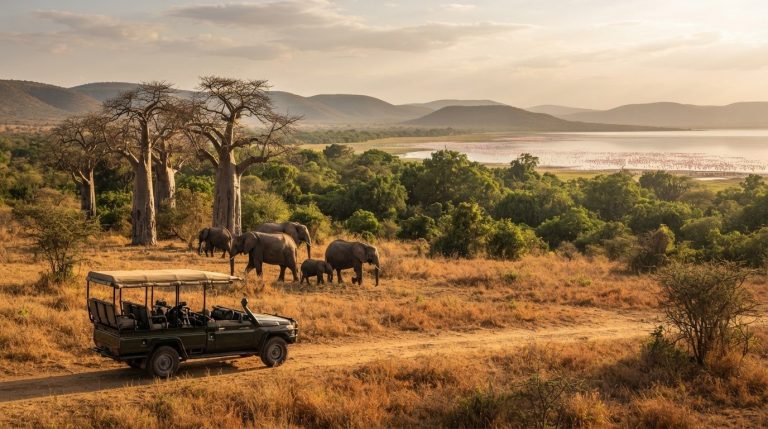
A Tarangire safari is a guided journey through a changing landscape of baobabs, open grassland, woodland and river country. A game drive may pass from open, sunlit scenery into tree cover or follow the Tarangire River. The park’s character is part of the experience, but wildlife moves with the seasons, so no itinerary can guarantee a particular encounter.
Tarangire’s appeal lies in its varied habitats and seasonal wildlife movement, giving each journey a landscape as compelling as the animals you hope to see. The river and surrounding habitats help explain why wildlife distribution can change over the year. For a broader look at the park’s geography and natural history, explore this Tarangire National Park overview.
What makes Tarangire’s landscapes and wildlife distinctive?
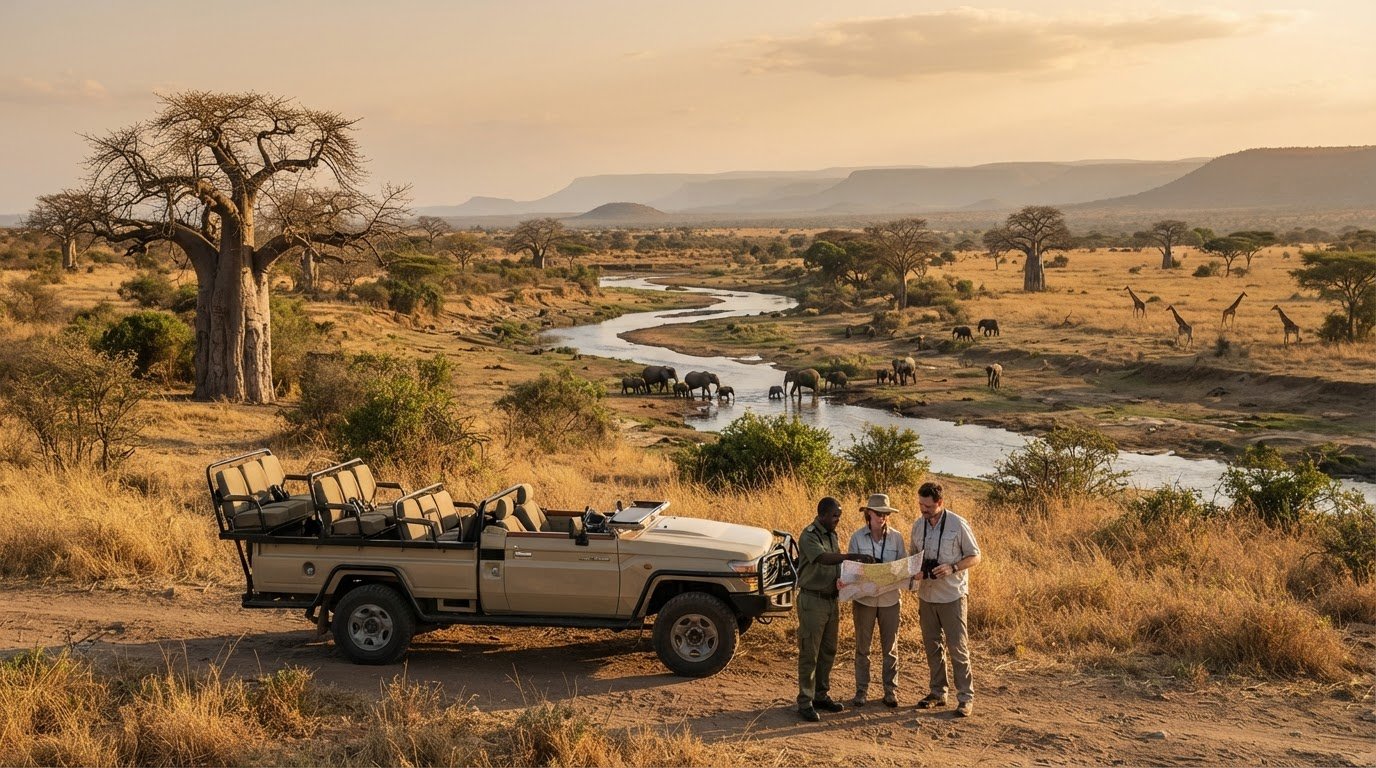
Baobabs rise above the savanna, while woodland and open country create contrasting views along the route. The Tarangire River adds another dimension, and seasonal changes in water availability can influence where wildlife gathers and moves. Elephants are among the animals visitors may hope to see, alongside other wildlife, but sightings depend on natural conditions rather than a fixed itinerary.
Let the drive unfold at the pace of the landscape. Notice the transition from grassland to shade, the shape of baobabs against the sky and signs of life around the river, rather than measuring the day only by a checklist of animals. A useful Tarangire safari planning guide starts with what you hope to experience and leaves room for the unexpected.
Who is likely to enjoy a Tarangire safari?
Tarangire may suit travellers who value scenery as much as wildlife viewing. If varied habitats, distinctive trees and the possibility of seeing elephants appeal to you, the park can be a memorable focus for a guided safari. Keeping expectations flexible also helps you enjoy the park’s character when a hoped-for sighting doesn’t happen.
Let your priorities shape the route. You might spend more time in Tarangire if its landscapes are the main draw, or combine it with Lake Manyara or other Northern Tanzania parks for a wider range of settings. Each added destination takes travel time, so decide whether variety or a slower, more focused visit matters more.
Astro Safaris and Tours Ltd designs guided Tarangire and Lake Manyara journeys, as well as tailor-made Tanzania safaris. Share your travel dates, wildlife interests and preferred pace to shape an itinerary around the experience you want, whether Tarangire stands on its own or forms part of a wider journey.
When to plan a Tarangire safari: Understand the seasonal trade-offs
Tarangire changes with the rhythm of rain and water. During the drier part of the year, wildlife may gather closer to dependable water sources, including the Tarangire River. Greener months bring a different landscape and viewing conditions. Neither season guarantees a particular sighting, so weigh the experience you value against the timing and pace of your wider trip.
| Season | General conditions | Planning consideration | Caveat |
|---|---|---|---|
| Dry season | Less rain and drier landscapes; wildlife may concentrate near water. | Consider it if water-associated wildlife viewing is a priority, and leave flexibility in game-drive expectations. | Animal movements and sightings vary; gathering near water doesn’t ensure a particular encounter. |
| Green season | Rain brings greener scenery and changing conditions across the park. | Consider how lush landscapes and a different safari atmosphere fit your interests and schedule. | Vegetation, weather and wildlife distribution can affect what you see on a drive. |
What should travellers expect during the dry season?
As water becomes less widespread, wildlife may be more likely to gather near rivers and other remaining sources. This can influence where a guide looks during a game drive, but it doesn’t make sightings certain. Keep your expectations adaptable: the day’s pace depends on animal movement and conditions on the ground, not a guaranteed checklist.
How does the green season change the experience?
The green season offers a different kind of beauty. Fresh growth gives the landscape a more verdant feel, while thicker vegetation may make some wildlife harder to spot. Changing water availability can also influence where animals are found. Season shapes the conditions of a Tarangire safari, but wildlife sightings remain variable in every season.
Consider the whole journey, not just the park. If your schedule is tight, choose dates that align with your main priorities and leave room for changing conditions. If Tarangire is part of a longer Northern Tanzania route, consider how the timing and pace of each destination work together. Season is one factor alongside scenery, wildlife interests and available time.
Before finalising practical arrangements, use Official Tarangire National Park information for park guidance and visitor information. Astro Safaris and Tours Ltd shapes guided itineraries around your travel dates and preferences. Explore tailor-made Tanzania safaris as you decide which seasonal experience suits your plans.
How to shape a Tarangire safari itinerary around your time
A safari route balances time exploring, time travelling and the range of places you want to experience. A focused Tarangire visit keeps the park at the heart of your journey. Adding Lake Manyara, or considering a wider route with the Serengeti or Ngorongoro, brings more variety but also requires time for travel and transitions. Choose the route that serves your priorities, not simply the one with the longest destination list. For a broader step-by-step approach, see how to plan a Tanzania safari.
| Route style | Best fit | Planning advantage | Trade-off |
|---|---|---|---|
| Tarangire-focused | Travellers who want to centre their safari on one park | Keeps the route centred on Tarangire’s scenery and wildlife experience | Offers less variety of parks than a wider circuit |
| Tarangire and Lake Manyara | Those looking to experience two distinct park settings | Pairs Tarangire with another Northern Tanzania destination | Requires travel time between parks and divides time across them |
| Wider Northern Tanzania route | Travellers with several parks high on their wish list | Can include considerations such as Serengeti or Ngorongoro | More destinations mean additional transitions and less time in each place |
Should you visit Tarangire alone or pair it with another park?
A focused visit makes sense if Tarangire is the experience you most want to linger over, or if your trip leaves limited time for a broad circuit. Pairing it with Lake Manyara suits travellers who want more than one park setting. Astro Safaris and Tours Ltd offers guided Tarangire and Lake Manyara itineraries, as well as routes that include Ngorongoro Crater. The Serengeti and Ngorongoro can also be considered as part of a wider safari plan. The right combination depends on your dates and priorities.
There’s no universally better route. A multi-park journey adds variety, while a focused plan can avoid making each day feel like a transition. Decide what you want each part of the safari to contribute.
How should trip length influence your route?
Start with the total time available for the safari, then account for travel between destinations. Consider your preferred pace, the parks that matter most and whether you’d rather explore fewer places in greater depth or see a broader range. Each additional stop takes time away from park visits and adds a travel transition, so make sure every destination earns its place.
Before settling on a route, ask yourself:
- Which park or experience is the highest priority?
- How much travel between parks feels comfortable?
- Would you prefer a focused journey or a wider circuit?
- Does the route leave enough time for the kind of safari pace you want?
There’s no single standard duration that suits every traveller. Treat trip length as the starting point for a tailored route, not a reason to squeeze in every park. Astro Safaris and Tours Ltd shapes custom Tanzania safaris around travellers’ timelines and preferences, helping make the route coherent from one destination to the next.
Prepare for your Tarangire safari: Turn your plan into practical arrangements
Once you’ve chosen a season and route, turn your ideas into a clear planning brief. Travel dates, wildlife interests, preferred pace and comfort level all influence how a guided safari takes shape. Work through these decisions in order so the route, accommodation and practical details support the same travel priorities.
Which choices should you settle before arranging the safari?
Start with the experience you want, then share the details that will shape it. Astro Safaris and Tours Ltd offers private and group wildlife safaris, with budget, mid-range and luxury travel options. Your dates and route help ground the plan in the time available, while your travel style and accommodation preference guide the overall arrangements.
- Set your travel dates and available safari time. Note any fixed dates and decide how much of your trip you want to devote to wildlife viewing.
- Record your group details. Include who is travelling and any preferences that could affect the pace or daily arrangements.
- Name your wildlife and scenery priorities. You might care most about elephants, varied habitats, birdlife or a broader mix of parks. Treat these as interests, not guaranteed sightings.
- Choose a route style. Decide whether to focus on Tarangire or pair it with Lake Manyara or another park, allowing time for travel between stops.
- Think about travel style and comfort. Consider whether private or group travel suits you, then indicate a budget, mid-range or luxury accommodation preference.
- Bring the choices together. Share your priorities so the itinerary can be tailored around your dates, preferred pace and comfort level.
What practical details belong on your pre-trip checklist?
Use your chosen route and season to guide preparations. Conditions can vary, so pack for time outdoors and changing weather. Comfortable clothing, practical footwear and sun protection are sensible starting points. Adapt what you bring to your travel dates and planned activities rather than assuming every safari calls for the same kit.
Before departure, review current park entry requirements, fees, rules and activity permissions. Park guidance can change, so consult Tanzania National Parks Authority information for official visitor guidance. If your itinerary includes more than one park, review the guidance for each destination rather than assuming rules are identical.
Finally, make sure your accommodation preferences and travel pace suit the route. A private safari allows an individually shaped plan, while group travel offers a shared format. Either way, choose a style that supports the experience you’re seeking. Start planning your guided Tarangire safari around your travel priorities.
Plan your Tarangire safari with a route shaped around you
A well-planned safari starts with a clear sense of what you want from the journey. Season influences the landscape and wildlife-viewing conditions; your interests help set the route; available time shapes its pace; and your comfort preference informs the travel style and accommodation. Bring these choices together to create a personal itinerary rather than one crowded with destinations that don’t serve your priorities.
What can a tailored Tarangire safari take into account?
Start with your travel dates and available time, then consider the experience you’re hoping for. You may be drawn to Tarangire’s changing habitats, interested in elephants or keen to see how the park fits into a broader Northern Tanzania journey. These interests can guide route design, but they can’t guarantee particular wildlife sightings: animals move naturally, and every game drive unfolds differently.
Tarangire can be the central focus or one part of a wider itinerary. A guided journey combining Tarangire and Lake Manyara may suit travellers seeking two distinct park settings, while a Tarangire-focused plan may better match someone who wants to give this landscape more attention. The route should reflect your priorities, travel dates and preferred pace.
Travel style matters, too. Astro Safaris and Tours offers private and group safari options, with budget, mid-range and luxury travel styles. These preferences help shape the overall arrangements, from the atmosphere you want on the journey to the comfort level you prefer between game drives. Consider how the choices work together rather than treating them as separate decisions.
What should you share when you begin planning?
Give your safari planner a clear starting picture. These details help connect your ideas to a coherent route:
- Your travel dates and the total time available for the safari
- The people travelling with you and any group preferences
- The wildlife, scenery or park experiences that matter most to you
- Your preferred pace, including whether you want a focused visit or several destinations
- Your preferred travel style and accommodation comfort level
Be clear about what you’d rather prioritise. If you have limited time, say which experience matters most. If variety is part of the plan, identify the parks you’re most interested in and allow for travel between them. This gives a custom itinerary a clear foundation while keeping expectations realistic.
Astro Safaris and Tours designs guided, tailor-made wildlife journeys in Tanzania, shaping arrangements around travellers’ timelines and preferences. Use this Tarangire safari planning guide to turn your priorities into a considered route, with room for the season, the journey and the moments you can’t plan in advance. Explore a tailored Tanzania safari.
Give your 2026 safari a clear starting point
Start by picturing the experience you want: the hush of dawn, a baobab against the open sky or the anticipation of a game drive. Use that image to guide your decisions. As you turn this Tarangire safari planning guide into a real journey, choose the feeling you most want to carry home, then make the route and practical details support it.
You don’t need every decision settled before you begin. Keep your priorities in view as the plan develops, and leave room for the unscripted: shifting light, a quiet stretch of road or a moment that invites you to pause. Those details can make a safari memorable beyond any particular wildlife sighting.
Take the next step and begin planning your journey: Explore a tailored Tanzania safari.
Frequently Asked Questions
Can you see the Great Migration in Tarangire?
No, Tarangire isn’t a primary destination for the Great Migration, which is associated with the Serengeti ecosystem. Tarangire has its own seasonal wildlife movements, but these aren’t the same event. If witnessing the migration is central to your trip, consider a route that includes the Serengeti and plan around the migration’s timing. Wildlife is unpredictable, so no itinerary can promise a particular sighting.
Is Tarangire National Park suitable for a first safari?
Yes, Tarangire can be a rewarding first safari, especially if you’re interested in varied habitats and having a guide interpret what you see. You don’t need to recognise every animal in advance. Share your interests with your guide and look beyond larger wildlife to details such as tracks, bird calls and animal behaviour. Keep expectations flexible and enjoy the experience beyond any particular sighting.
Are night game drives available in Tarangire National Park?
Don’t assume a night drive is permitted as part of every Tarangire visit. Park rules and activity permissions determine what visitors can do, and these can differ between destinations. Before including a night drive in your plans, review current guidance from the Tanzania National Parks Authority and confirm that the activity is permitted for your visit. A daytime game drive offers another way to explore the park’s wildlife and landscapes.
Can visitors take a walking safari in Tarangire?
Walking safaris depend on current park permissions and the arrangements for a specific visit, so don’t treat one as an automatic part of a Tarangire itinerary. Review official park guidance about permitted activities before making plans. If walking is important to you, mention it while shaping your route so the itinerary can reflect current rules. Otherwise, plan around permitted activities and enjoy exploring from your guided safari vehicle.
Is Tarangire a good destination for birdwatching?
Yes, Tarangire’s varied habitats make it appealing for birdwatchers, with river, woodland and open-country environments offering different settings for observing birdlife. Bring binoculars if you have them, and allow unhurried time to watch rather than focusing only on larger animals. Bird activity varies with conditions and season, so share your interest when planning. A guide can help you make the most of the birdlife encountered during your visit.
How much does a Tarangire safari cost?
The total cost depends on the itinerary, accommodation style, travel dates, trip length and whether you choose private or group travel. Park entry and any applicable overnight or activity fees may also affect the overall budget. Since charges and safari arrangements can change, use current official park information when estimating non-tour costs. Astro Safaris and Tours offers budget, mid-range and luxury safari styles, with arrangements tailored to your trip.
Do I need to book Tarangire accommodation in advance?
Booking accommodation ahead is a sensible step, particularly if your travel dates are fixed or you have a specific comfort level in mind. It helps coordinate where you stay with your route, park visits and preferred pace, rather than leaving lodging decisions until the rest of the plan is set. Once you know your dates and itinerary priorities, include your accommodation preferences so the safari can be designed as a coherent journey.