Ndutu Wildebeest Safari Cost, Calving Season and Distances
A practical Ndutu wildebeest safari guide starts with three essentials: costs depend on trip length, accommodation, transport and whether Ngorongoro Crater is included; the safari price is provided after a quote request. Calving peaks from late January to March, while Ndutu lies about 280 km by road from Arusha, roughly a six-hour drive.
It’s natural to focus on the price first, but the route and timing shape the experience just as much. During calving season, newborn wildebeest gather on the short-grass plains, drawing predators to the area. Pairing Ndutu with Ngorongoro adds a very different landscape to the journey.
This guide explains what influences safari costs, when to plan around calving season, how the distances work by road or air, and how to combine Ndutu with a crater visit. It helps you picture the journey, from open migration plains to Ngorongoro’s vast volcanic bowl.
Key Takeaways
- Plan around the seasonal movement of the herds, and allow enough time to experience the calving plains without rushing each game drive.
- Choose between the overland journey and a flight with the route and time available in mind; Ndutu also sits within reach of Central Serengeti and the Ngorongoro Crater rim.
- Match your travel dates to the wildlife you most want to see, from newborn calves and their predators to resident animals gathering near water in the dry season.
- Allow at least 7 days for a Ndutu and Ngorongoro Crater combination, giving the migration plains and crater floor room in the same safari.
Wildebeest calving season
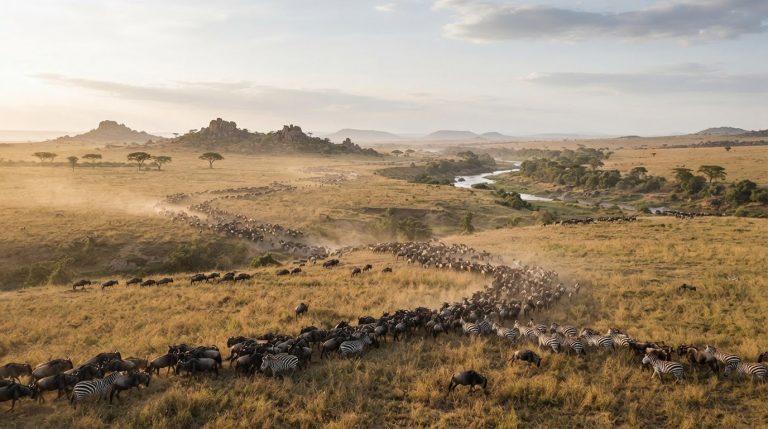
Ndutu’s calving season follows the migration, bringing immense herds onto southern Tanzania’s short-grass plains. The timing of your visit, along with rainfall, shapes what you may see, from newborn calves to predators moving nearby.
Migration and Calving Patterns
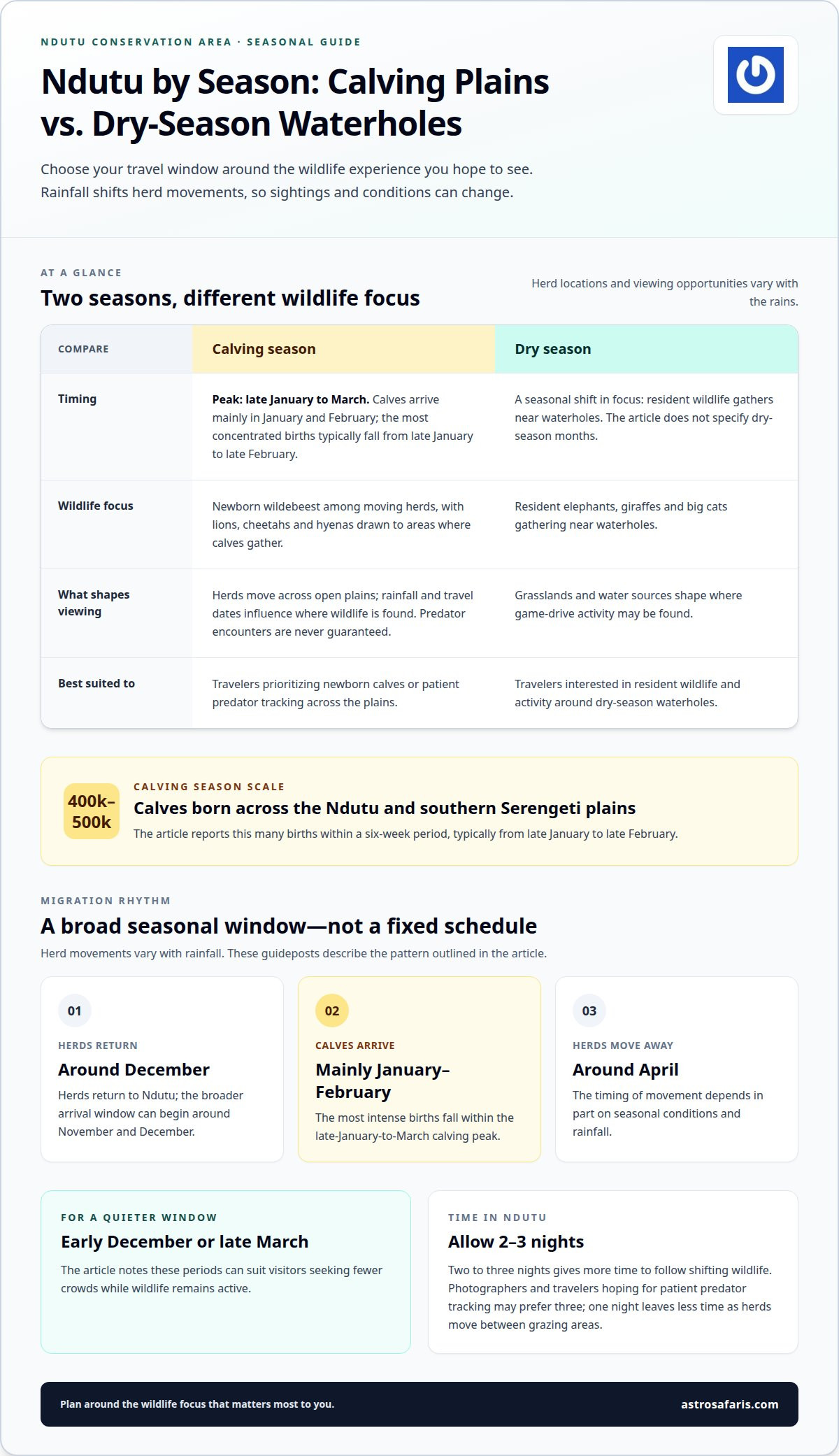
The migration brings wildebeest herds to Ndutu’s plains each year, where many give birth. Herds return in December, calves arrive mainly in January and February, and the animals move away around April. Ndutu lies between the Ngorongoro Conservation Area and Serengeti National Park, along the herds’ route. Because herd locations change with the season, wildlife viewing depends in part on when you travel.
Calving Numbers and Season
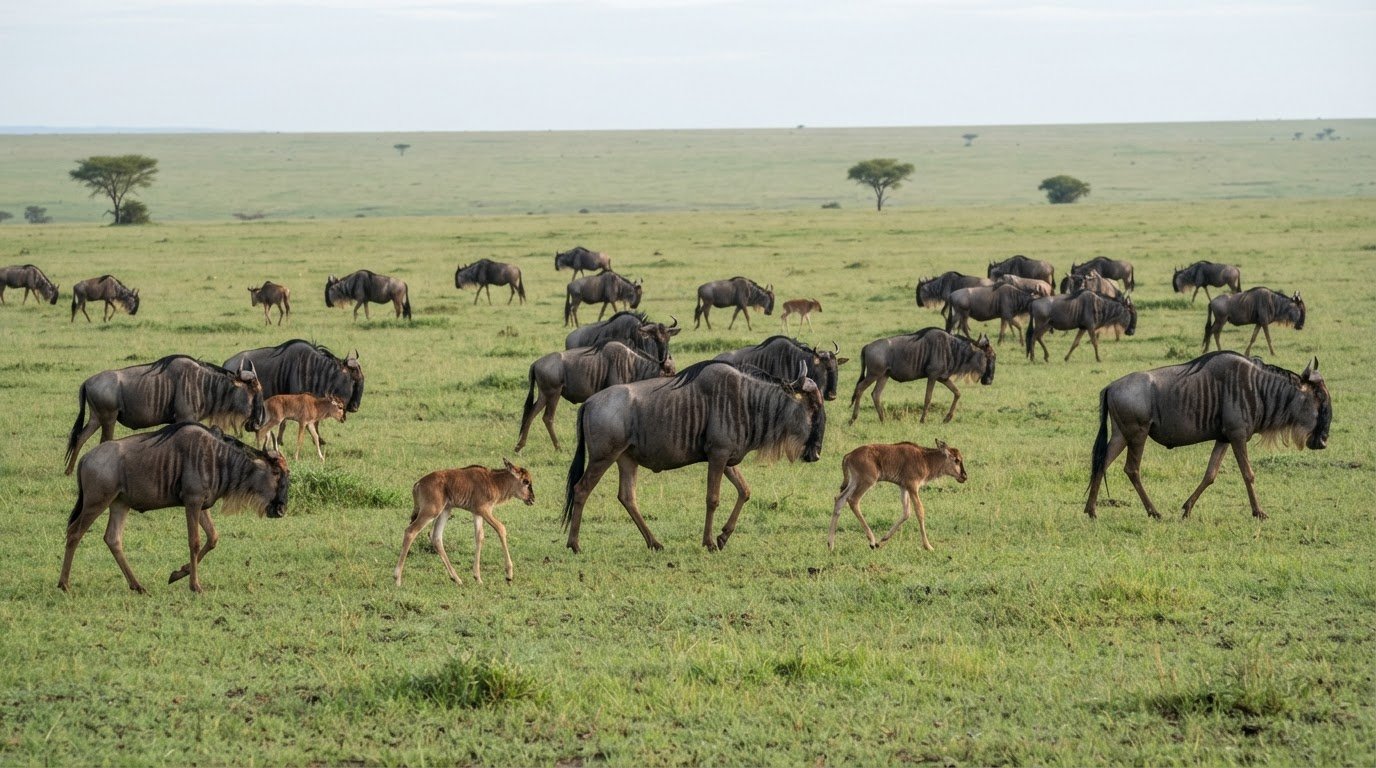
Calving peaks from late January to March, with 400,000 to 500,000 calves born on the Ndutu and southern Serengeti plains within a six-week period, typically from late January to late February. The concentrated season brings young wildebeest onto open grasslands, where they take their first steps amid the moving herds. A useful Ndutu wildebeest safari guide should distinguish the broader migration window from the calving peak: herds may arrive around November and December, while the most intense births occur later. Pack light layers for changing conditions, plus sun protection and rain protection; choose clothing suited to the season and time outdoors.
Calving and Predator Activity
Calving season also draws predators, including lions, cheetahs, and hyenas, to areas where newborn calves and herds gather. Their presence can make game drives compelling, but sightings are never guaranteed: animals move across the plains, and encounters unfold on their own terms. For safety, remain inside the safari vehicle unless your guide directs otherwise, keep a respectful distance from wildlife, and follow instructions during sightings. Carry personal medication and follow your guide’s practical advice about food, water, and insect exposure.
Allow two to three nights in Ndutu to follow wildlife across the plains; photographers and travelers hoping for patient predator tracking may prefer three nights. One night can suit a tighter itinerary, but leaves less time to view wildlife as herds shift between grazing areas. Staying near the plains can also reduce travel time to game-viewing areas. Build your stay around the calving peak if newborns are your priority, or consider the wider migration period if your dates are more flexible.
How far is Ndutu from Arusha or from Central Serengeti?
Ndutu is about 280 km by road from Arusha, a journey of roughly six hours. Flying from Arusha to Ndutu Airstrip takes just under an hour, while the drive from Central Serengeti takes about two hours. The journey is part of the safari: landscape and wildlife viewing change as you travel across Tanzania.
Ndutu lies between the Ngorongoro Conservation Area and the southern edge of Serengeti National Park. Driving from the plains to the Ngorongoro Crater rim takes approximately two to three hours. This makes it possible to combine migration viewing with a crater visit rather than treating each place as an isolated stop.
Rainfall influences where herds graze, so wildebeest migration patterns and viewing opportunities shift with conditions. During calving season, game drives across Ndutu’s open plains can reveal wildebeest and zebras moving through the grasslands. Tarangire, Serengeti, and Ngorongoro each offer a distinct setting for wildlife encounters; a route linking them adds variety, not a guarantee of particular sightings.
For photography, use game drives to watch how light, distance and animal movement change across the day. Ndutu also offers birdlife, with more than 400 bird species recorded in the area. Serengeti National Park has over 70 mammal species and over 500 bird species, adding a wider range of wildlife to a multi-area journey.
Off-road game drives are allowed in the Ndutu Conservation Area. Keep wildlife viewing respectful by following your guide’s directions around animals and other vehicles. Ndutu camps typically have 8-15 tents. The most suitable accommodation is a base that fits your route and places you well for that day’s drives; distances to wildlife viewing areas vary with camp location and where animals are moving.
For a route connecting these distinct landscapes, explore a tailored Tanzania safari route.
When is the Best Time to Visit Ndutu Conservation Area?
Ndutu changes with the rains: migration herds, resident wildlife, and viewing conditions shift through the year. Choose dates based on whether you hope to see newborn calves or animals gathering around dry-season waterholes.
Seasonal Wildlife and Resident Predators
Resident wildlife remains part of Ndutu’s appeal beyond the Great Migration, with elephants, giraffes, and big cats gathering near waterholes during the dry season. The dry season offers a different focus from the calving months. The season affects the landscape and wildlife patterns to look for, not simply the number of animals. Grasslands and water sources shape where game drives may find activity.
Predators and Newborn Calves
During calving, newborn wildebeest attract predators such as lions, cheetahs, and hyenas. This makes Ndutu compelling for travelers interested in predator tracking, but animal movements remain dynamic across the region. Patient viewing matters: a predator may be nearby without appearing on every drive. The drama lies in observing natural behavior from a respectful distance, not expecting a particular encounter. Africa’s open plains offer a vivid setting for these changing interactions.
Wildebeest Migration Timing
The migration reaches Ndutu and South Serengeti from late December to March, with exact movements influenced by rain. Early December or late March can suit visitors seeking fewer crowds while wildlife remains active. Conditions in Ndutu vary seasonally, so visitors should plan around rainfall and wildlife movements. April and May bring the long rains, when driving to Ndutu is discouraged.
For a calving-season visit, allow at least two nights in Ndutu, especially when flying in. If resident wildlife matters more to you than migration herds, the dry months offer a distinct reason to visit. Rainfall shapes grazing and movement, so game drives follow changing conditions across the plains. Set your travel dates around the experience you value most, whether that means newborn calves, predator activity, or elephants near water.
Combining Ndutu with Ngorongoro Crater
Pair Ndutu’s migration plains with Ngorongoro Crater for two distinct wildlife settings in one northern Tanzania safari. Ndutu follows seasonal herds across open grasslands; the crater brings game viewing into a vast volcanic caldera. The Ngorongoro Crater covers 260 km², while the wider Ngorongoro Conservation Area covers just over 8,000 km². Together, these landscapes make the journey more varied than a single-destination visit.
Allow at least 7 days for a Ndutu and Ngorongoro Crater combination. If you also want Central Serengeti, plan for 6-8 safari days to give each area meaningful time. The drive from Ndutu to the crater rim takes approximately 2-3 hours, so the transition is manageable within a multi-day itinerary. A crater game drive typically lasts five to six hours, another reason to avoid compressing the route too tightly.
Plan the order of destinations around your priorities. Put Ndutu first if calving-season herds are central to your trip, then continue toward the crater for a contrasting landscape and wildlife experience. Herd locations shift with rainfall, so a well-paced itinerary leaves time for game drives rather than relying on a single sighting. Thousands of animals may fill the plains, while Ngorongoro offers a concentrated day of viewing below the rim.
Starting and ending in Arusha can frame a northern Tanzania circuit, but each added stop uses travel time. Choose the combination that gives Ndutu enough days for patient wildlife viewing and reserves a full crater visit. A shorter schedule may mean choosing fewer destinations; adding Central Serengeti calls for the broader 6-8-day window. Let the contrast guide the plan: open migration country, then the crater’s enclosed wilderness.
Astro Safaris and Tours: Ndutu & Ngorongoro Luxury Tour
Astro Safaris and Tours Ltd offers the Ndutu & Ngorongoro Luxury Tour, pairing migration viewing with a crater visit. It brings together Ndutu’s open plains and Ngorongoro’s distinct landscapes, making it a natural fit if both destinations are priorities.
Choose this tour if you want to combine Ndutu and Ngorongoro in one safari. For other northern Tanzania highlights, Astro Safaris and Tours Ltd also offers Serengeti and Ngorongoro, Tarangire and Lake Manyara National Park, and Tarangire, Lake Manyara and Ngorongoro Crater tours. The right itinerary depends on your travel dates, preferred pace, and the wildlife experiences you value most.
Contact Astro Safaris and Tours Ltd to discuss a safari combining Ndutu and Ngorongoro.
Shape the Safari Around the Story You Want to Bring Home
Your next decision is not simply where to go, but what you want the journey to feel like: open wilderness, a changing trail of wildlife, or a route between contrasting landscapes. A thoughtful Ndutu wildebeest safari guide can help turn those priorities into a coherent itinerary, with time for unhurried game viewing and travel between destinations.
Astro Safaris and Tours Ltd can shape a route around Tarangire and Lake Manyara National Park, Serengeti and Ngorongoro, or Tarangire, Lake Manyara and Ngorongoro Crater. Share the kind of safari you have in mind and the places you hope to experience, and start with the landscape that matters most to you.
Contact Astro Safaris and Tours Ltd to start planning your Tanzania safari. Let the plains, crater and wildlife become part of a journey that feels distinctly yours.
Frequently Asked Questions
How Much Does the Safari Cost?
Safari cost depends on travel dates, accommodation, route, transport, and party size. Astro Safaris and Tours Ltd provides a price after a quote request, based on your itinerary details. For a useful estimate, describe whether you want Ndutu paired with Ngorongoro or other destinations, along with your preferred travel style. The Ndutu & Ngorongoro Luxury Tour is one option for combining the two areas.
The Ndutu Location: Where Exactly Is It?
Ndutu lies in northern Tanzania, between the Ngorongoro Conservation Area and the southern edge of Serengeti National Park. It is part of the wider southern Serengeti ecosystem, so safari routes can connect its plains with nearby conservation landscapes. On a map, look south of central Serengeti and northwest of Ngorongoro Crater. Its location makes Ndutu a distinct stop on a northern Tanzania wildlife itinerary.
What Is Included?
The Ndutu & Ngorongoro Luxury Tour is listed as 5 Days / 4 Nights. Its described safari inclusions cover transfers, park permits, guided game drives, accommodation, and dedicated vehicle and guide services. These elements support the journey between wildlife areas and the time spent viewing them. Check the itinerary details for how those components fit the planned route and overnight stays.
What Makes Ndutu Unique Compared to Serengeti?
Ndutu is closely associated with the southern plains and the seasonal concentration of wildebeest during calving, while Serengeti National Park spans a broader landscape and migration route. This distinction matters when choosing a safari focus: Ndutu highlights seasonal herds and open grasslands, while a Serengeti itinerary can cover other parts of the ecosystem. The two destinations complement each other rather than offering identical experiences.
What Do I See Here Apart from the Great Migration During the Recommended Months?
Beyond migrating herds, Ndutu’s alkaline lakes can attract flocks of flamingos, adding vivid color to the landscape. The area also has more than 400 bird species, so game drives can include birdlife as well as mammals. In the dry season, elephants, giraffes and big cats gather near waterholes. The mix changes with season and location, giving each drive a different focus.
When Is the Best Time to See Calving?
The calving peak runs from late January to March, with the most concentrated births typically from late January to late February. Choose dates within that peak if newborn calves are your main interest. The wider migration may be present beyond the peak, but rainfall affects herd movements. A Ndutu wildebeest safari guide can help you match your travel dates and route to the calving experience you hope to see.