What to Pack and Expect on a Tanzania Safari
Pack light, breathable clothing in muted colors, a warm layer for cool mornings, comfortable closed-toe shoes, sun protection, insect repellent, and any camera or binoculars you want close at hand. Knowing what to expect on a Tanzania safari means preparing for early game drives, changing outdoor conditions, and restful breaks at camp or lodge. The right bag leaves room for both adventure and ease.
Wildlife is at the heart of the journey, but the daily rhythm matters too: expect time in a safari vehicle, attentive guiding, and lodge services that vary by stay. You may also wonder how to balance days in the bush with time by the sea. With thoughtful planning, Tanzania’s open landscapes and Zanzibar’s coastal calm can become two chapters of one remarkable trip.
This guide covers what to pack, how game drives and lodge routines generally work, and what to consider when pairing a safari with Zanzibar. You’ll know what to bring and how to plan the transition from wild savannah to warm ocean shore.
Key Takeaways
- Pack versatile layers, practical footwear, and essentials for time outdoors so you’re ready for cool mornings and sunlit drives.
- Understand the rhythm of game drives and lodge stays to plan for wildlife viewing, downtime, and evening comfort.
- Choose a route through Tarangire, Ngorongoro, and the Serengeti that gives each landscape room to unfold.
- Pair the safari with Zanzibar by planning the transition from days in the bush to a slower coastal stay.
1. WHAT IS GAME-DRIVE?
On a Tanzania safari, a game drive is a guided wildlife outing by vehicle. The route follows park tracks, with stops to observe animals and birds. What wildlife can you expect to see on a Tanzania safari? Wildebeest, zebras, and gazelles feature in the Great Migration; sightings elsewhere vary with habitat, season, and location. A Tanzania national parks tour can bring together Tarangire, Ngorongoro, and the Serengeti, each offering a different landscape for wildlife viewing.
Tarangire brings rich birdlife into the experience, with over 550 bird species recorded in the park. Scan treetops and open ground as the vehicle moves, and listen for calls between sightings. Ngorongoro’s crater creates a striking setting for a drive, with wildlife visible across its varied habitats. In the Serengeti, more than 70 large mammal species live across a vast landscape. Your guide’s route and pace help make each sighting part of the day, rather than a race between locations.
The Great Migration adds a seasonal dimension. The herds travel an annual 800 to 1000 km in search of fresh grazing, water, and safe calving grounds. Almost 2 million zebras, wildebeest, and gazelles are involved in this famous movement. In the Southern Serengeti, wildebeest calving season runs from late December to early March. Because herds move in response to grazing and water, their location changes through the year. The timing of your visit shapes which part of this journey may be closest to your route.
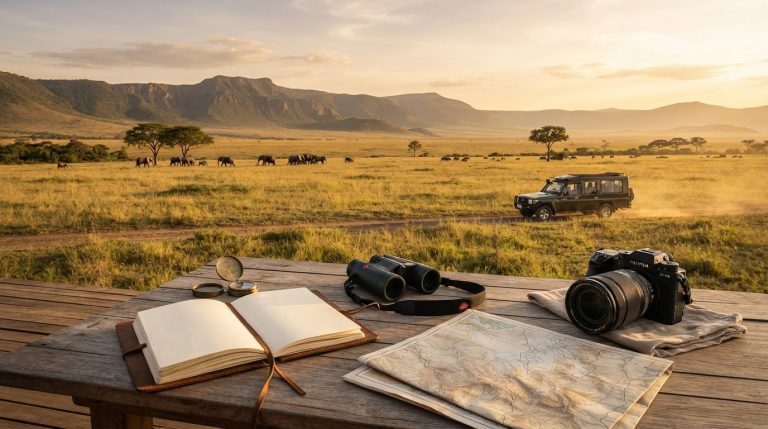
Morning drives bring a quieter start to the destination. A typical safari day begins at 6:00 AM with coffee or tea before breakfast and the drive. At 9:30 AM, guests pause for tea, coffee, and snacks. Early hours offer time to watch animals waking and moving through their habitat, while birdsong makes the drive rewarding even between larger sightings. Tanzania has over 1,000 bird species, so bring binoculars if birdwatching matters to you. Keep your camera ready, listen to your guide, and give each sighting time. That patience can turn a brief glimpse into a memorable encounter.
2. WHAT TO PACK FOR TANZANIA SAFARI?
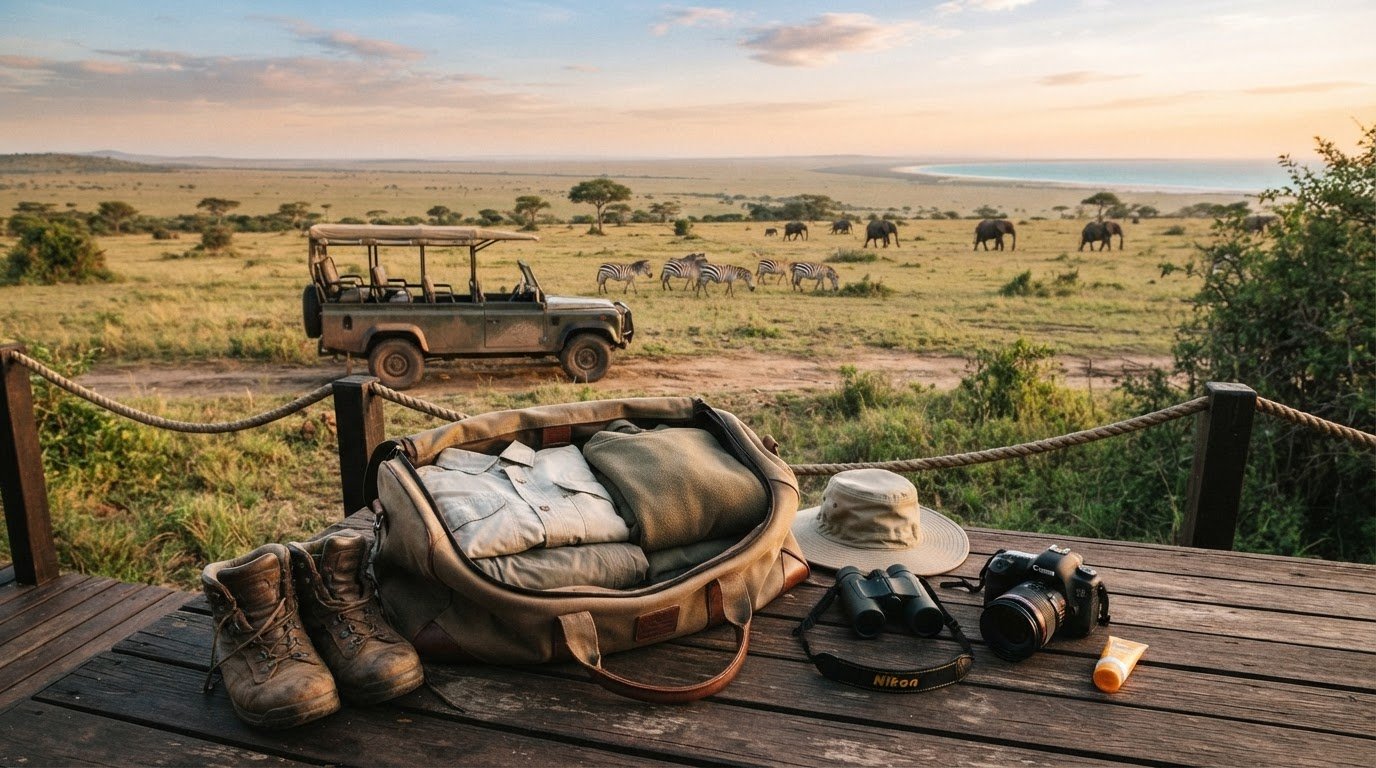
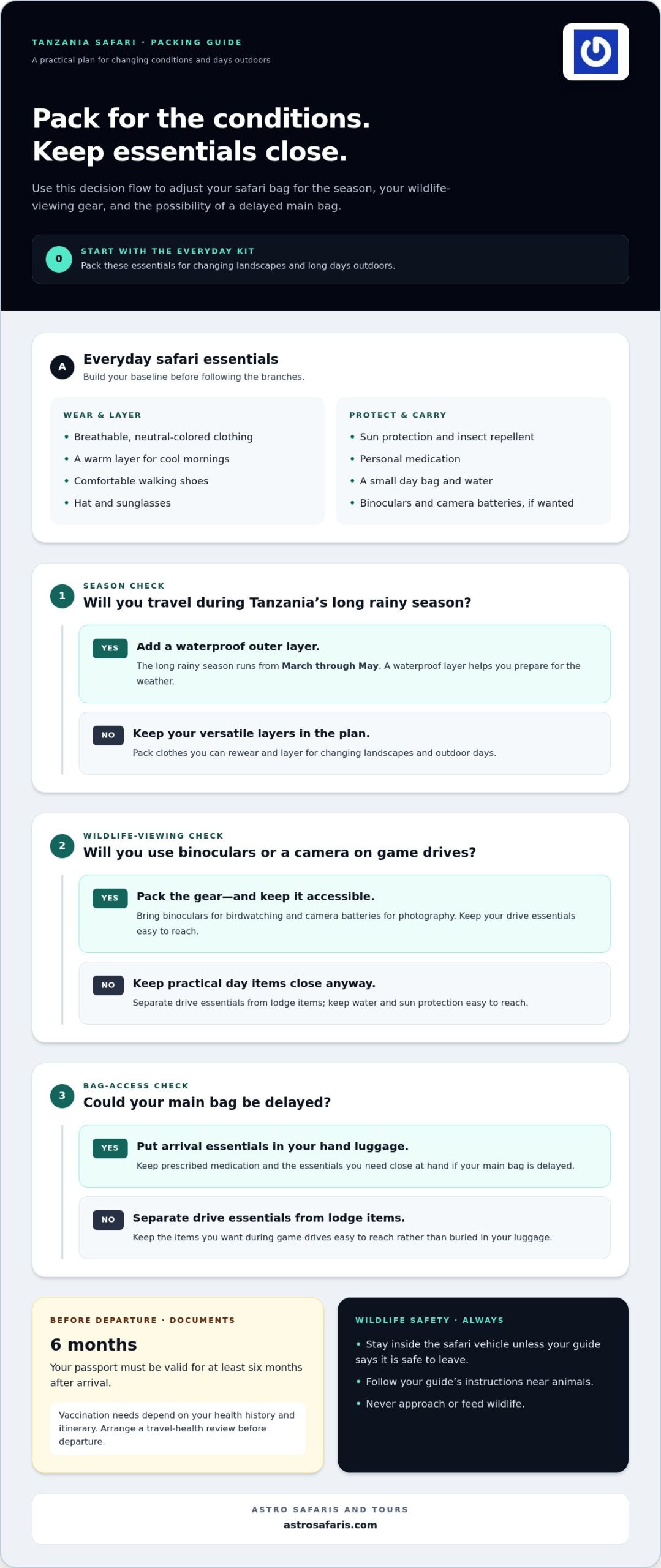
Pack for changing landscapes and long days outdoors. Choose breathable, neutral-colored clothing, a warm layer for cool mornings, comfortable walking shoes, a hat, sunglasses, and sun protection. Add insect repellent, personal medication, binoculars, camera batteries, and a small day bag. During Tanzania’s long rainy season, from March through May, a waterproof outer layer helps you prepare for the weather.
For health and travel documents, carry a passport valid for at least six months after arrival. Vaccination needs depend on your health history and itinerary, so arrange a travel-health review before departure; bring prescribed medication and keep it accessible. For wildlife safety, stay inside the safari vehicle unless your guide says it’s safe to leave, and follow instructions near animals. Never approach or feed wildlife.
A safari itinerary may start in Arusha, then follow scenic routes toward Ngorongoro Crater and the Serengeti. Game drives, lodge stays, and travel between parks shape each day, so pack clothes you can rewear and layer. The season influences both the route and what you need outdoors. Keep essentials in your hand luggage for arrival, especially if your main bag is delayed.
Seven days gives travelers time to explore three or four parks in northern Tanzania. A practical route can include Tarangire, Ngorongoro, and the Serengeti, with travel time between parks built into the plan. The Serengeti’s vastness makes route choices important: where you stay affects how much time remains for game drives. If a Maasai village visit matters to you, make room for it in the itinerary instead of squeezing it between long transfers.
Before departure, lay out each day’s clothing and separate drive essentials from lodge items. Keep binoculars, a camera, water, and sun protection easy to reach. For a route tailored to your priorities, explore custom safari planning in Tanzania.
3. Private game drives, service, and lodge amenities
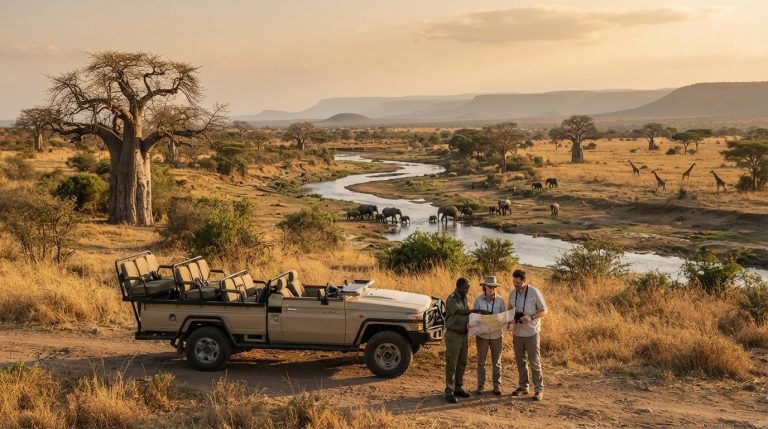
A private game drive lets your party travel with a guide in a dedicated safari vehicle, shaping the pace around sightings and interests. In a 4×4, elevated seats and broad windows make it easier to scan for an elephant or follow movement across the plains. Ask your guide to pause when an animal appears; observation, not distance covered, makes the drive rewarding.
Shared group vehicles have a different rhythm: a Tanzania group safari vehicle is shared with 6-8 other travellers. Road transfers also take time beyond wildlife viewing. For example, the drive from Arusha to Tarangire National Park covers 120km/ 2hrs. A typical itinerary averages 2 hours per day of driving, excluding game drives, while routes between parks affect how much time remains for stops and rest.
Afternoon game drives resume at 3:00 PM as the day cools. The changing light can bring an incredible shift in the landscape, from Lake Manyara’s forest edge to open grassland. Keep your camera accessible, listen for your guide’s directions, and avoid distracting the driver during sightings. Each national park has its own tracks and viewing conditions, so the route shapes the safari experience.
Park fees cover access and depend on the park and visit arrangements, so account for entry and vehicle access in the itinerary. Use permitted tracks, follow signs and your guide’s instructions, and remain in the vehicle unless your guide directs otherwise. These habits help protect wildlife and ensure respectful viewing.
Lodge amenities depend on the property and itinerary. Review what each stay provides, including meals, room facilities, and shared spaces, then pack personal items that will make you comfortable. A night near Kilimanjaro may feel different from a stay beside the Serengeti, so consider the location and transfer plan when deciding what to keep close. Clear expectations about lodge services make transitions between drives and downtime smoother.
4. Combining a safari with a Zanzibar beach stay
Pair the Serengeti’s wildlife-rich days with Zanzibar’s shoreline for two distinct chapters in one Tanzania itinerary. A safari brings early starts, time in a vehicle, and changing scenery; the island offers a gentler pace shaped by the coast. Plan the safari first, then arrange the transition to Zanzibar so your final stay in the bush and island accommodation fit together smoothly.
Route order matters. Starting in Arusha can lead to Tarangire, Ngorongoro Crater, and the Serengeti, before continuing to Zanzibar. The best sequence depends on your arrival and departure arrangements, the parks you want to visit, and the season. Astro Safaris and Tours Ltd can map the connection between your safari endpoint and island stay as one itinerary, rather than treating the transition as an afterthought.
Choose your safari focus before selecting beach accommodation. If the Great Migration is central, the Serengeti region and seasonal herd movements influence where you spend your safari nights. If crater scenery and varied habitats matter more, Ngorongoro can anchor the mainland portion. Then decide what you want from Zanzibar: quiet time by the water, coastal exploration, or a balance of both. This approach helps match the island stay to the pace you want after game drives.
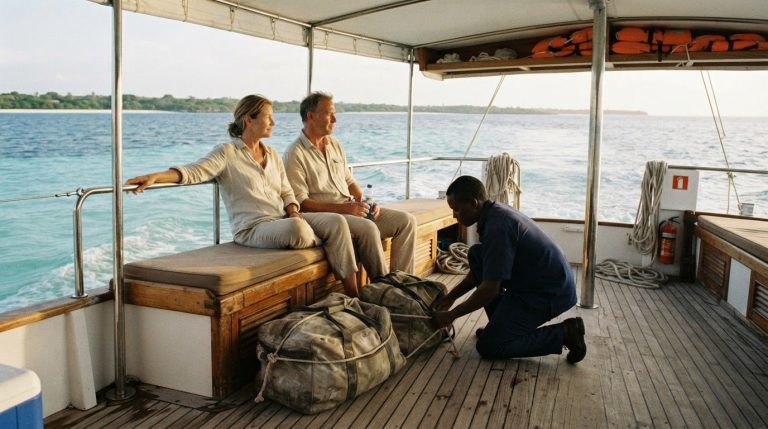
Keep the practical details together: park route, lodge check-in and check-out, transport arrangements, and your Zanzibar arrival plan. Leave breathing room between wildlife viewing and island activities, especially after a long transfer. Pack beach essentials separately, so swimwear and light clothing stay accessible without unpacking your safari luggage. The contrast is part of the appeal: animal tracks and open plains, followed by salt air and a slower horizon.
Ready to shape both landscapes into one journey? Plan a Tanzania safari with a Zanzibar stay around your preferred parks, season, and accommodation style.
Astro Safaris and Tours: Tarangire and Lake Manyara National Park
Astro Safaris and Tours Ltd can shape a northern Tanzania safari around the landscapes and wildlife you most want to experience. Choose Tarangire and Lake Manyara National Park for two distinct settings, or combine Tarangire, Lake Manyara and Ngorongoro Crater in one journey. The Serengeti and Ngorongoro option brings together those defining destinations.
Turn to Astro Safaris and Tours Ltd when you’re ready to turn your priorities into a practical itinerary, including where to travel and how to balance time across the parks. Travelers drawn to seasonal wildlife can consider the Ndutu & Ngorongoro Luxury Tour. Each option offers a different way to experience Tanzania’s open wilderness, from sweeping plains to the dramatic crater landscape.
Contact Astro Safaris and Tours Ltd to discuss the safari route that suits your plans.
Let Your Tanzania Journey Take Shape
Start by deciding what you want the journey to feel like. Perhaps you picture quiet moments watching wildlife, a route shaped around dramatic landscapes, or a final stretch of calm beside the Indian Ocean. Understanding what to expect on a Tanzania safari helps turn those hopes into choices about pace, park stops, and the kind of stay that suits you.
Astro Safaris and Tours Ltd offers routes through Tarangire and Lake Manyara National Park, Serengeti and Ngorongoro, and Tarangire, Lake Manyara and Ngorongoro Crater. These options are a starting point for shaping a trip around the places you most want to experience and fitting each part into your wider plans.
When you’re ready to move from inspiration to itinerary, contact Astro Safaris and Tours Ltd to discuss your Tanzania safari. Your story can begin with a single thoughtful choice.
Frequently Asked Questions
What should I pack for a Tanzania safari?
Pack a compact day bag with essentials for transfers and wildlife outings. Keep camera batteries, memory cards, binoculars, personal medication, and important documents together rather than buried in your main luggage. A soft-sided bag can be easier to manage between vehicles and lodges. Before departure, review your activities and accommodation so you can separate safari necessities from items you need only for your stay.
How long should you stay in Tanzania?
Allow at least 7 days to explore several highlights, and consider adding time if the Serengeti is central to your plans. Its vast scale makes a minimum of 3 days there a useful planning guide. With 8 days, an itinerary can also make room for a Maasai village visit and an extra day in Ngorongoro. The right length depends on how many destinations you want to experience without rushing between them.
How far in advance should I book an African safari?
Plan to book a Tanzania safari 9 to 12 months before departure. This lead time gives you room to shape the route around your travel season, preferred parks, and accommodation style. It also helps when your plans include popular wildlife areas or a specific migration focus. First settle on your preferred travel dates and destinations, then build the itinerary around them so transfers and overnight stays work together.
What is a game drive?
A game drive is a guided wildlife outing through a park in a safari vehicle. If you’re wondering what to expect on a Tanzania safari, your guide will read tracks, habitat, and animal behavior when choosing where to stop. Bring binoculars and keep your camera ready, but take time to observe without a screen. Tell your guide which sightings interest you, so the outing can reflect your curiosity.
When is the best time to visit Tanzania?
The best time depends on the experience you want. Tanzania’s long dry season runs from June through September, while the long rains fall from March through May. The short dry season is December through February, and shorter rains arrive from October through November. For travelers asking what to expect on a Tanzania safari during calving season, the Southern Serengeti’s wildebeest calving season runs from late December to early March.
When should I go to Tanzania?
Choose your travel dates according to your priorities: wildlife movement, park conditions, or the balance you want between safari and coast. If you hope to see calving in the Southern Serengeti, plan around late December to early March. For a journey through several northern parks, match the season to the landscapes and experiences you value most. A clear priority helps narrow down the timing before you settle on an itinerary.