Grumeti Wildebeest Safari: When to See the Migration
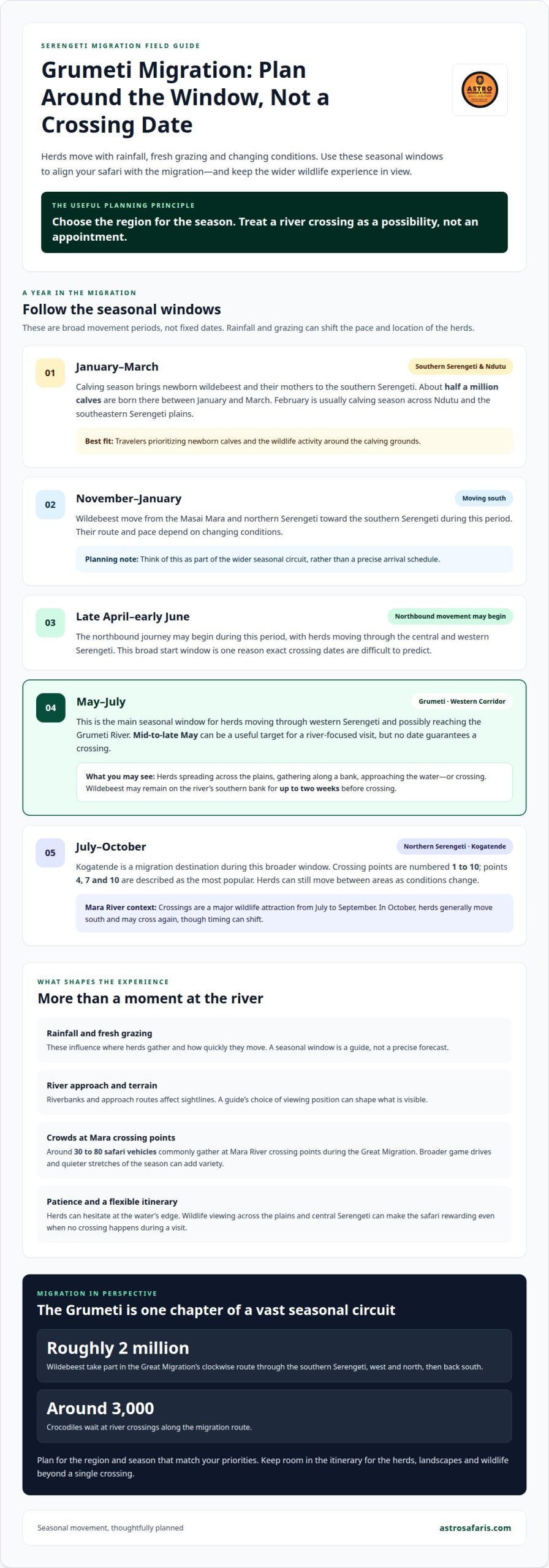
The migration calendar is a guide, not a crossing appointment. A Grumeti wildebeest safari is best planned for May to July, when herds move through the western Serengeti and may reach the Grumeti River. Their northbound journey may begin between late April and early June, making mid-to-late May a useful target for a river-focused visit. Rainfall, fresh grazing and herd movement shape the timing, so think of the season as a window, not a precise date.
It’s natural to hope for the heart-stopping moment when a herd gathers at the water’s edge. But Grumeti’s appeal goes beyond river crossings. A well-chosen travel window can still bring rewarding wildlife viewing as herds shift across the plains.
Here, you’ll learn when wildebeest move through Grumeti, why crossings are difficult to predict, and how to plan around the season without making one dramatic sighting the whole story. You’ll also see how quieter areas and broader game viewing can add depth to a safari across Tanzania’s open wilderness.
Key Takeaways
- Plan around seasonal movement rather than a fixed crossing date; changing rain and grazing conditions influence where herds gather.
- Understand how Mara River crossings fit into the wider migration, and why herd movements can shift between northbound and southbound journeys.
- Consider the southern Serengeti and Ndutu calving season if newborn wildebeest and predator activity are central to your safari.
- Build in varied wildlife viewing and less-crowded areas so the experience offers more than waiting at a river crossing.
Can the Migration River Crossings be Predicted?
No exact crossing date can be predicted: rainfall, grazing and herd movement shape the migration’s pace. The route links the Serengeti and Maasai Mara in a sweeping seasonal circuit.
Grumeti River Crossing Patterns
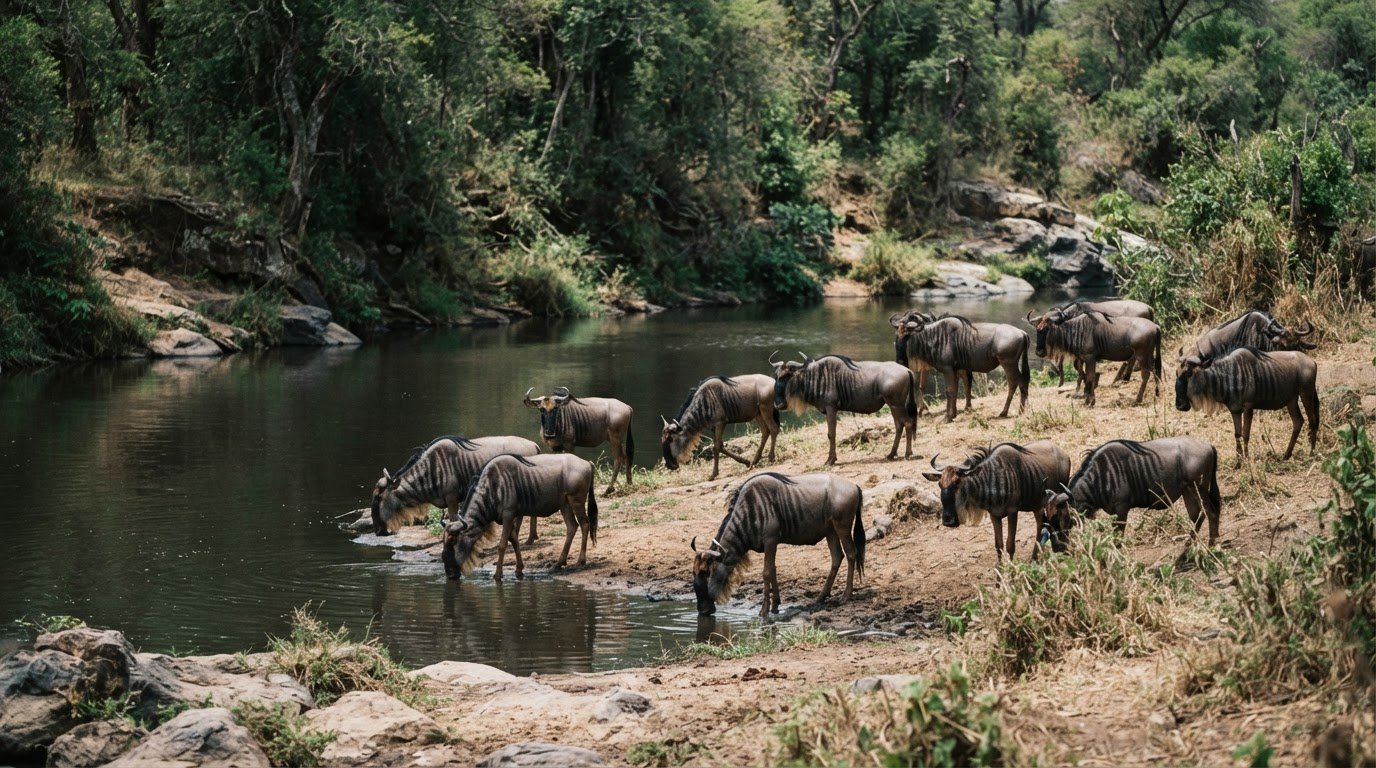
The Grumeti River crossing is a seasonal attempt by wildebeest moving through the Serengeti’s Western Corridor. Crossings typically occur from May through July, but herds may gather on a bank before entering the water. That uncertainty matters when choosing a travel window: a Grumeti wildebeest safari can follow the migration, but no date ensures a crossing. Around 3,000 crocodiles wait at river crossings along the migration route.
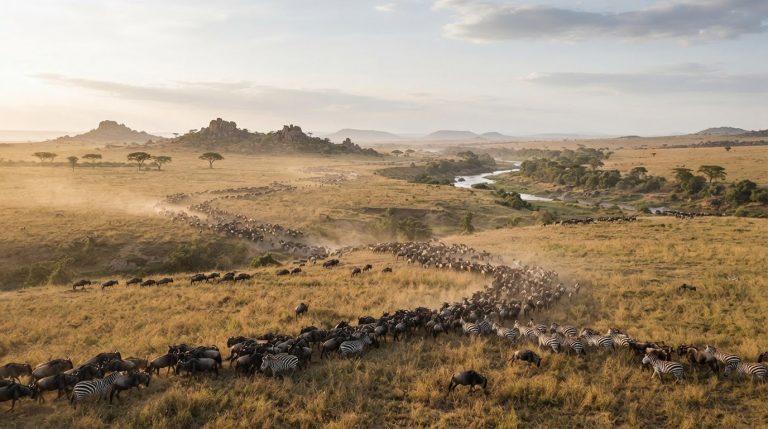
The wider journey is vast. Roughly two million wildebeest take part in the Great Migration, following a clockwise route through the southern Serengeti, west and north, then back south. Grumeti is one chapter, not the whole spectacle. In the northern Serengeti, Mara River crossings generally happen later, from July to August, so the best region for your safari depends on where the herds are moving.
Seasonal Crossing Points
Kogatende, in the northern Serengeti, is a migration destination from July to October. Its crossing points are numbered from 1 to 10, with points 4, 7 and 10 described as the most popular. The numbering helps identify locations, but it cannot make wildebeest approach on schedule. Herds may move between areas as conditions change, so timing and location both shape a crossing-focused safari.
In practical terms, match your travel season to the region the herds are expected to traverse. May to July points toward Grumeti and the Western Corridor; July to October offers a broader northern Serengeti window around Kogatende. Migration timing can still shift, so planning for the landscape and wildlife beyond a single river crossing gives your journey more possibilities.
Entry requirements, park fees and safari rules are separate from migration timing. What applies depends on your circumstances and park access arrangements, not the season alone.
Seasonal showers can affect travel conditions, so factor them into your plans. Near wildlife and rivers, follow your guide’s directions. The Grumeti crossing window spans May to July, but local conditions remain part of the experience.
Mara River crossings and seasonal herd movements
The Great Migration’s river scenes unfold as herds move between Tanzania and Kenya. Seasonal shifts mean the Mara River and Grumeti River offer different viewing windows.
Crossing Timing and Location
Grumeti River crossings happen in the western Serengeti, while Mara River crossings draw attention farther north. Mara crossings are a major wildlife attraction from July to September. Wildebeest usually cross again in October before heading south, though this can happen earlier. The distinction matters: choosing a region that fits your travel season helps align your safari with the herd’s changing route.
At Grumeti, wildebeest may remain on the river’s southern bank for up to two weeks before crossing. Watching the herds gather and shift as they approach the water can be part of the experience. The crossing itself is a brief possibility within a wider season, not a daily event to build your entire journey around.
Crowds and River Terrain
At Mara River crossing points, around 30 to 80 safari vehicles commonly gather during the Great Migration. That concentration can shape the viewing experience, making quieter stretches of the season or broader wildlife drives appealing alternatives. At Grumeti, the river and its approaches influence where a guide can position a vehicle and what can be seen from the bank.
Terrain affects what you can see. The riverbanks, surrounding ground and herd approach routes all influence sightlines, so a crossing may be visible from one position but obscured from another. Your guide’s choice of viewing location matters as much as reaching the right part of Serengeti National Park.
River-Crossing Viewing
River-crossing viewing means watching from a suitable position as herds approach, hesitate or enter the water. On the Grumeti River, patience matters: animals may wait before crossing. In October, herds at the Mara River are generally moving south, although timing can shift. Understanding these movements helps set realistic expectations for each game drive.
A crossing is only one chapter of the season. Wildebeest moving toward the river, herds spreading across the plains and wildlife in the central Serengeti can all enrich a Tanzania safari. Staying open to these changing scenes makes the experience rewarding beyond the moment at the water’s edge.
What Time of the Year Do the Wildebeest Migrate?
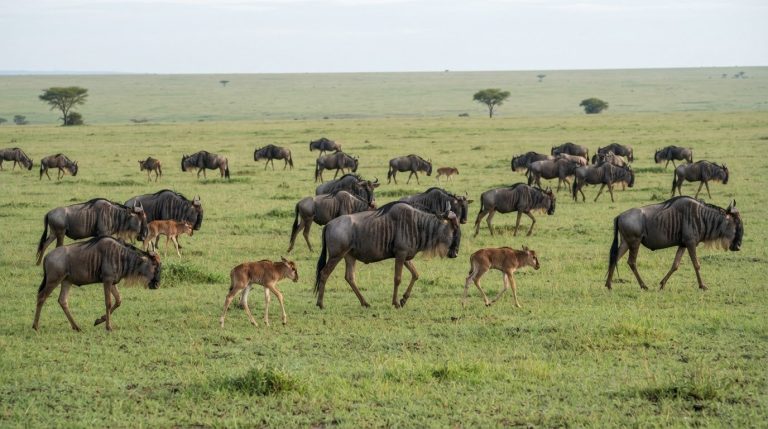
The southern Serengeti and Ndutu are central to the migration’s calving season. About half a million wildebeest calves are born in the southern Serengeti between January and March. February is usually calving season across the Ndutu area and southeastern Serengeti plains, with the main calving grounds extending southeast of Seronera toward Ndutu.
This seasonal gathering offers a different kind of wildlife viewing from a river crossing. Newborn calves and their mothers shape the plains, while predators are also part of the vivid natural scene. Choosing a region that matches the herd’s movement can make your safari more focused than pursuing one dramatic moment elsewhere.
The wider route changes through the year. Wildebeest move from the Masai Mara and northern Serengeti toward the southern Serengeti from November to January. Their northbound journey may begin between late April and early June, with herds moving through the central and western Serengeti. A safari operator plans the route around the travel season, migration location and your priorities. Grumeti lies in Tanzania’s western Serengeti, along the Western Corridor.
For a Grumeti-focused journey, Astro Safaris and Tours Ltd can shape the itinerary around the western Serengeti and select accommodation to suit the route. Combining the Serengeti and Ngorongoro adds a contrasting landscape and wildlife experience, while your available time determines how much ground the journey can cover. A migration itinerary may allocate three full days to exploring the Serengeti and following the herds.
There is no single ideal number of days for every Grumeti safari. The right plan depends on your travel window, time in the Western Corridor, and whether Ngorongoro Crater or other Serengeti areas belong in the itinerary. These choices set the journey’s pace and balance, leaving room for both migration viewing and the broader wildlife experience.
How a safari operator can help you avoid crowds and diversify game viewing
A crossing-focused journey may center on one riverbank, but Tanzania’s wider landscapes offer more ways to experience the Great Migration. Astro Safaris and Tours Ltd can shape your route around seasonal herd movement, then balance that priority with other habitats and wildlife. This approach does not depend on a crossing happening on schedule. It makes the journey about the living landscape as well as the spectacle.
Location matters. The Lamai Wedge in the northern Serengeti is separated from the rest of the park by the Mara River, with one tiny seasonal bridge providing access. That natural bottleneck can affect how vehicles reach the area. Route planning can account for access and seasonal movement when arranging time in northern Tanzania, rather than treating every crossing point as equally convenient.
Broaden the itinerary beyond the river. Tarangire National Park brings a different landscape to a Serengeti journey, while Lake Manyara National Park offers birdlife, with more than 400 bird species depending on the season. Ngorongoro Crater adds a distinct setting to wildlife viewing. Combining destinations gives travelers more varied scenery and animal encounters, even when herds are elsewhere.
Seasonality can guide your choices. From November to January, newly sprouted grass after the rains attracts large herds to grasslands around Namiri Plains. In another period, the Western Corridor may better suit travelers following the migration. Astro Safaris and Tours Ltd can align your route with the travel window, preferred pace and interest in wildlife beyond wildebeest, balancing time between national parks and varied habitats.
For a journey shaped around the Great Migration and broader nature viewing, plan a tailored Tanzania safari that pairs seasonal priorities with complementary landscapes. The result is a richer sense of Africa, where open plains, crater country and bird-rich habitats each have space in the story.
Astro Safaris and Tours: Grumeti Wildebeest Safari
Astro Safaris and Tours Ltd designs specialized Grumeti Wildebeest Safari packages for travelers across the United States who are planning around the migration’s passage through the western Serengeti. Once you have chosen your travel season and decided whether river crossings or broader wildlife viewing matter most, an expert-guided itinerary with Astro Safaris and Tours Ltd is a natural next step.
To extend your journey beyond Grumeti, consider combining the Serengeti and Ngorongoro, or including Tarangire, Lake Manyara and Ngorongoro Crater. These destinations bring different landscapes and wildlife experiences into one comprehensive Tanzania itinerary. The right combination depends on your priorities and how much time you want to spend exploring.
Share your preferred travel period, wildlife interests and the places you hope to include. Astro Safaris and Tours Ltd can shape a customized Grumeti wildebeest safari around your choices, with the migration as its seasonal focus rather than a fixed crossing promise.
For help planning your ideal African adventure from the United States, contact Astro Safaris and Tours Ltd to get started.
Start shaping your own migration journey
A meaningful safari begins with the experience you want to carry home. Decide whether your priority is time among the herds, a quieter rhythm across the wilderness, or a journey that gives equal weight to varied landscapes and wildlife. These choices turn a broad idea into a trip with a clear sense of purpose.
For a Grumeti wildebeest safari, share your preferred travel period, interests and ideal pace. Astro Safaris and Tours Ltd can use your priorities to shape a Tanzania itinerary around the experience you’re seeking, while keeping the migration’s changing nature in view.
Imagine open plains at first light, the hush before a herd moves, and unexpected wildlife moments between destinations. Start planning with a conversation about the journey you hope to take.
Contact Astro Safaris and Tours Ltd to discuss your safari plans. Let the first decisions open the way to a journey that feels personal, thoughtful, and full of possibility.
Frequently Asked Questions
When should I visit?
For a Grumeti wildebeest safari, choose your travel dates around the wildlife experience you most want to prioritize. The Grumeti season suits travelers focused on western Serengeti herds, while the southern plains offer a different focus during calving. If your schedule is flexible, decide whether river scenes, newborn calves or varied landscapes matter most, then shape the itinerary around that preference.
Where does the Great Migration start?
The Great Migration’s annual cycle centers on the southern Serengeti, where wildebeest gather to calve. From there, herds travel through different parts of the Serengeti ecosystem before returning south. The best starting region for your safari depends on when you travel: an itinerary shaped around the herds’ seasonal range can offer more relevant wildlife viewing than choosing a destination by name alone.
When is the best time to see the wildebeest migration in Grumeti?
A Grumeti wildebeest safari is best planned for the May-to-July crossing season, with mid-to-late May a useful target for a river-focused visit. Herd movements still determine where wildlife gathers during your stay, so build the itinerary around the Western Corridor rather than a single expected crossing. This leaves room to enjoy other wildlife and landscapes along the way.
What are the best safari areas and lodges in Grumeti?
The Western Corridor of Serengeti National Park is the area to focus on for Grumeti wildlife viewing. Accommodation that suits your intended route can shape how you experience the region, so consider the balance between time near migration areas and exploring other parts of the park. Your preferred travel season and interests can guide the choice of safari area and lodging style.
How much does a Grumeti wildebeest safari cost?
The cost depends on the itinerary and arrangements selected, including accommodation, route, travel dates and safari style. There is no single fixed price for every traveler; the price is provided after a quote request. Sharing your preferred season, travel plans and destinations helps define the trip and the elements that shape its quote.
What is included in a Grumeti safari package?
The Grumeti Wildebeest Safari is listed as a 7 Days / 6 Nights itinerary. Package features include dedicated safari vehicles and expert guides, with the journey focused on wildlife viewing. Travelers seeking a broader route can also consider Serengeti and Ngorongoro. The details of the itinerary depend on the destinations and experience chosen for the trip.