Kilimanjaro Trekking Tour Packages, Prices and Porter Care
The summit is only part of the climb. Kilimanjaro trekking tour packages pair a professional guide with route planning and mountain crew support; climbing typically takes 5-7 days. On this high-altitude journey, route choice, daily pace and time on the mountain all shape the experience.
Look beyond the itinerary headline: you’ll want to know what guidance adds, how group and private climbs differ, and how the people carrying supplies are treated. Kilimanjaro trekking tour package prices depend on route, duration, group or private format, and inclusions. The price is provided after a quote request.
This guide explains the value of a guided climb, what to compare when reviewing packages, and what porter care means in practice. It also shows how to weigh practical details alongside the anticipation of moving through Kilimanjaro’s changing landscapes, from forest paths to the vast summit horizon.
Key Takeaways
- Understand why a guided climb matters on a 5,895-meter mountain, where acclimatization is part of route planning.
- Compare package costs by route, trip length and included services, rather than relying on the headline price alone.
- Use your preferred pace and flexibility to decide whether a group departure or private climb fits you better.
- Learn what responsible porter care involves, including fair crew pay and clear limits on carried loads.
Why should I choose a Kilimanjaro climbing tour?
A guided climb brings route planning, local guidance and mountain logistics together. Kilimanjaro is 5,895 meters high, according to the U.S. Geological Survey, so acclimatization matters.
Route Options and Trek Durations
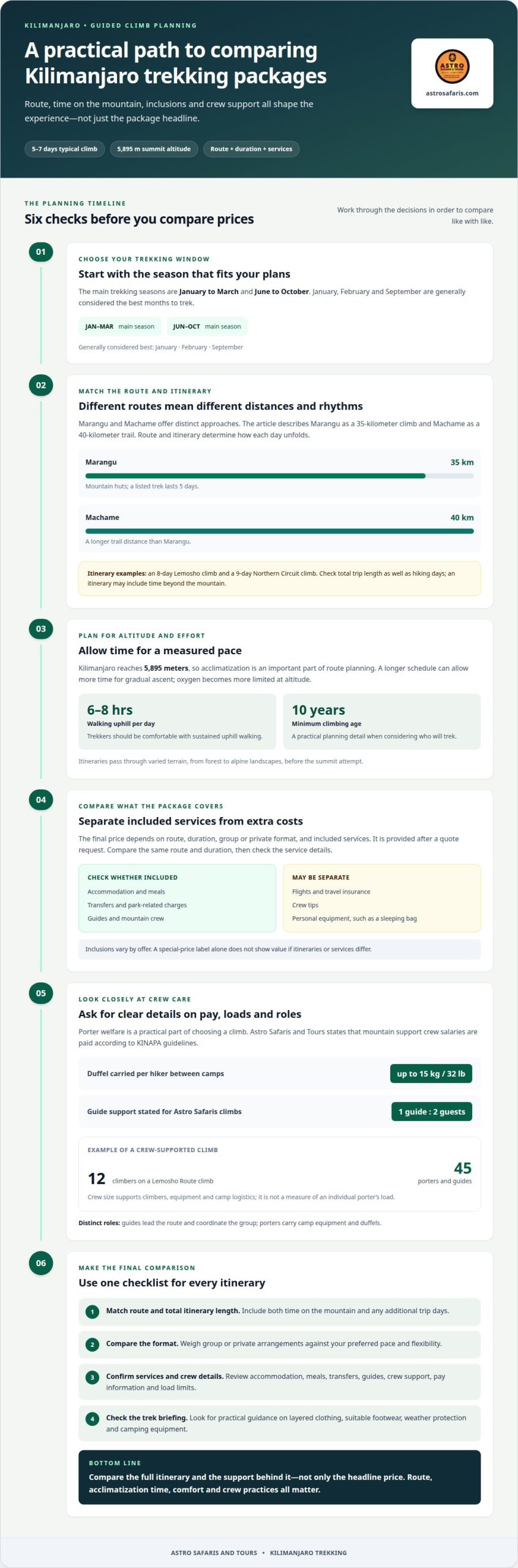
Marangu and Machame offer distinct approaches to the mountain. Marangu is described as a 35-kilometer climb, while Machame covers a 40-kilometer trail. Climbs typically take 5-7 days, with route and itinerary shaping the daily pace. When comparing open-group packages, look beyond the headline price: route, duration, accommodation and included services influence what each itinerary provides. A shorter schedule and a longer route offer different trade-offs in time and acclimatization.
Itinerary Highlights and Acclimatization
Itineraries cross varied terrain, from forest to alpine landscapes, before the summit attempt. A longer schedule can allow more time for gradual ascent, while the route determines where each day begins and ends. Compare the full trip length with the hiking days, since an itinerary may include time beyond the mountain. Oxygen becomes more limited at altitude, so a measured pace and attention to acclimatization are important parts of the plan.
A listed Marangu trek lasts 5 days, and climbing Kilimanjaro typically takes 5-7 days. The minimum age for climbing is 10 years. These figures help frame itinerary choices, but route duration still affects the rhythm of each climb.
The main trekking seasons are January to March and June to October. January, February, and September are generally considered the best months to trek. Choose dates that suit your plans, then compare route durations and group departures.
Expect sustained effort: trekkers should be comfortable walking 6 to 8 hours uphill per day. Fitness for a Kilimanjaro trek means building stamina for repeated uphill days, not just one demanding hike. A guided team can shape pacing around the itinerary, while acclimatization remains central at 5,895 meters.
Featured Kilimanjaro trekking packages and prices
Kilimanjaro trekking tour packages differ by route, mountain days, group format, and included services. Start comparisons with the itinerary, not the headline price: an eight-day Lemosho climb and a nine-day Northern Circuit climb spend different amounts of time on the mountain. Those extra days can affect what a package covers and how the journey unfolds.
Route choice shapes the experience. The Marangu Route uses mountain huts, while many other itineraries use campsites. This affects overnight comfort and the equipment you’ll need. Guides and porters support the climb, but package inclusions can vary, so compare the listed services as well as the route and duration.
The final price depends on the itinerary and is provided after a quote request. Route, duration, group format, and included services all shape the cost. Check whether the package includes accommodation, meals, transfers, park-related charges, and mountain crew. A longer itinerary in Tanzania may involve additional nights and logistical support, so compare the same route and duration for a clearer picture.
Some costs commonly fall outside a package. Flights, travel insurance, crew tips, and personal equipment may be excluded, and inclusions vary by offer. A sleeping bag is one example of personal equipment to account for. Make room in your overall travel budget for these separate needs instead of treating the package price as the full trip cost.
Compare packages in a few steps: match the route and total itinerary length, separate inclusions from exclusions, then compare group and private arrangements. Look for clear details about meals, accommodation, guides, transfers, and crew support. A special price label alone says little about value if itineraries or services differ. The summit may be the same goal, but routes, altitude schedules, and comfort can vary substantially.
Are porters on Kilimanjaro treated well?
Porter welfare is part of responsible mountain travel, not a minor detail. Look for clear information about crew pay, carried loads, and how guides coordinate each climb.
Porter Welfare and Community Support
To make a more informed, responsible choice, compare how an operator explains porter pay, load limits, and crew support. Astro Safaris and Tours states that mountain support crew salaries are paid according to KINAPA guidelines. This gives you a specific point to consider alongside the itinerary and camping arrangements. Crew compensation makes porter welfare a tangible part of travel spending in Tanzania.
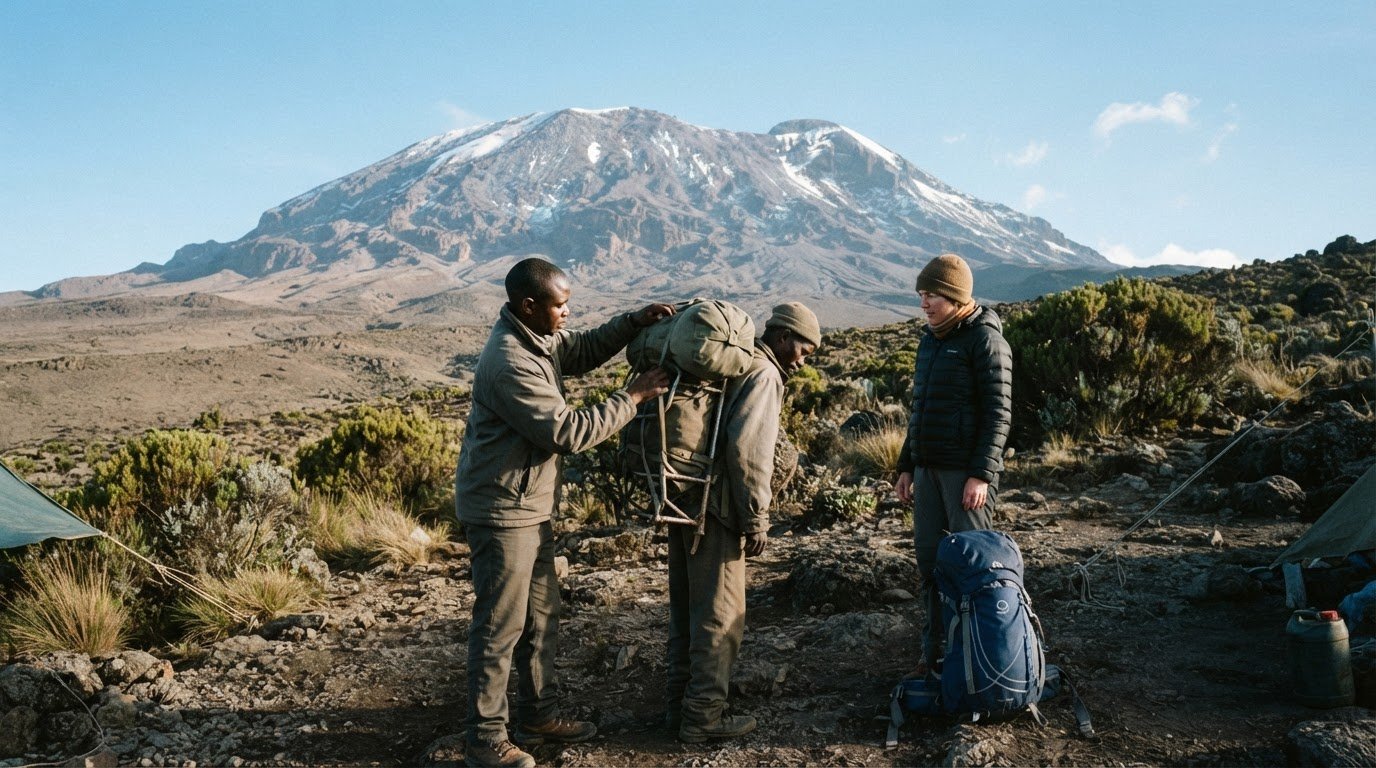
Ask what the porter service covers in practical terms: on the included climb, porters carry each hiker’s duffel between camps up to 15kg / 32 lbs. A stated limit helps distinguish the porter’s load from your personal daypack. Clear expectations matter when weather shifts and warm clothing, rain protection, and sleeping gear must move between camps.
Porter Services and Support Crews
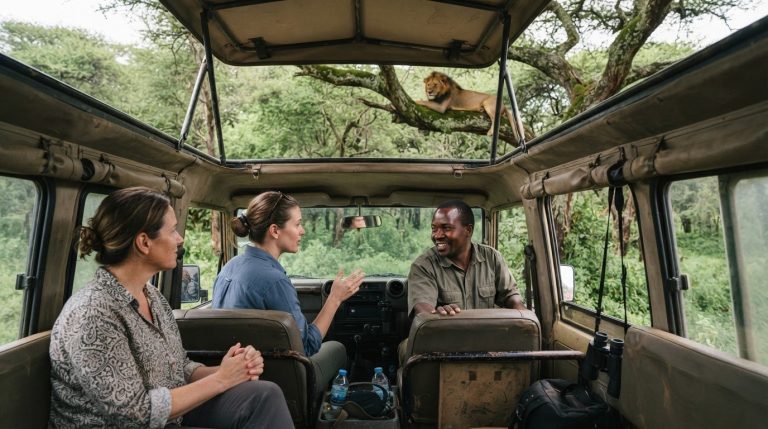
Porters move camp equipment and duffels, while guides lead the route and coordinate the group. Astro Safaris and Tours provides one guide for every two guests on its Kilimanjaro climbs. This ratio helps show how guide support relates to group size, while porters carry supplies across changing mountain terrain.
Scale matters, too. A group of 12 on a Lemosho Route climb was supported by 45 porters and guides. Crew size reflects the combined needs of climbers, camping equipment, and camp logistics; it isn’t simply a measure of individual porter loads. Look for the crew’s responsibilities to be described distinctly.
A useful trek briefing covers layered clothing, suitable footwear, weather protection, and camping equipment. It should also treat vaccinations as a personal planning topic, rather than offer a blanket recommendation unrelated to your itinerary or health history.
Before choosing, compare the operator’s stated approach to crew pay, duffel limit, guide ratio, and support roles. These concrete details help you assess porter welfare and understand how the crew sustains the journey from camp to camp.
Group and private tour options
Choose a group departure for a shared adventure, or a private climb for a more personal rhythm. The right fit depends on your travel party, preferred dates, and how much flexibility you want during the ascent. A market listing counts 532 group tours on Mount Kilimanjaro, so group travel is a substantial format to compare, not a single fixed itinerary.
On a group climb, everyone follows the same scheduled route and daily plan. This format can suit solo hikers or companions who enjoy meeting others on the trail. It also means following the itinerary and sharing camp routines, from meals to sleeping arrangements. Review departure dates alongside route length, since both shape the days available for hiking and rest.
A private climb is planned around your own party. It can make coordination easier for families or friends traveling together, especially when their priorities differ from those of a scheduled group. Discuss the route, duration, and daily rhythm with the operator as part of one plan. Private does not mean unguided: the ascent still relies on professional mountain support and a carefully coordinated itinerary.
Use these questions to make the choice practical:
- Dates: Can your party travel on a group departure, or do you need a dedicated schedule?
- Company: Would shared camp life add to the adventure, or would your group prefer time together?
- Flexibility: Do you want a set itinerary, or a plan shaped around your party’s priorities?
- Preparation: Are all hikers comfortable with the route’s daily demands and sleeping arrangements?
Both formats call for preparation for Kilimanjaro’s sustained hiking and changing conditions. A group can offer shared momentum; a private party can keep decisions focused on its own needs. Neither format changes the mountain or guarantees a summit, so choose the journey that suits you, not just the label.
For a climb shaped around your party and preferred travel style, discuss your Kilimanjaro plans.
Astro Safaris and Tours Ltd: Kilimanjaro Trekking
Astro Safaris and Tours Ltd organizes Kilimanjaro trekking for travelers ready to shape a considered mountain itinerary around their route and group preferences. Bring together your preferred travel dates, route, trip length, and choice of group or private climb. These choices shape the experience and its practical arrangements.
For a broader Tanzania journey, combine the trek with safari planning, such as Tarangire and Lake Manyara National Park or Serengeti and Ngorongoro. First clarify your priorities: time on the mountain, the kind of climb you want, and whether you want wildlife travel in the same itinerary. This gives your plans a thoughtful starting point without treating the summit as a guaranteed outcome.
For a conversation about your route and travel plans, contact Astro Safaris and Tours Ltd.
Let the Mountain Shape What Comes Next
A climb can be more than a summit goal. It can open a wider Tanzania journey, with time on the mountain followed by wildlife and open savannah. Astro Safaris and Tours Ltd offers Tarangire and Lake Manyara National Park, Serengeti and Ngorongoro, and Tarangire, Lake Manyara and Ngorongoro Crater itineraries. Consider how Kilimanjaro trekking tour packages fit the wider travel experience you want, rather than planning the climb in isolation.
Start with what matters most to you: the route, group format, and whether you want to add a safari. Clear priorities give your planning conversation direction while leaving room to shape an itinerary around your vision of Tanzania.
Contact Astro Safaris and Tours Ltd to discuss your Kilimanjaro plans and the journey you hope to create. The mountain is waiting, and your next chapter can begin with a thoughtful first step.
Frequently Asked Questions
How difficult is a Kilimanjaro trek?
A Kilimanjaro trek is physically demanding, although standard routes don’t require technical mountaineering skills. The challenge comes from repeated uphill walking, altitude, and consecutive days on the trail. Stamina and comfort with extended walks are helpful. Route pace and overnight arrangements also shape how demanding each day feels, so consider the full itinerary, not just the summit attempt.
How can a tour operator help plan your trekking to Kilimanjaro?
A tour operator can coordinate the route, itinerary, guides, porters, meals, and mountain equipment as one expedition plan. This brings practical details together with your travel dates and group preferences. Experienced local outfits like Victory Rental & Safaris can help align trekking logistics with broader travel across Tanzania, explaining how camping differs from the Marangu hut itinerary and clarifying which services are included.
What Is the Best Route up Kilimanjaro?
There isn’t one best route for every climber; the right choice depends on preferred duration, overnight style, and the kind of journey you want. Marangu offers hut accommodation, while Machame, Lemosho, Umbwe, and Rongai itineraries use different schedules and mountain approaches. For example, listed itineraries include an 8-day Machame or Lemosho climb and a 7-day Rongai climb. Compare the full route plan before choosing.
Will the altitude affect us?
Altitude can affect how your body responds to exertion and sleep as the climb gains height. Sleep is likely to become more disrupted above 4,000 meters, and summit air pressure is about 50% of sea-level pressure. A gradual itinerary gives more time for acclimatization, but each climber responds differently. Follow your guide’s pace and report changes in how you feel during the trek.
Can a beginner hike Kilimanjaro?
Yes, beginners can climb Kilimanjaro on standard trekking routes without prior mountaineering experience. But the journey still involves sustained hiking and altitude, so preparation and a sensible route plan matter. Choose an itinerary that suits your fitness and allows a manageable daily rhythm. Your guide leads the climb; arrive ready for repeated walking days and changing mountain conditions.
How long do I need to complete the climb and does that include time to acclimatize?
Check whether the itinerary counts mountain days or the full trip. Some eight-day itineraries count only days on the mountain, while operator trips can run eight to ten days, including six days of hiking. Acclimatization time is built into the route schedule, so compare its daily progression as well as the total duration. This distinction helps you plan travel days around the climb.