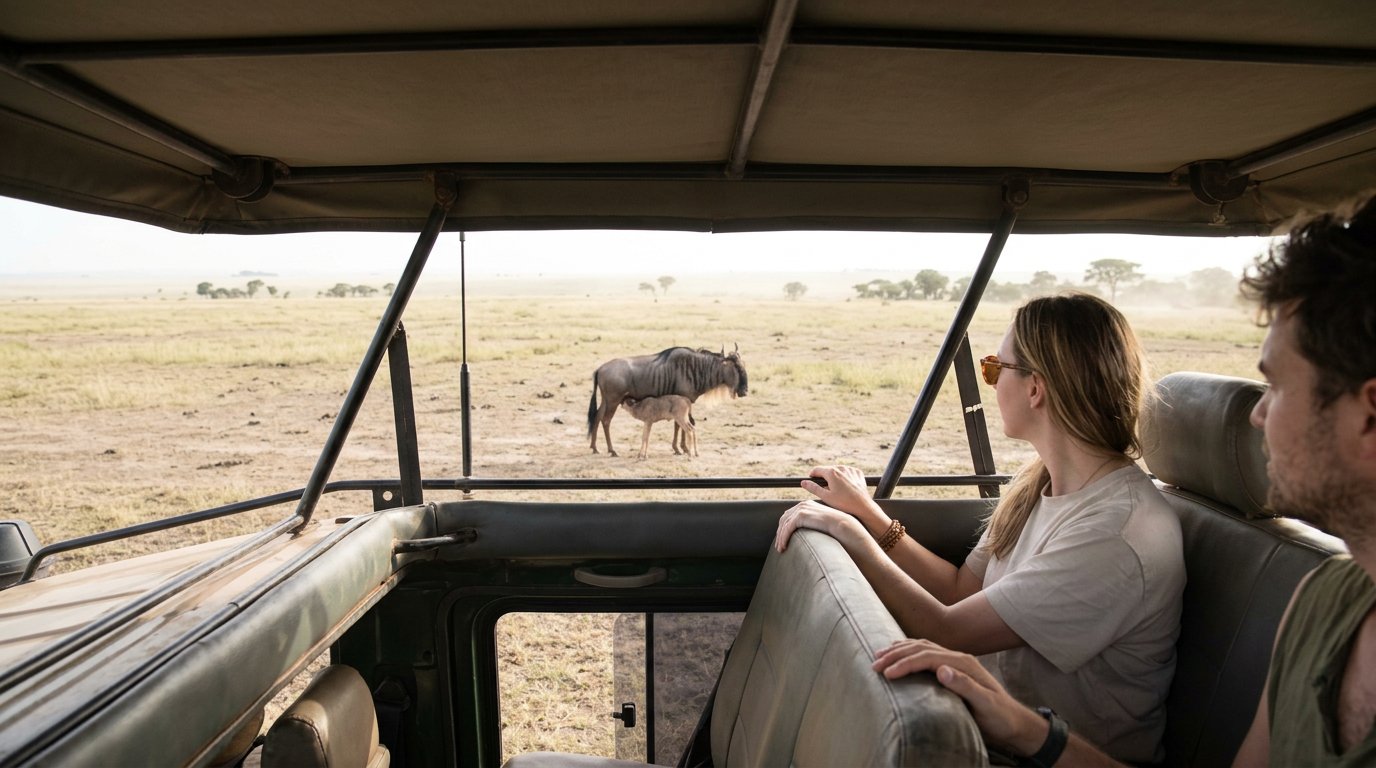
Ndutu and Ngorongoro Safari Prices and Places to Stay
Wildebeest calving is a seasonal wildlife event in Ndutu, so timing can shape what visitors see. A Ndutu and Ngorongoro safari at this time combines newborn calves on the plains with wildlife viewing in the crater. Calving activity generally runs from mid-December to mid-March.
Choosing the right time and accommodation shapes your safari: you might prefer a comfortable lodge, a tented camp close to the wilderness, or a simpler camping experience. This guide covers when to travel for calving, how accommodation options differ, and how group size can affect per-person safari costs. It also explains practical planning considerations for Ndutu and Ngorongoro, helping you weigh wildlife priorities, comfort, and budget. Follow the season across open grasslands, then descend into the crater for a striking change of scenery.
Key Takeaways
- Use the calving-season timing to plan your trip around the wildlife moments that matter most to you.
- Compare lodges, tented camps, and camping by the comfort and wilderness atmosphere you prefer.
- See how group size can shape per-person safari costs, and which itinerary details influence the overall price.
- Explore how Astro Safaris and Tours Ltd’s Tanzania safari offerings can help bring your Ndutu and crater plans together.
Wildebeest calving season
Calving activity in Ndutu is described from December to April, with its peak in February and March. Seasonal timing helps determine where game drives focus.
Great Migration Timing
The annual migration brings more than 2 million wildebeests through Ndutu. Calving is described as running from mid-December to mid-March, within the broader December-to-April season. Consider your travel dates alongside the landscapes you want to experience: the southern Serengeti plains offer open views, while Ngorongoro adds crater scenery. Conservation Area entry and crater vehicle fees are separate cost lines, and the total depends on visitor category and itinerary. Follow posted access conditions and guide directions.
Wildebeest Calving-Season Safaris
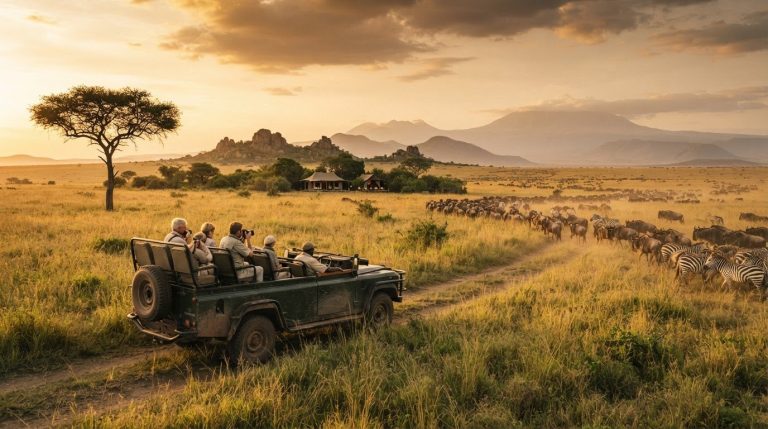
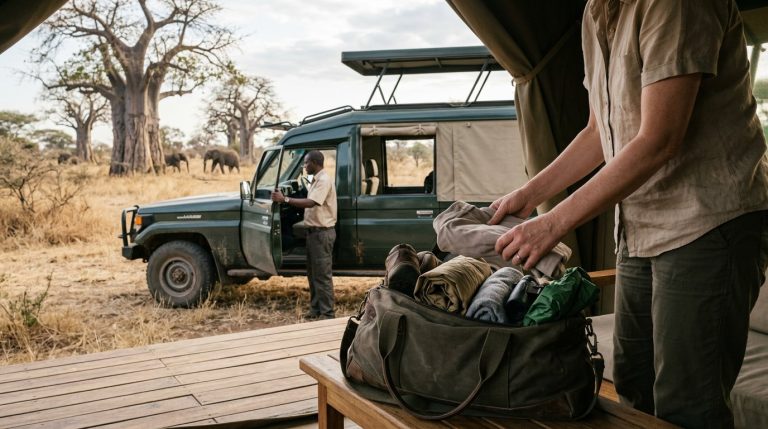
Calving-season game drives focus on locating wildebeest herds and observing newborn calves across Ndutu. The area can see as many as 8,000 wildebeest births a day during the calving period, with the strongest activity in February and March. Ndutu and Ngorongoro offer contrasting experiences: Ndutu’s broad plains suit tracking seasonal herds, while the crater brings wildlife into a dramatic enclosed landscape. Pack layered clothing, sun protection, insect repellent, and any personal medication; stay with your guide’s safety instructions during drives.
Migration Season at Ndutu
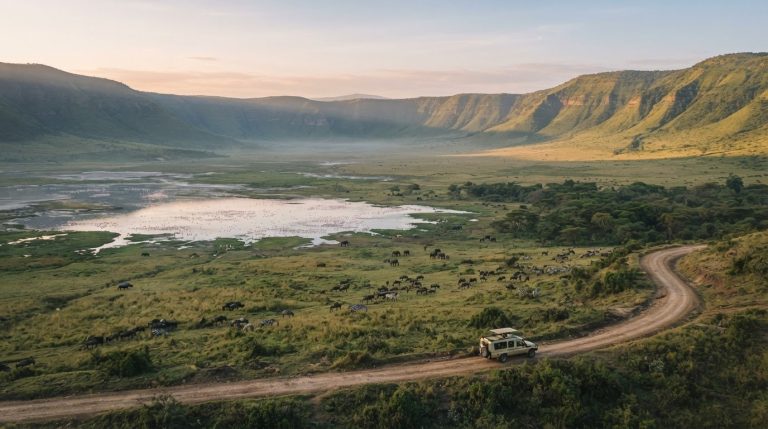
Ndutu lies on the southern Serengeti plains, within the Ngorongoro Conservation Area. The journey from Ndutu to Ngorongoro Crater connects open grasslands with crater scenery. During the migration, herds move through the region as seasonal conditions shift, so game drives should allow time to follow wildlife rather than focus on a single sighting. For a Ndutu and Ngorongoro safari, allow the changing scenery and animal movements to guide the day’s rhythm.
Lodge, tented-camp, and camping accommodation
Where you stay shapes the pace of a Tanzania safari, from quiet evenings near the plains to practical overnight stops. For calving-season travel between December and March, choose accommodation based on your preferred wildlife areas and comfort level.
Lodge and Tented-Camp Stays
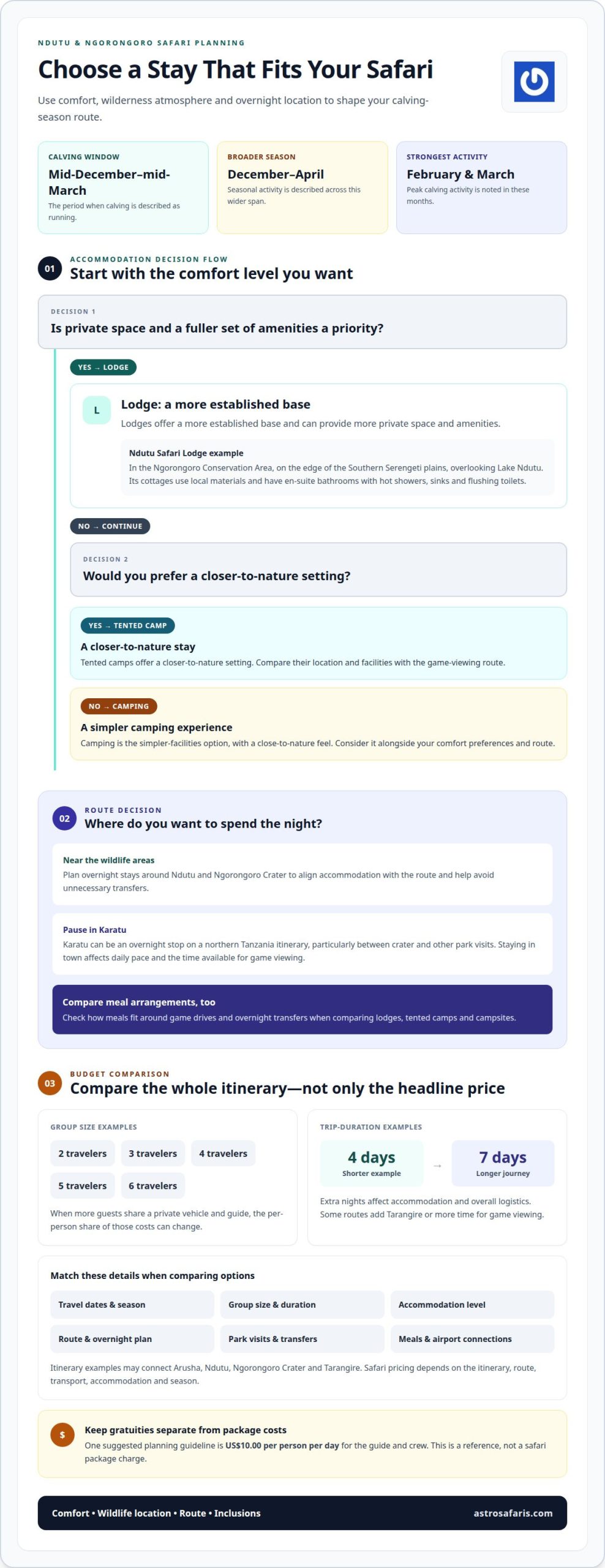
Ndutu Safari Lodge is in the Ngorongoro Conservation Area, on the edge of the Southern Serengeti plains, overlooking Lake Ndutu. Its cottages are built with local materials and have en-suite bathrooms with hot showers, sinks, and flushing toilets. Tented camps offer a closer-to-nature setting, while lodges provide a more established base. Compare location, bathroom facilities, and how each stay fits your game-viewing route.
Accommodation Tiers and Booking
Accommodation ranges from camping to tented camps and lodges. Match your choice to your priorities: simpler facilities and a close-to-nature feel, or more private space and amenities. For calving-season travel from December to March, settle your dates and comfort preferences early, then plan overnight stays around Ndutu and Ngorongoro Crater. This aligns accommodation with your route and helps avoid unnecessary transfers.
Karatu can be an overnight stop on a northern Tanzania itinerary, particularly when planning the sequence of crater and other park visits. Decide whether you want to stay near wildlife areas or pause in town between drives. This choice affects your daily pace and the time available for game viewing.
Meal arrangements are another practical point to compare. Review them alongside accommodation, especially when moving between lodges, tented camps, and campsites. A clear plan shows how meals fit around game drives and overnight transfers. Choose an arrangement that keeps the journey comfortable while leaving time to enjoy the landscapes.
Per-person safari prices by group size
Per-person safari costs reflect how the group shares transport and guiding, as well as the route length and accommodation. Compare itineraries by total days, overnight locations, and travel between Arusha, Ndutu, Ngorongoro Crater, and Tarangire, rather than by the headline figure alone. A shorter visit and a longer migration circuit suit different travel priorities.
Examples in the market include groups of two, three, four, five, or six travelers. When more guests share a private vehicle and guide, the per-person share of those costs can change. Accommodation also affects the budget: camping, a tented camp, and a luxury lodge offer different levels of comfort. Before comparing options from wildlife specialists like Ripple Safaris, review what the itinerary includes, such as park visits, meals, transfers, and airport connections.
Trip duration also affects the calculation. Ndutu-to-Ngorongoro itineraries range from four-day examples to seven-day journeys, while some routes add Tarangire or more time for game viewing. Extra nights affect accommodation and overall logistics. During calving season, the route and timing can influence where you stay, so compare the overnight plan as carefully as the number of days.
Safari pricing depends on your itinerary and is provided after a quote request. Key factors include group size, duration, accommodation, transport, route, and season. A luxury Tanzania safari may prioritize upgraded stays and a tailored route, while a simpler tier has different inclusions. For a fair comparison, match travel dates, group size, lodging level, and destination sequence.
Budget separately for gratuities. One suggested guideline is US$10.00 per person per day for the guide and crew. Treat this as a planning reference, not a safari package charge. Then compare the trip’s inclusions and daily pace, whether you’re arriving through Arusha or combining Ndutu with the crater. That detail reveals what each per-person quote actually covers.
Great Migration wildlife viewing
Migration viewing in the southern Serengeti brings together moving herds, open plains, and predator activity. When planning your days, consider the season, wildlife movements, and the contrast with the landscapes of the Ngorongoro Conservation Area.
Southern Serengeti Migration
The route through Ndutu draws hundreds of thousands of wildebeest, zebra, antelope, and predators. Seasonal movement brings wildlife across the southern Serengeti, where open terrain gives game drives room to follow herds. The Ngorongoro Conservation Area also hosts the Great Migration as it travels down from Kenya each year. Look at how your itinerary connects these areas, rather than treating each drive as an isolated excursion.
Migration Timing
Migration viewing depends on seasonal movement, so your travel dates influence which part of the cycle you may encounter. Ndutu’s calving period brings a striking concentration of young animals and predator activity. For a broader wildlife experience, consider how time in the Serengeti and Ngorongoro can balance herd-focused drives with distinct scenery. The northern safari circuit offers wildlife viewing year-round, while migration patterns shape the focus of each visit.
Ndutu offers wildlife encounters beyond the migrating herds. All six cat species are found in the area year-round, providing another focus for game drives outside the calving period. Ask your guide to interpret tracks, herd behaviour, and predator movement as the landscape changes. The enclosed setting of Ngorongoro Crater contrasts with the broad Serengeti plains, making the transition between regions part of the safari experience.
Build your route around the wildlife experiences you value most, then plan your migration safari with the right balance of Serengeti and Ngorongoro time.
Lake Ndutu is a shallow alkaline lake on the eastern border of Serengeti National Park.
Astro Safaris and Tours Ltd: Tarangire and Lake Manyara National Park
Astro Safaris and Tours Ltd can shape your wildlife priorities into a Tanzania itinerary with its Ndutu & Ngorongoro Luxury Tour. This tour pairs migration-season viewing in Ndutu with time around Ngorongoro Crater, with accommodation and route choices tailored to your preferred safari style.
For a broader northern circuit, consider Tarangire and Lake Manyara National Park or Tarangire, Lake Manyara and Ngorongoro Crater. If you’re focused on the Serengeti and crater landscapes, explore Serengeti and Ngorongoro. Choose the combination that fits your wildlife interests and preferred pace, then build the journey around those priorities.
Contact Astro Safaris and Tours Ltd to discuss your safari itinerary, or visit astrosafaris.com.
Shape the Safari Around Your Own Story
Start by deciding what you want from the journey: a focused wildlife expedition, a varied northern-circuit route, or a more spacious escape with time to absorb each landscape. A thoughtfully planned Ndutu and Ngorongoro safari can bring these priorities together in one itinerary, paced around your interests and preferred travel style.
Astro Safaris and Tours Ltd offers Tarangire and Lake Manyara National Park, Serengeti and Ngorongoro, and Tarangire, Lake Manyara and Ngorongoro Crater. These options let you consider how different landscapes can complement your time in Ndutu, rather than treating every destination as a separate decision. Picture the route you’d most like to remember, then take the next step toward making it yours.
Contact Astro Safaris and Tours Ltd to discuss the safari you have in mind and begin shaping a journey through Tanzania’s remarkable wilderness.
Frequently Asked Questions
What is the best time to visit Ndutu and Ngorongoro for wildlife viewing?
Travel during calving season, with February and March bringing peak wildebeest calving in Ndutu. The wider season runs from December to April, making these months a good fit for travelers planning around migrating herds and newborn calves. A game drive in Ngorongoro can complement the plains with a different landscape, making this period a strong choice for combining seasonal migration viewing with a crater visit.
What animals can you see in Ndutu and Ngorongoro, including during the wildebeest calving season?
During Ndutu’s calving season, wildebeest, zebra, and gazelle draw predators across the plains. All six cat species are also found in the area year-round, adding another focus to wildlife viewing beyond the migration. In Ngorongoro Crater, visitors may see a wide variety of animals in a compact landscape. Sightings vary with animal movement and the areas visited during game drives.
How many days should a Ndutu and Ngorongoro safari take?
A five-day, four-night itinerary is one option for combining Ndutu and Ngorongoro. It allows time to travel between areas and take game drives in both settings. If migration viewing is your priority, consider how much time you want to spend in Ndutu rather than simply adding destinations. A longer itinerary can provide a gentler pace and more time for wildlife observation.
How do you travel between Ndutu and Ngorongoro, and what are the road conditions?
Travel between Ndutu and Ngorongoro Crater by road; the route is approximately 86 kilometers and takes about 2-3 hours. Treat that as a transfer estimate, not a promise of arrival time, since stops and the day’s route affect the pace. Ask your itinerary to show the transfer alongside planned game drives, so you can see how travel fits into each day.