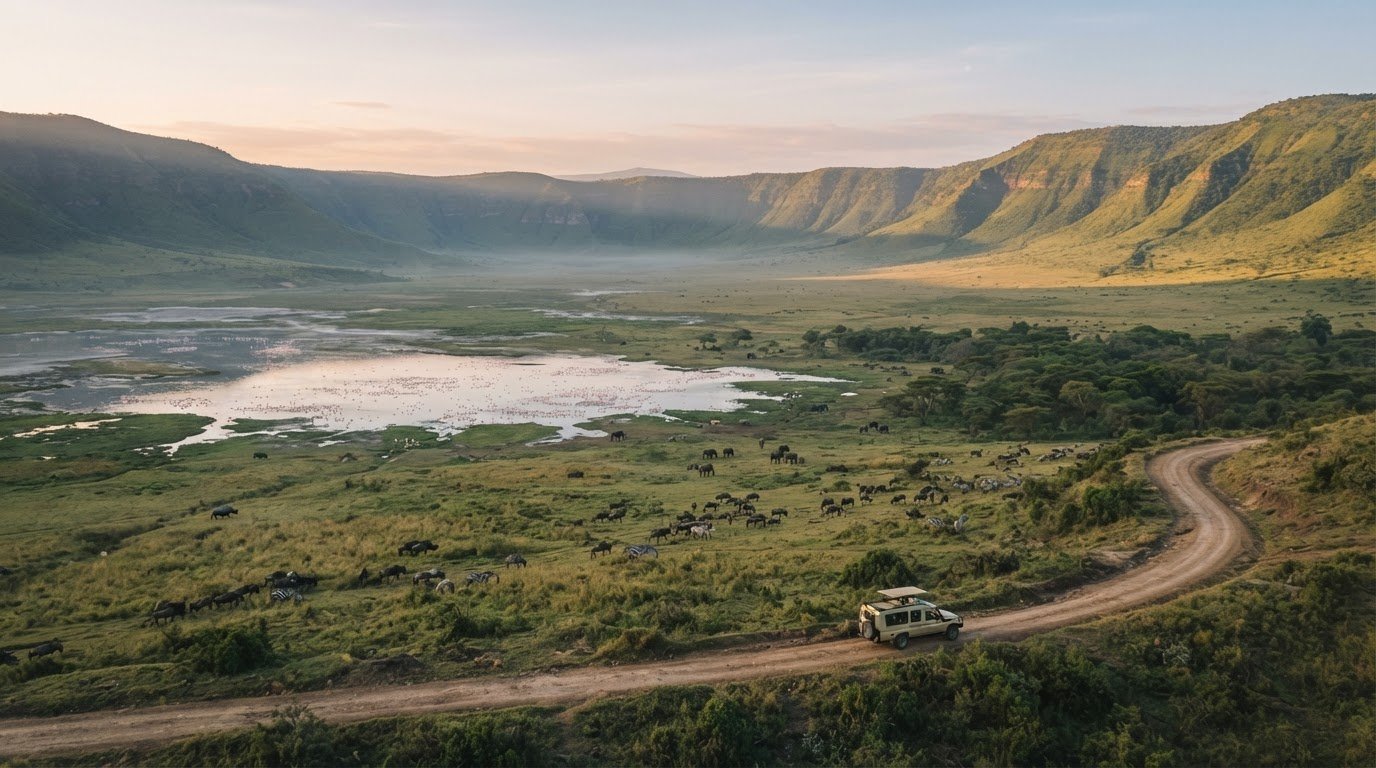
Ngorongoro Crater Safari Planning: Timing, Wildlife and Access
The road from Arusha is part of the safari, not merely the way there. Ngorongoro Crater safari planning means allowing for a drive of about 190 kilometers, usually 3.5-4.5 hours, before the descent into the caldera. The journey is worth considering if you want a remarkable landscape and the chance to seek abundant wildlife in one concentrated area.
Timing shapes your Ngorongoro Crater safari planning: the dry season, green-season scenery, birdlife, and flamingoes each offer a different experience. Because the drive takes several hours, choosing a day trip or an overnight stay can also affect how relaxed your visit feels.
This guide covers when to go, which animals to look for, and what to consider when choosing between a day visit and an overnight stay. It also explains how the journey from Arusha fits into a wider Tanzania safari itinerary, so you can plan both the crater visit and the route there.
Key Takeaways
- Match your visit to the experience you want, from dry-season game viewing to greener scenery and seasonal birdlife.
- Learn which animals make the crater a memorable wildlife destination, and what to keep in mind when looking for the Big Five.
- Choose between a day trip and a nearby stay by weighing your pace, seasonal conditions, and the value of an earlier start.
- Plan the journey from Arusha with realistic drive time in mind, then shape the route around the rest of your Tanzania safari.
WHEN IS THE BEST TIME OF YEAR TO VISIT THE NGORONGORO CRATER?
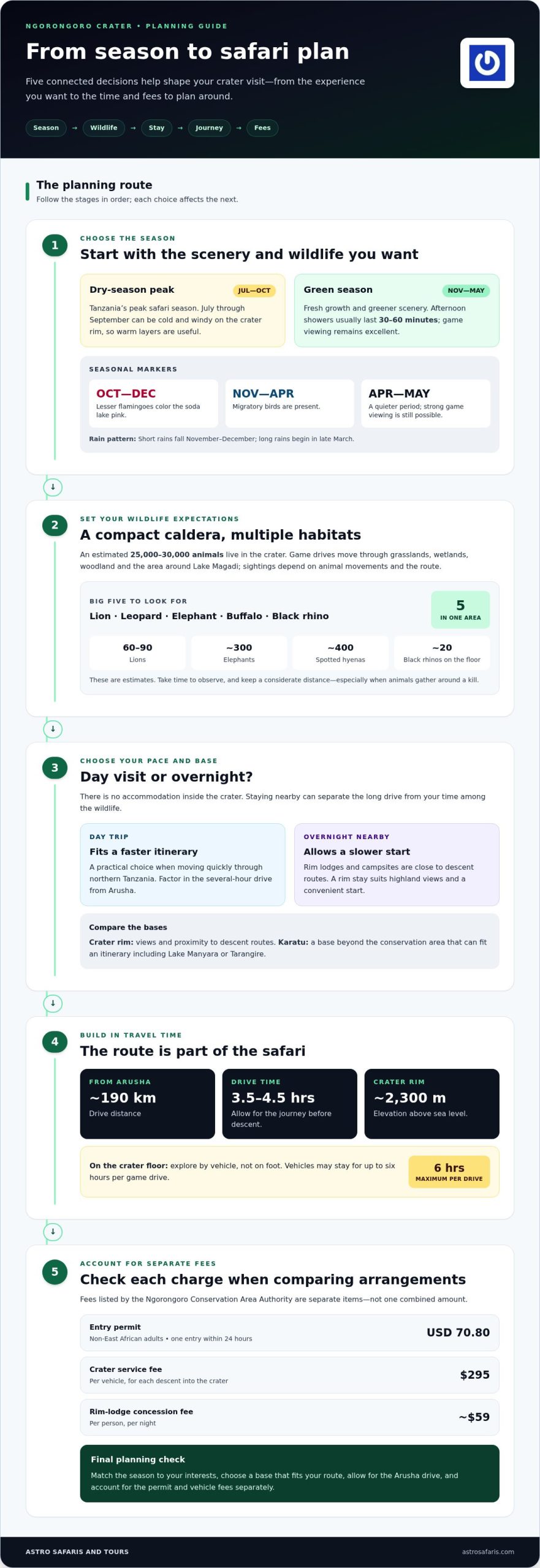
Choose your season based on the scenery and wildlife you most want to experience. Tanzania’s peak safari season runs from July to October, while Ngorongoro’s green season lasts from November through May. Lesser flamingoes color the crater’s soda lake pink from October to December, and migratory birds are present from November to April. Short rains fall from November to December; long rains begin in late March.
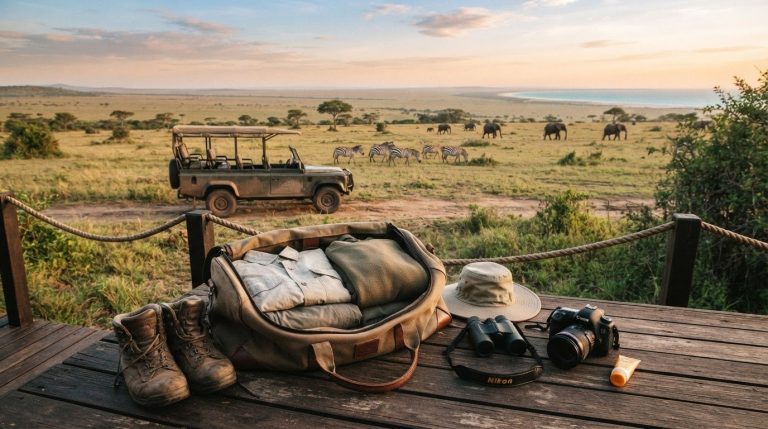
July through September can bring cold, windy conditions on the crater rim, so pack warm layers. Bring comfortable walking shoes for lodges and camps, along with sun protection for time outdoors. You explore the crater floor by vehicle, not on foot.
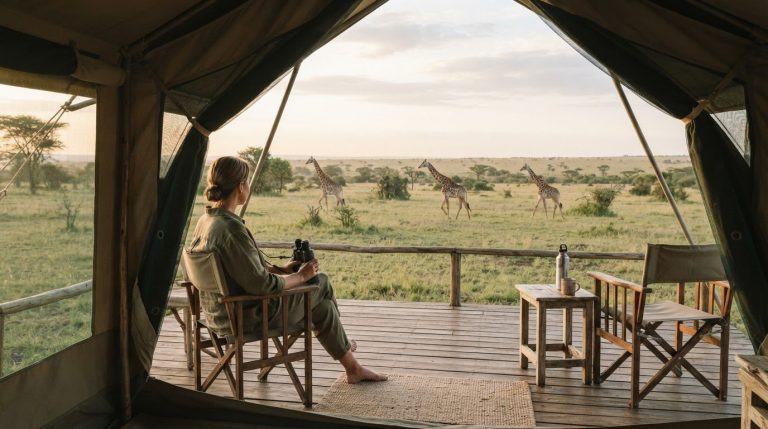
There’s no accommodation inside the crater. Rim lodges and campsites put you close to the descent routes, while Karatu is another base beyond the conservation area. A rim stay suits travelers seeking highland views and a convenient start; Karatu can work well if your itinerary also includes Lake Manyara or Tarangire. Compare location, comfort, and how each option fits your route.
According to Ngorongoro Conservation Area Authority, the entry permit for non-East African adults costs USD 70.80 and is valid for one entry within 24 hours. The same authority sets the crater service fee at $295 per vehicle for each descent into the crater, and the concession fee for a rim-lodge stay at approximately $59 per person per night. Include these separate charges when comparing accommodation and safari arrangements.
According to Ngorongoro Conservation Area Authority, crater descent gates close at 16:00 hours and close at 18:00 hours. This timing makes your base and daily route important, especially when travelling from outside the rim area.
Unlike a Serengeti safari, Ngorongoro concentrates wildlife viewing within a dramatic caldera. Tarangire offers a different setting, so combining destinations can add varied landscapes and wildlife to one Tanzania itinerary.
Crater wildlife and Big Five viewing
The crater’s grasslands, wetlands, and woodland draw wildlife into a compact setting in northern Tanzania. Knowing which animals live here helps you set realistic expectations for a game drive.
Wildlife Viewing Expectations
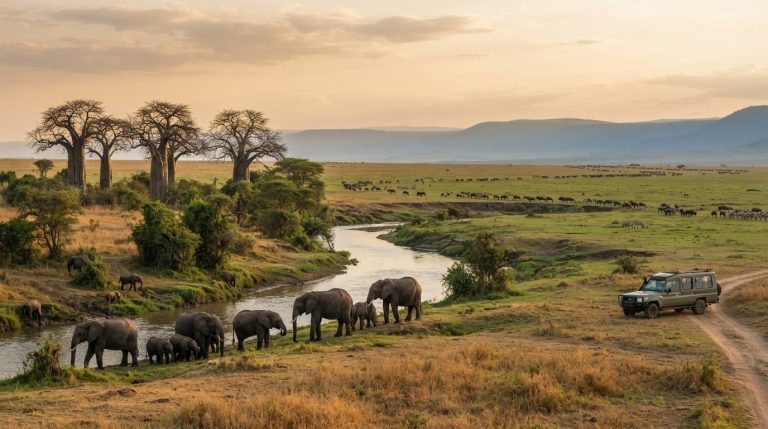
Wildlife viewing means scanning several habitats for resident animals, rather than following one migrating herd. An estimated 25,000 to 30,000 animals live in the crater, where open plains, marshes, and Lake Magadi create different places to look. Watch the grasslands for wildebeest, then scan wetland edges and woodland for other species. Each stretch of the drive offers a distinct scene.
The crater’s wildlife is part of the wider Ngorongoro Conservation Area, a UNESCO World Heritage Site. Sightings depend on animal movements and the habitats your route passes through. Take time to observe behaviour, not just count species; a herd crossing the plains can be as memorable as a rare sighting.
Big Five Sightings
The Big Five are lion, leopard, elephant, buffalo, and black rhino. Ngorongoro is one of the few places in Africa where visitors have an excellent chance of looking for all five in one area. The crater appeals to travelers seeking varied wildlife viewing in a concentrated landscape, but sightings still depend on animal movements during your drive.
Estimates put the crater’s lion population at 60 to 90, with around 300 elephants and 400 spotted hyenas. About 20 black rhinos are counted on the crater floor. Look carefully across open ground and near water, where animals may be easier to spot; a guide can help distinguish shapes at a distance. Leopards and buffalo complete the Big Five list, while hyenas add another compelling predator encounter.
Respectful viewing matters. Keep the vehicle’s position considerate when animals gather, especially around a kill. For a broader northern Tanzania wildlife itinerary, Tarangire, Lake Manyara and Ngorongoro Crater brings together habitats beyond the caldera, including the plains and woodlands of other parks.
Should You Stay or Visit on a Day Trip?
A day trip suits travelers with limited time, while an overnight stay gives the crater more space in a northern Tanzania itinerary. Season, road time, and your interest in the Great Migration can help you decide which pace fits.
Seasonal Weather and Wildlife Viewing
Seasonal weather changes the landscape and the feel of a game drive, shaping what you see across the caldera. From November through May, green-season scenery brings fresh growth, and afternoon showers usually last 30-60 minutes. April and May are quieter, while game viewing remains excellent. In the drier months, open landscapes offer a different atmosphere for watching animals.
The crater rim can be cold and windy from July through September, so pack warm layers if you’re staying overnight. Choose a day trip if you’re moving quickly through northern Tanzania; stay nearby if you prefer a slower start and more time around the crater.
Visitor Crowds and Wildlife Conditions
Visitor numbers and wildlife conditions vary by season, affecting the pace of a game drive. The dry season, from July to October, is Tanzania’s peak safari period. April and May bring a quieter crater, though strong game viewing is still possible. An overnight stay can make the visit more measured by separating the long drive from your time among the wildlife.
The Great Migration’s calving season on the Ndutu plains usually falls between January and March, when thousands of wildebeest calves are born over a short period. Ndutu and the crater offer different experiences, so a Serengeti-focused trip may need more time in the wider region than a crater-only visit.
For health and safety planning, account for the crater rim’s elevation of about 2,300 meters above sea level and the 3.5-4.5-hour drive from Arusha. Walking isn’t permitted on the crater floor; observe wildlife from your vehicle and keep a respectful distance. Vehicles may stay on the floor for up to six hours per game drive and must leave by 6:00 PM, so a day visit needs a carefully paced route.
Getting to Ngorongoro from Arusha
The drive from Arusha to Ngorongoro covers about 190 kilometers and usually takes 3.5-4.5 hours. Good Ngorongoro Crater safari planning treats that drive as part of the day, not a quick transfer. Allow time for the approach, entrance formalities, and the descent, rather than building a tight schedule around arrival. The route’s length also makes an overnight stop useful for travelers wanting a less compressed visit.
The first 50 miles from Arusha are on a tar road. Beyond that stretch, the drive continues through changing highland scenery toward the Ngorongoro Conservation Area. Volcanic landscapes, forested slopes, and open country give the journey its own rhythm. Travel time can feel different depending on road conditions and stops, so leave flexibility in your itinerary.
Plan your departure around the crater’s early access. The Lemala and Seneto descent roads open at 6 a.m., making a night near the conservation area practical for an early game drive. If you travel from Arusha on the same day, factor the full road journey into your timing, then allow room for the descent and wildlife viewing. Ngorongoro Crater safari planning works best when the drive and crater visit are treated as one connected experience.
This route passes through a living conservation landscape, not an empty wilderness corridor. Around 40,000 Maasai pastoralists graze cattle alongside wildlife in the Ngorongoro Conservation Area. Their presence is part of the area’s character, alongside its volcanic scenery and protected habitats. Respectful travel means following your guide’s direction and treating communities and wildlife with care.
For Ngorongoro Crater safari planning that connects the drive with other destinations, consider how the crater fits into a wider northern Tanzania itinerary. Astro Safaris and Tours Ltd creates custom Tanzania safaris that bring destinations together. Treat the route, departure timing, and overnight stops as parts of one carefully planned adventure.
Astro Safaris and Tours: Tarangire and Lake Manyara National Park
Astro Safaris and Tours Ltd can shape your crater visit into a wider northern Tanzania safari. Focus your journey on Ngorongoro, or combine the crater with Tarangire and Lake Manyara to experience distinct landscapes and wildlife habitats along the way.
If the Great Migration’s calving season draws you to the Ndutu plains, the Ndutu & Ngorongoro Luxury Tour combines that seasonal experience with time in the crater. For travelers weighing destinations, pace, and overnight stays, these options are a practical starting point for building an itinerary around their priorities.
Contact Astro Safaris and Tours Ltd to plan a Tanzania safari itinerary around your priorities.
Shape Your Tanzania Safari Around the Moments That Matter
Thoughtful Ngorongoro Crater safari planning can shape more than a single game drive. Consider what you want from the journey: a focused wildlife encounter, a changing sequence of landscapes, or a broader route with time to take in each place. Let that preference guide your choice of destinations and pace.
Astro Safaris and Tours Ltd offers journeys connecting Serengeti and Ngorongoro, as well as Tarangire and Lake Manyara National Park. Its Tarangire, Lake Manyara and Ngorongoro Crater safari brings these varied settings together in one itinerary. Choose a combination that suits your interests, rather than treating your Tanzania travels as a collection of stops.
When you’re ready to turn your ideas into a route, contact Astro Safaris and Tours Ltd to discuss your safari plans. Your next great story in Tanzania can begin with a journey designed around what matters most to you.
Frequently Asked Questions
Quick Answer: Is a Ngorongoro Crater Safari Worth It?
Yes, it’s worthwhile for travelers seeking a striking volcanic landscape and concentrated wildlife viewing. The crater covers 264 km², creating a compact setting where grasslands, wetlands, and woodland meet. Its scale and variety make the experience distinct from a safari focused on following migrating herds across broad plains. It’s especially rewarding for travelers who value dramatic scenery alongside animal encounters.
WHERE SHOULD I STAY AROUND THE NGORONGORO CRATER?
Choose a rim lodge or campsite for a highland setting close to the crater, or stay in Karatu if your route includes other destinations. A rim base suits travelers who want dramatic views and a wilderness atmosphere; Karatu can be a practical choice for an itinerary linking several stops. There’s no accommodation on the crater floor, so plan to stay outside it.
How much does a Ngorongoro Crater safari cost in park fees?
According to the Ngorongoro Conservation Area Authority, the entry permit for non-East African adults costs USD 70.80 and allows one entry within 24 hours. The authority also sets the crater service fee at $295 per vehicle for each descent. A rim-lodge stay carries an approximately $59 per person per night concession fee, also according to the authority.
WHAT OTHER ACTIVITIES ARE AVAILABLE?
Beyond a crater-floor game drive, visitors can take guided walks along the rim or in surrounding areas such as Olmoti and Empakaai. Walking isn’t permitted on the crater floor. Birdwatching is another option: the Ngorongoro Conservation Area has around 550 recorded bird species, and migratory birds are present from November to April. These activities add a highland perspective to a wildlife-focused visit.
What Animals Live in the Ngorongoro Crater?
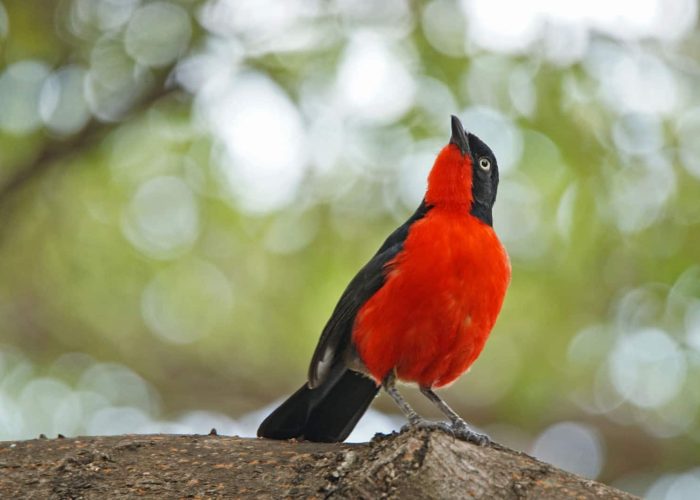
The crater is home to lions, elephants, buffalo, black rhinos, and leopards, known together as the Big Five. Wildebeest and spotted hyenas are also among the wildlife you may encounter. Lesser flamingoes can gather at the soda lake, while migratory birds add seasonal variety. This mix of mammals and birdlife makes the crater more than a Big Five checklist.
When is the best time to visit Ngorongoro Crater for wildlife viewing?
For a dry-season safari, consider July to October, Tanzania’s peak safari period. Choose October to December if lesser flamingoes at the soda lake are a highlight, or November to April for migratory birds. The green season runs from November through May, bringing a different landscape and atmosphere. The best timing depends on whether you prioritize dry conditions, birds, or greener scenery.