Serengeti safari planning: safety, itineraries, travel and costs
A Serengeti safari can be planned with safety in mind: follow your guide’s instructions, and at many lodges, don’t walk around unaccompanied after sunset. This Serengeti safari planning guide will help you prepare for the practical decisions that shape a rewarding trip, from timing and travel to the overall budget.
It’s natural to think first about wildlife and open plains, while also wondering how safe the journey will feel and how much time to allow. Thoughtful planning brings both into view: the season influences where the herds may be, while your itinerary and choice of road or air travel shape how you experience this vast landscape.
Here, you’ll find safety guidance, sample itineraries, ways to combine the Serengeti with nearby destinations, and an explanation of the factors that shape a safari budget. Use these details to picture a journey that suits you, whether you’re drawn to migration season or a slower passage through Tanzania’s northern parks.
Key Takeaways
- Match your travel dates to the migration’s likely location, then shape your route around the wildlife experience you most want.
- Allow enough time in the Serengeti to explore a region at an unhurried pace rather than treating it as a quick stop.
- Compare driving and flying by the time you want to spend on the road, the scenery you hope to see, and your luggage needs.
- Build a northern Tanzania itinerary by deciding how the Serengeti fits with Ngorongoro, Tarangire, or a Zanzibar stay.
- Compare safari budgets by travel style and what the accommodation and itinerary include, not by headline cost alone.
1. Are Serengeti Safaris Safe?
Safaris can be planned with safety in mind. Follow your guide’s instructions, stay inside the vehicle during game drives, and respect wildlife viewing distances. At many lodges, do not walk around unaccompanied after sunset. These habits matter around animals that move freely through the region, including elephants, lions, and leopards.
Season matters too. Certain southern plains are best visited from late December to early April for a chance to see the Great Migration. Wildebeest calving runs from December to March, with intense predator activity in February to March. January to March is the recommended window for calving-season viewing across open grassland areas.
Which regions and travel routes suit different seasons? Choose southern plains from late December to early April, western areas from late May to early July, or northern zones from July to October. From April through June, herds generally move through central and western routes; by November, they often shift south.
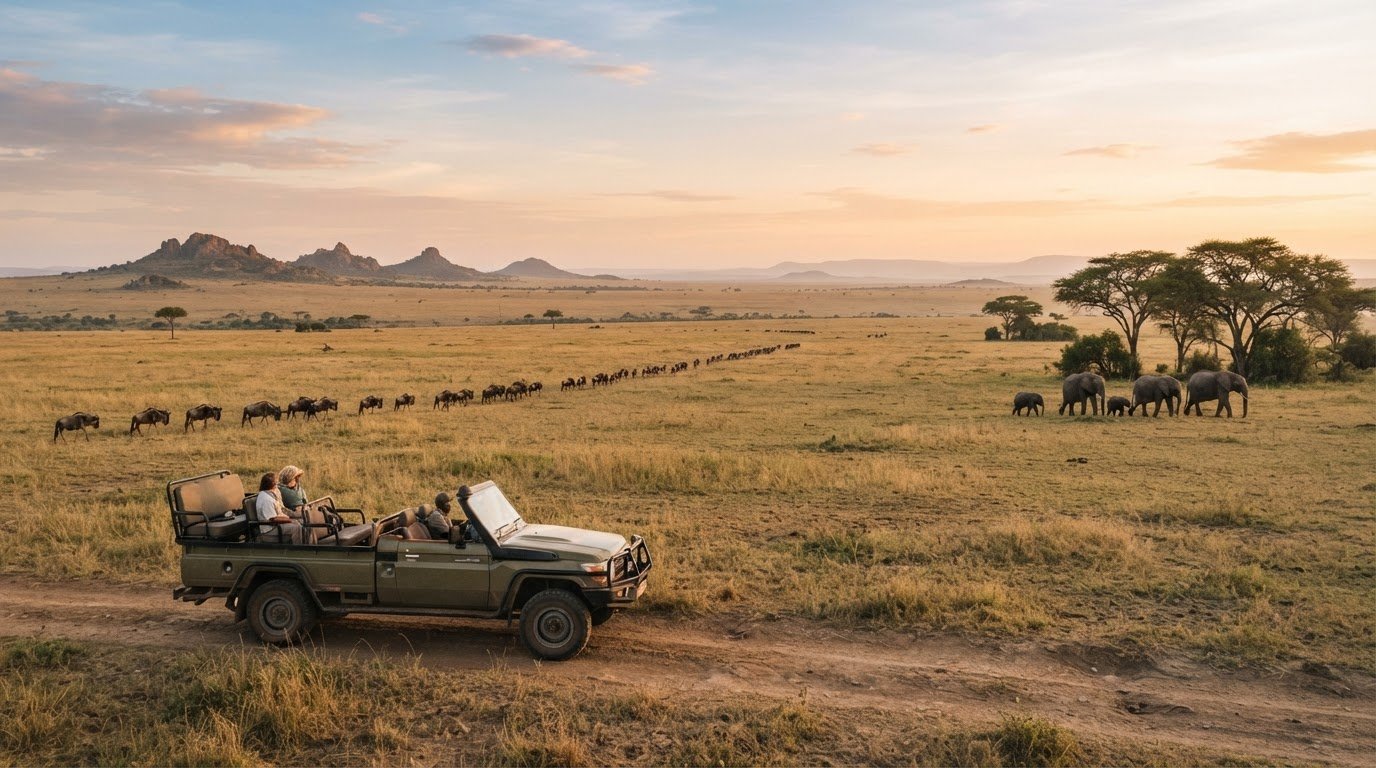
The Great Migration follows rainfall and fresh pasture across vast East African reserves. Herds generally move north around April, reach northern sectors from July through October, then begin their return south in November. Dramatic river crossings are associated with northern zones in July to August, while western river crossings are listed for May to June.
For Great Migration viewing in western corridors, late May to early July is a useful seasonal window. Herds move through these zones, where the rut takes place and animals cross local waterways. Rain in April and May can bring quieter tracks and rich color, while July to October is the peak season and dry-season game-viewing window. Wildlife sightings depend on where animals are moving, so plan around the area and season rather than expecting a crossing on a specific day.
What permits, visas, vaccinations, and travel insurance are needed for a major wildlife journey? Plan destination visa arrangements and park-entry permits as separate requirements, with visa rules depending on nationality and travel route. Yellow fever vaccination is generally required for travelers arriving from a country with transmission risk, and comprehensive travel insurance is recommended for long-haul journeys with internal flights.
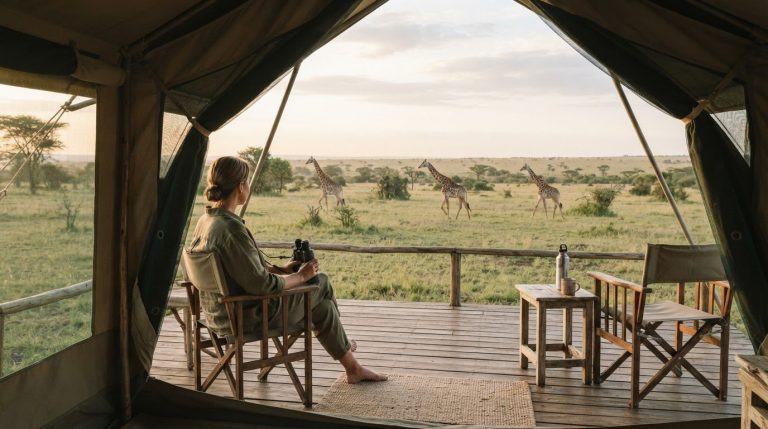
What accommodation options are available inside and near major conservation areas? Choose among lodges and safari camps in the park or nearby, based on your route and seasonal wildlife focus. A southern stay suits calving-season plans, while a northern base places you closer to key rivers during crossing season.
2. Sample safari itineraries
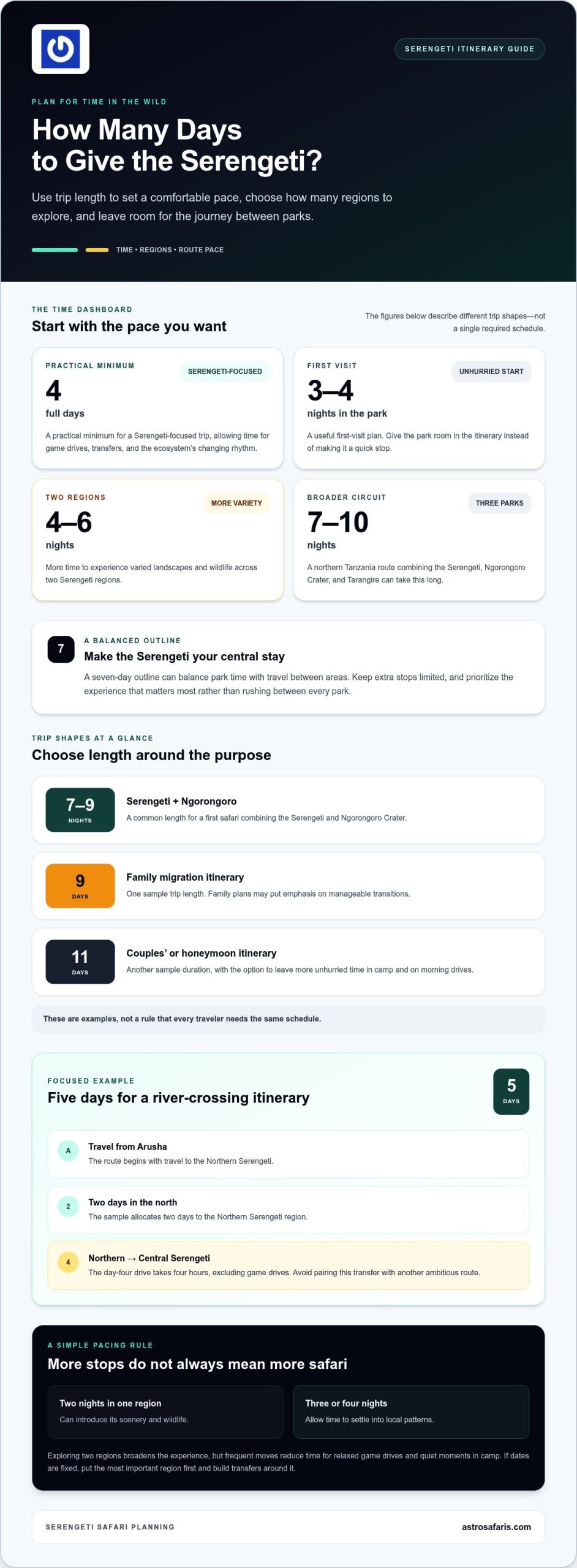
Allow at least four full days for a Serengeti safari. A well-paced itinerary leaves time for game drives, transfers, and the ecosystem’s changing rhythm, instead of making every morning a departure. For a first visit, plan three to four nights in the park. Four to six nights across two regions can offer more time to experience varied landscapes and wildlife. A Serengeti safari planning guide is most useful when it helps match those nights to your priorities.
How many days should a Serengeti safari last, and what itinerary works best? Four full days is a practical minimum for a Serengeti-focused trip, while a seven-day outline can balance park time with travel between areas. Choose your route according to the season, your wildlife interests, and whether Ngorongoro Crater belongs in the plan. Make room for the experience you value most rather than adding stops simply to cover more ground.
For a seven-day outline, make the Serengeti your central stay and limit extra stops. A northern Tanzania safari combining Serengeti, Ngorongoro Crater safari planning, and Tarangire can take seven to ten nights, so a shorter trip calls for prioritizing rather than rushing between every park. A measured pace leaves space to watch wildlife and absorb the scale of Africa’s open landscape. A Serengeti safari planning guide can help organize these choices around one clear main destination.
A five-day river-crossing itinerary offers a focused example. It begins with travel from Arusha to the Northern Serengeti and allocates two days to the region. On day four, the drive from Northern to Central Serengeti takes four hours, excluding game drives. Since this transfer takes a meaningful part of the day, avoid scheduling another ambitious route alongside it.
Other sample trip lengths show how purpose shapes the pace. A family migration itinerary lasts nine days, while a couples’ or honeymoon itinerary lasts eleven days. These are examples, not a rule that every traveler needs the same schedule. Family plans may prioritize manageable transitions; couples may prefer more unhurried time in camp and on morning drives.
Two nights in one Serengeti region can introduce its scenery and wildlife, while three or four nights allow time to settle into local patterns. If your dates are fixed, put the most important region first, then build transfers around it. Exploring two regions broadens the experience, but frequent moves reduce time for relaxed game drives and quiet moments in camp.
For a journey shaped around your priorities, explore a tailored Tanzania safari itinerary that brings the Serengeti into focus alongside the travel pace and destinations you prefer.
Combining the Serengeti with Ngorongoro, Tarangire, or Zanzibar
A northern Tanzania journey can pair the Serengeti with Ngorongoro Crater or Tarangire, then continue to Zanzibar. A first safari combining the Serengeti and Ngorongoro commonly lasts seven to nine nights. If Tarangire is also on the route, allow seven to ten nights for the northern circuit. These combinations balance open plains, crater scenery, and varied wildlife habitats without treating every destination as a brief stop.
Ngorongoro works naturally alongside the Serengeti because the crater sits on a connected northern Tanzania route. The drive from Ngorongoro Crater to Serengeti National Park takes about three hours. Choose the order around your arrival and wildlife priorities: begin in the Serengeti for migration viewing, or visit the crater before continuing west. An afternoon transfer can affect how much time remains for game viewing that day.
Tarangire adds a distinct landscape to a Serengeti itinerary, while Zanzibar shifts the journey from inland wildlife to an island stay. One listed Serengeti and Zanzibar itinerary includes a two-hour flight from central Serengeti to Zanzibar. This option shortens the overland transition and links a safari among the southern or western plains with time on the coast.
What is the difference between a private safari, group safari, and self-drive safari in the Serengeti? A private safari gives your party its own itinerary and vehicle, while a group safari shares transport and planned activities with other travelers. On a self-drive trip, you manage the vehicle, route, and timing yourself, making navigation and daily planning part of the experience.
Drive-in travel suits visitors who want to connect parks by road and watch the scenery change between areas. Transfers to Serengeti lodges generally use a 4×4 safari vehicle. Fly-in travel can shorten long road legs: the route from Arusha to Northern Serengeti involves a ten-hour drive or a one-hour flight, excluding game drives. A combined plan can use a vehicle between nearby parks, then fly onward to Zanzibar.
Build the route around your priority, then add destinations that fit its direction. For migration, put the Serengeti region that matches your travel season at the heart of the itinerary; add Ngorongoro for a crater experience or Tarangire for another northern park. If island time matters most, reserve the Zanzibar connection and choose road or air travel accordingly. This sequence gives each transition a purpose and leaves room to enjoy the landscape rather than simply cross it.
4. Flights versus driving between safari areas
Choose road or air travel by weighing time against the journey itself. Light aircraft from Arusha to a Serengeti bush airstrip take roughly one to two hours. Driving takes longer but keeps the transition on the ground, with changing landscapes along the route. A flight still requires a ground transfer between the airstrip and your camp, so include that connection when planning the day.
The season and your wildlife priorities can shape the best route. A four-day calving itinerary to southern Serengeti, including Ndutu, begins with a five-hour drive or a one-hour flight from Arusha, excluding game drives. A four-day big-cat itinerary to central Serengeti, around Seronera, begins with a six-hour drive or a one-hour flight. Each option changes how much of your first day remains for the park.
Consider the return journey, too. Flying out of the Serengeti after a safari can save at least eight hours of driving to Arusha. That time may matter if your itinerary includes another national park or a connecting journey. By road, the transfer becomes part of the safari; by air, you trade the extended drive for a quicker connection between destinations.
Airstrips provide access to remote safari areas, but they are not the camp itself. After landing, a ground transfer completes the journey to your accommodation. Before choosing a flight, compare the airstrip’s location with your planned camp and game-drive area. This matters if you’re heading toward wildlife associated with a particular season or balancing Serengeti time with the Ngorongoro Crater and its different scenery.
Pack carefully for small aircraft. Chartered planes serving Serengeti safaris allow 12 to 15 kg of carry-on luggage, and light aircraft enforce a 15-kilogram luggage limit. Soft-sided luggage is usually required or strongly preferred. Keep essentials and items needed during the journey accessible, while avoiding bulky cases that make it harder to stay within the aircraft’s limit.
Use this sequence to decide: first, identify the Serengeti region that matches your dates; next, compare its road and flight access from Arusha; then account for transfers to your camp and the luggage allowance. If elephants, predators, or time on the plains matter most, prioritize the route that gives you the right location and useful game-drive time. A mixed itinerary can use road travel between nearby areas and a flight for a longer leg.
5. Serengeti safari budget ranges
A useful Tanzania safari budget starts with the experience you want, not a single headline figure. Compare accommodation, transport, trip length, and the Serengeti region you plan to visit. A stay focused on the Great Migration may call for a different route and season than a trip centered on central Serengeti wildlife viewing. Each choice shapes the itinerary and its costs.
Season is one of the main planning variables. July to October is the Serengeti’s peak season, while November to December and April to May are generally the low or green season. Travel dates influence which areas suit your wildlife priorities and which accommodation locations fit the route. Decide whether seasonal movement is essential before comparing safari plans.
Transport is another meaningful cost factor. A drive-in safari uses a 4×4 vehicle and makes the journey between areas part of the experience. Flying can shorten long transfers, such as the journey from Arusha to Northern Serengeti, but adds a flight and a ground transfer from the airstrip. Compare the full route, not just one leg, when weighing those options.
Accommodation and inclusions also shape the budget. Serengeti stays range from camps to lodges, with different comfort levels and services. Many lodges include meals, coffee, tea, and often local-brand drinks in the price. Compare what each itinerary includes, such as meals and transfers, to understand where extra spending may arise during the trip.
Trip length affects the total cost and daily rhythm. A northern Tanzania itinerary combining Serengeti, Ngorongoro Crater, and Tarangire can take seven to ten nights. More nights mean additional accommodation and travel days, but also allow a slower pace across several destinations. A shorter itinerary can focus on one priority, such as a particular migration region, instead of adding every park.
Use this checklist to compare safari budgets: identify your travel season, choose the Serengeti region, decide between road travel and flying, then compare accommodation and included services. Your safari price depends on the route, season, accommodation, transport, and trip length, and is given after a quote request. Those factors show why two itineraries through the same national park can have very different budgets.
Ready to shape your priorities into a practical route? Request a tailored safari quote for a journey built around your preferred season, destinations, and travel style.
Astro Safaris and Tours: Tarangire and Lake Manyara National Park
Astro Safaris and Tours Ltd can shape a Tanzania itinerary around the destinations and travel style you’ve chosen. To connect the Serengeti with a crater visit, consider the Serengeti and Ngorongoro route; for a broader northern parks journey, Tarangire, Lake Manyara and Ngorongoro Crater brings those stops together. Travelers drawn to southern Serengeti wildlife can choose the Ndutu & Ngorongoro Luxury Tour. These options turn decisions about season, park combinations, and pace into a coherent safari plan. For a journey centered on Tarangire and Lake Manyara, explore that national park experience as another way to shape your route. Visit astrosafaris.com to explore your Tanzania safari options.
Let the landscape shape your next step
Your safari can begin with a simple choice: decide what you most want the journey to feel like. Perhaps you imagine following wildlife across open country, pausing for quiet moments in camp, or continuing onward into another landscape. A clear priority makes it easier to shape a personal route rather than crowding the itinerary with stops.
Use this Serengeti safari planning guide as a starting point, then bring your preferred pace, travel season, and destinations together in one plan. Astro Safaris and Tours Ltd offers journeys to Tarangire and Lake Manyara National Park, Serengeti and Ngorongoro, and Tarangire, Lake Manyara and Ngorongoro Crater. Each combination can offer a different view of Tanzania’s wild places.
When you’re ready to turn your ideas into a considered itinerary, contact Astro Safaris and Tours Ltd. Let the next chapter begin with the landscapes that call to you.
Frequently Asked Questions
Are Serengeti Safaris Safe?
Yes, visitors can reduce common safari risks by following their guide’s directions and keeping a respectful distance from wildlife. Don’t feed animals, leave the vehicle during a game drive, or approach wildlife for a closer photograph. At camp, follow staff instructions about moving around after dark. Staying alert during drives and keeping children close to adults helps everyone enjoy the experience responsibly.
How Long to Spend in the Serengeti?
Plan at least four full days for the Serengeti, with more time if you want to explore separate regions. For example, a first trip might reserve several nights for one area before transferring to another, rather than changing camps daily. Consider how much time you want for morning and afternoon drives, as well as travel between camps. This balance helps prevent transfers from taking over the safari.
Location: Where is the Serengeti?
Serengeti National Park is in northern Tanzania, while the wider Serengeti ecosystem extends across the border into Kenya’s Masai Mara. The park is a natural part of a northern Tanzania safari and is often combined with Ngorongoro. If your trip also includes Kenya, remember that crossing between countries changes the route and travel arrangements. The park and the larger ecosystem are related but not identical geographic areas.
What Does it Cost?
The cost depends on your travel dates, route, accommodation, transport, and length of stay. Flying between safari areas, choosing a particular camp, or adding destinations can all change the total. Compare itineraries by looking at what’s included, such as meals, park access, transfers, and game drives, rather than comparing headline amounts alone. For a personal itinerary, the price depends on its details and is provided after a quote request.
What is the Best Time to Visit Serengeti?
The best time depends on the experience you want. For dry-season wildlife viewing, late June to October is a recommended window. April and May can bring rain, quieter roads, and vivid scenery, while the short rains in November and December coincide with herds moving south. Choose dates based on your preferred landscapes and wildlife focus, then plan park regions around seasonal movement.
Can I see the Great Migration all year round?
The migration moves through the Serengeti ecosystem throughout the year, but the herds aren’t in the same region all the time. Their movement follows pasture and water, shifting between southern, central, western, and northern areas before moving toward Kenya’s Masai Mara. To plan around the migration, choose your dates first, then focus your route on the region associated with that season. A crossing or specific sighting can’t be scheduled like a fixed event.
Drive-in, fly-in or combo safari?
Choose a drive-in safari if you want road travel to connect the areas on your itinerary; choose a fly-in option to shorten a long transfer. A combination can use road travel between nearby parks and a flight for a longer leg. Compare the time saved with the added airstrip transfer, and pack within light-aircraft limits. Small charter flights commonly require soft-sided luggage, which is easier to handle in compact aircraft.
When is the best time to visit the Serengeti for wildlife viewing and the Great Migration?
For general dry-season game viewing, late June to October is a strong choice; for southern Serengeti calving, January to March is the key window. These periods offer different wildlife experiences, so choose based on whether open, dry-season viewing or newborn wildebeest and predator activity matters most. The best match also depends on the herd’s seasonal location, so plan your route around the region you want to explore.