Tanzania Safari Packages: Costs, Parks and Stay Options
The best-value safari isn’t always the shortest or the one with the lowest starting price. Tanzania safari packages are priced according to trip length, parks, accommodation, season and whether you travel privately or in a group. The final price depends on your itinerary and is provided after you request a quote.
It’s natural to compare costs first, but your choice of parks shapes the experience just as much. In the Serengeti, the Great Migration moves through different regions over the year, while Tarangire and Ngorongoro offer their own distinctive landscapes and wildlife encounters.
This guide explains the main factors that affect safari costs and how to compare options by migration timing, group size, accommodation and parks. You’ll see how each choice shapes the journey, from shared game drives and lodge stays to private travel and tented camps, and how to start building an itinerary around the wilderness you most want to experience.
Key Takeaways
- Compare itineraries by trip length, park selection, accommodation and travel style to understand what shapes the overall cost.
- Plan around the Great Migration’s seasonal movement: the Southern Serengeti is a focus from December to March, while the Northern Serengeti is a focus from June to October.
- Choose between shared and private game drives based on the group experience you want; one shared migration tour allows up to six people per vehicle.
- Weigh lodge, tented camp and camping stays against your preferred balance of comfort and budget; camping safaris are generally cheaper than lodge safaris.
- Match parks to the wildlife and landscapes that matter most to you, from Serengeti and Ngorongoro to Tarangire and Lake Manyara.
How much does a Tanzania safari cost?
Cost depends on itinerary length, parks, season, accommodation and whether game drives are shared or private. Compare these details first, then check exactly what each tour includes.
Sample Itineraries and Starting Prices
Sample routes show how time is divided between parks, which helps you compare value. For example, a seven-day mid-range itinerary with three nights in the Serengeti gives wildlife viewing a substantial share of the journey. A shorter route through Tarangire and Ngorongoro Crater can focus on varied landscapes and opportunities to see elephants. Prices depend on the itinerary and are provided after you request a quote.
Package Options and Price Ranges
Options range from shared group departures to private journeys, with lodges, tented camps and camping shaping the overall cost. A longer Northern Circuit route can include more parks and driving days than a focused visit to Tarangire. Compare the number of nights, named parks, accommodation style and game-drive arrangement, rather than trip length alone.
Which Tanzania safari packages include the Serengeti and Ngorongoro Crater? Choose an itinerary that names both destinations, then check how many nights it allocates to each. Combining the Serengeti and Ngorongoro links open plains with the crater’s enclosed wildlife landscape.
Daily Budgets and Seasonal Land Costs
Daily costs reflect the ground arrangements: park itinerary, accommodation, meals, transport and guiding. The number of nights in each park also matters, since more stops change the lodging and driving pattern. Tanzania’s rainy season, from March through May, is described as the most budget-friendly time to visit. Season and route together shape the cost of arrangements on the ground.
Tour Prices and Included Services
Compare inclusions line by line: accommodation, meals, park visits, ground transport and guided game drives. This shows what the tour price covers and where routes differ. A Serengeti stay combined with Ngorongoro Crater, for example, requires different ground arrangements from a Tarangire-focused trip. Review each itinerary’s inclusions before judging its overall value.
Can Tanzania safari packages be combined with Zanzibar beach stays or Mount Kilimanjaro climbs? Yes. A Serengeti-to-Zanzibar itinerary can pair wildlife viewing with time on the coast, while combining a safari with a Kilimanjaro climb brings together two distinct travel experiences.
What visas, vaccinations and travel documents are required for a Tanzania safari? U.S. citizens need a visa to enter Tanzania. Plan your travel documents and vaccination guidance according to your route and current entry requirements.
What should travelers pack, and what luggage limits apply? Pack lightweight layers for cool mornings and warmer afternoons, along with comfortable walking shoes. Luggage limits depend on your transport and accommodation arrangements, so choose bags suited to your planned route.
Serengeti and Great Migration safaris
The Great Migration is a moving wildlife spectacle, so timing and route matter. Plan travel in the Serengeti around the season and the region you most want to explore.
Great Migration Viewing
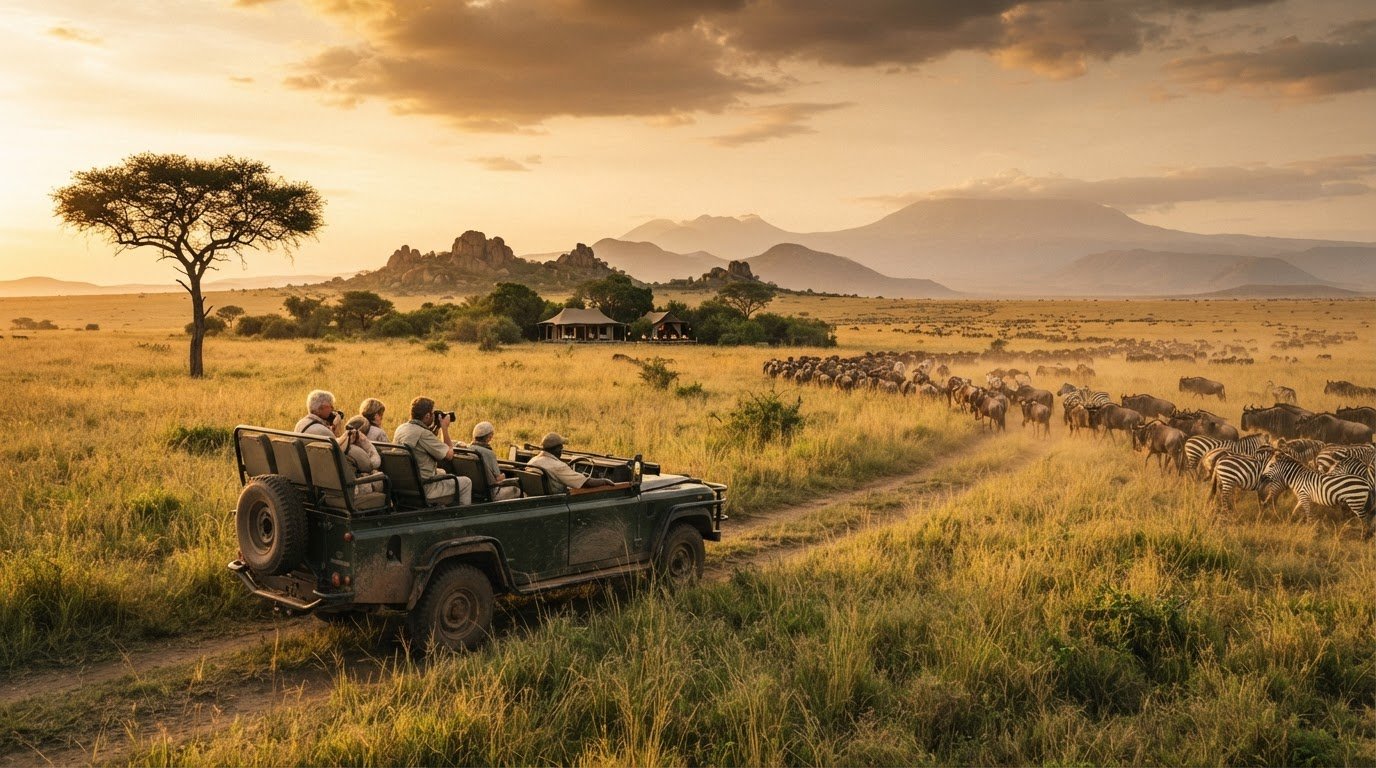
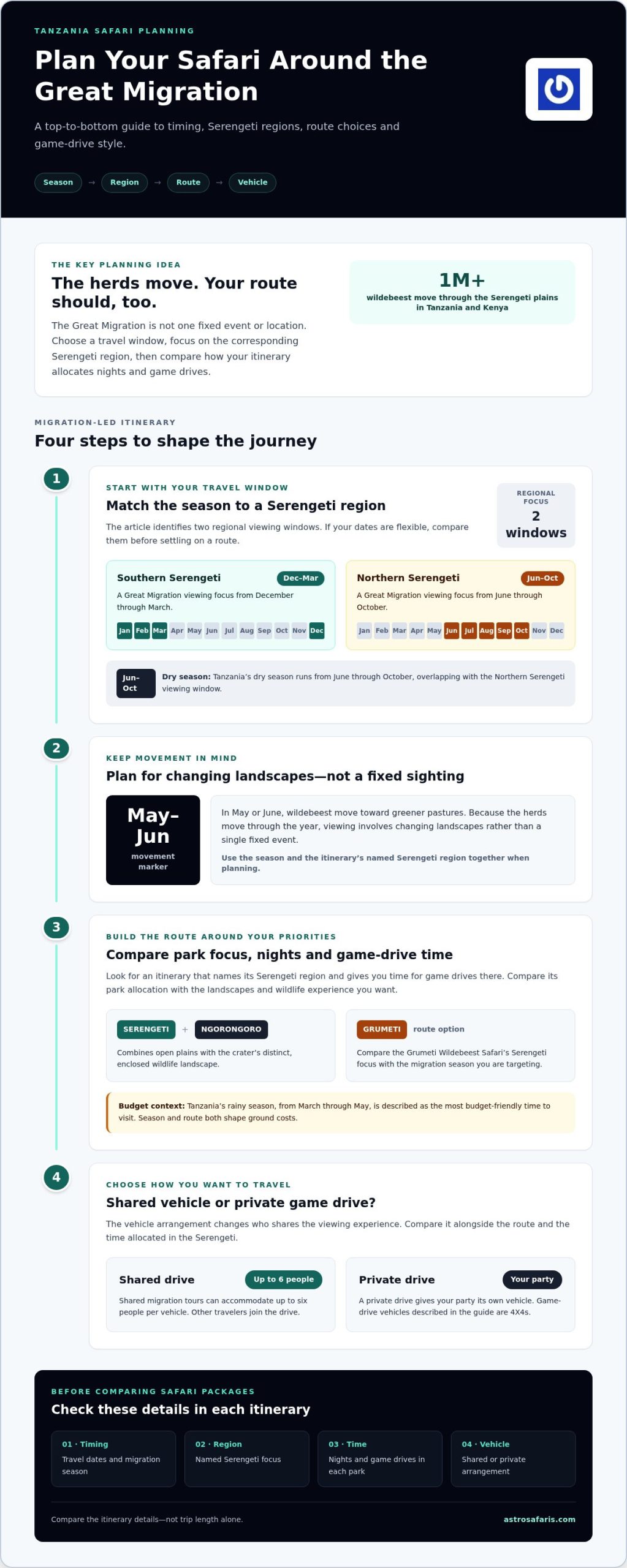
More than a million wildebeest move through the Serengeti plains in Tanzania and Kenya as part of the Great Migration. Because the herds move, viewing involves changing landscapes rather than a single fixed event. Choose an itinerary that identifies its Serengeti region and allows time for game drives there. Shared migration tours can accommodate up to six people per vehicle.
Vehicles and groups shape the experience, too. A shared drive brings other travelers into the viewing experience, while a private drive gives your party its own vehicle. Tanzania safari vehicles described for game drives are 4X4s, suited to travel across varied ground. Compare the vehicle arrangement and time in the Serengeti, not just the trip’s headline length.
Think about the wildlife experience you value most. The migration draws attention to moving herds, but the Serengeti also offers wildlife viewing across open plains. A route combining the Serengeti and Ngorongoro can pair migration-focused viewing with the crater’s distinct landscape, instead of concentrating every day in one area.
Migration Viewing Seasons
Season helps determine which Serengeti region to prioritize. December through March is identified as a Great Migration season in the Southern Serengeti, while June through October is a viewing season in the Northern Serengeti. If your travel dates are flexible, compare these regional windows before choosing a route.
In May or June, wildebeest move toward greener pastures. Tanzania’s dry season runs from June through October, overlapping with the Northern Serengeti viewing season. Use these calendar markers to decide which region fits your travel period, then consider how the itinerary allocates nights and game drives. Since the migration moves, the itinerary’s regional focus is central to planning.
For a migration-led itinerary, consider the Grumeti Wildebeest Safari as one route option. Compare its Serengeti focus with the migration season you’re targeting, and consider whether adding Ngorongoro better suits the landscapes you want to experience. This keeps travel dates, park choices and viewing priorities aligned.
Small-group departures and private game drives
Decide whether to share a vehicle with other travelers or keep game drives private to your party. Group size affects the feel of each drive, while the route and time at each stop shape your experience in places such as Ngorongoro.
Small-Group and Shared Safaris
Shared departures suit travelers who want to experience a safari alongside other guests. A shared seven-day wildebeest migration tour allows a maximum of six people per vehicle, while a shared four-day mid-range lodge tour allows up to seven. Compare the group limit, route and time in each park, not just the words “small-group” in an itinerary.
Group size matters during a memorable wildlife encounter. With several guests aboard, everyone shares the vehicle and the decisions made during a game drive. Check the permitted group size and whether the itinerary focuses on destinations such as the Serengeti or Ngorongoro. The right fit depends on how you want to balance company, cost and flexibility.
Private Guides and Game Drives
A private game drive centers the outing on your travel party rather than a shared group. Ask how the itinerary handles the guide, vehicle and daily schedule, then compare those details with your priorities. Tanzania safari vehicles described for these trips are 4X4 vehicles, built for travel across varied ground between wildlife-viewing areas.
Private travel can suit families, couples or friends who want to shape each day around their interests. A party focused on Ngorongoro, for example, may prefer a schedule centered on crater exploration, while travelers prioritizing migration may want more time in the Serengeti. The vehicle arrangement and route determine how the trip unfolds; the word “private” alone doesn’t explain either detail.
Tailor-Made Private Safaris
A tailor-made private safari lets you choose the places and pace that fit your trip. Start by naming priority parks, such as Tarangire and Ngorongoro, then decide how much time to spend in each. This approach can bring wildlife, scenery and rest together in one itinerary for travelers with different interests.
Compare itineraries in practical terms before choosing: which parks they visit, how nights are distributed, and whether game drives are shared or private. A route connecting several places may involve more time on the move than a stay focused on one area. Keep essential stops at the center, then weigh optional additions against the time available.
Use these criteria to compare safari options: departure group size, vehicle arrangement, guide setup and park schedule. A clear comparison makes it easier to choose the experience you want, whether you prefer sharing the journey or traveling privately through Tanzania’s wildlife landscapes.
Lodge, tented camp, and camping accommodation
Your accommodation shapes how each safari day begins and ends. Compare the setting, comfort and meal arrangements alongside the parks on your route, whether you’re staying near the Serengeti plains or traveling through Ngorongoro.
Lodges offer a permanent base between game drives, while tented camps bring canvas accommodation into a wilderness setting. Camping safaris are generally cheaper than lodge safaris, making them an option for travelers weighing comfort against budget. The right fit depends on the kind of evenings you want, as well as the cost and style of the full itinerary.
Full-board describes a meal arrangement, not a type of accommodation. Before comparing tours, check the meal plan and identify which meals are covered on travel days and during park stays. Then compare the accommodation at each stop. A route through Tarangire and the Serengeti, for example, may use different properties along the way, so reviewing each night gives a clearer picture than relying on one label for the whole trip.
Location matters. A stay near the central plains offers a different setting from a lodge or camp near a park entrance or another destination. Consider the driving pattern and the places you want to explore. If your trip combines wildlife viewing with a Kilimanjaro climb, compare safari and trekking accommodation separately, since each serves a different purpose.
Safari camps can also differ in how personal their hospitality feels. The camps described in the research have a staff-to-guest ratio of 1:1. Use this as a detail to compare for those camps, rather than assuming every lodge or tented stay offers the same arrangement. The property’s location, meal plan and service setup all help define the experience.
- For lower-cost stays: compare camping options with lodge itineraries, noting how accommodation changes across the route.
- For a permanent base: look at lodge locations and meal arrangements near the parks you plan to visit.
- For a wilderness setting: compare tented camps by location and the service details provided.
Before choosing, map each overnight stay against the parks and reserves on your itinerary. Check whether the meal plan covers travel days between destinations, and compare accommodation by type instead of assuming one category guarantees a particular level of comfort. This review helps you find a stay that suits your travel style and the journey you have in mind.
Tanzania national parks and wildlife
Park choice shapes the wildlife story of a safari. Compare landscapes and species, then build a route around the encounters you most want.
Serengeti National Park and Ngorongoro Crater both hold all five Big Five species: lion, leopard, elephant, rhino and buffalo. The crater caldera covers 100 square miles, creating a striking setting for wildlife viewing. Pairing these destinations can offer contrasting scenery within one journey, from the Serengeti’s broad plains to Ngorongoro’s enclosed volcanic landscape.
The Serengeti is the central stage of the Great Migration, which moves through Tanzania and Kenya. More than a million wildebeest are part of this year-round movement. Because the herds change location, season and route matter when selecting a national park itinerary. Prioritize the Serengeti for migration viewing, or combine it with Ngorongoro to add the crater’s wildlife and dramatic terrain.
Tarangire offers a different wildlife focus. It is home to about 2,500 elephants, making it a compelling destination for travelers drawn to these powerful animals. Combining Tarangire with Lake Manyara or Ngorongoro creates a varied northern circuit, with each stop contributing a distinct landscape and viewing experience. Choose parks based on the species and scenery that matter most, rather than trying to include every destination.
Conservation is another defining feature of Tanzania’s safari landscape. Almost 40% of the country is protected and set aside for conservation, while national parks and game reserves cover almost 35%. These figures describe different aspects of protected land. They underscore the scale of conservation areas available to travelers exploring the country’s wildlife destinations.
Use your priorities to narrow the route:
- For Big Five viewing: compare Serengeti and Ngorongoro, where all five species are present.
- For elephant encounters: consider Tarangire, home to about 2,500 elephants.
- For wildebeest movement: include the Serengeti and align travel dates with the migration season.
A luxury itinerary can combine these wildlife priorities with a higher-comfort stay, while a park-focused route can dedicate more attention to particular landscapes. Choose the places first, then match the journey’s pace and accommodation to your travel style. Plan a safari around Tanzania’s wildlife parks.
Astro Safaris and Tours Ltd: Tarangire and Lake Manyara National Park
Astro Safaris and Tours Ltd offers routes that match Tanzania’s parks to the wildlife and landscapes you want to experience. Choose Tarangire and Lake Manyara National Park for a focused northern circuit, or compare Serengeti and Ngorongoro for a journey linking open plains with the crater landscape.
For broader park coverage, an itinerary combining Tarangire, Lake Manyara and Ngorongoro Crater brings three distinct destinations into one journey. Travelers seeking a luxury stay can consider the Ndutu & Ngorongoro Luxury Tour. These options offer starting points for comparing park choices, accommodation styles and travel priorities.
Contact Astro Safaris and Tours Ltd to discuss an itinerary, or visit astrosafaris.com.
Shape the Journey You’ll Remember
The next step is to turn your priorities into a route that feels like yours. Decide which landscapes matter most, how you want to travel between them and what you hope to do each day in the wilderness. These choices give your itinerary direction, whether you’re drawn to open savannah, crater scenery or quiet moments between game drives.
Astro Safaris and Tours Ltd offers journeys focused on Tarangire and Lake Manyara National Park, Serengeti and Ngorongoro, or Tarangire, Lake Manyara and Ngorongoro Crater. These options provide different starting points for shaping Tanzania safari packages around the parks you want to experience. Share your priorities to start building a route around them, with each destination contributing its own character to the journey.
Contact Astro Safaris and Tours Ltd to begin planning a safari that reflects the landscapes and experiences you’re looking forward to. Your Tanzanian wilderness story starts with the places you choose.
Frequently Asked Questions
When is the best time to visit Tanzania?
June through October is Tanzania’s dry season, making it a strong choice for travelers prioritizing wildlife viewing. For the Great Migration, match your travel dates to the region: Southern Serengeti viewing is associated with December through March, while Northern Serengeti viewing is associated with June through October. If your dates are fixed, choose parks and activities that suit the season rather than trying to follow every stage of the herds.
Are these trips ready to book?
Trips are available in scheduled and tailor-made formats. A scheduled itinerary suits travelers happy to follow a set route, while a custom safari can be shaped around preferred parks, travel dates, group size and comfort level. Compare route and accommodation details with your plans first to decide whether a structured departure or a more personalized journey fits better.
How do I request a tailor-made trip?
Start by outlining your travel dates, party size, preferred parks and accommodation style. Add priorities such as spending more time on wildlife viewing or combining a mainland safari with a beach stay. Astro Safaris and Tours Ltd offers custom safaris in Tanzania, with itineraries tailored to travelers’ timelines, group sizes and preferences. A clear list of priorities gives the trip design a useful starting point.
How do I select a reliable Tanzanian tour operator?
Choose an operator that clearly describes its services and provides a specific route, accommodation plan and transport arrangement. Compare how guided game drives work, whether the trip is private or shared, and which parks are included. Astro Safaris and Tours Ltd offers guided private and group game drives, along with custom itineraries. These details help you assess whether a trip suits your travel style.
How is the wildlife viewing in Tanzania?
Tanzania’s parks offer varied wildlife experiences. Serengeti National Park and Ngorongoro Crater contain all five Big Five species: lion, leopard, elephant, rhino and buffalo. Tarangire is known for its elephant population, while the Serengeti is central to the Great Migration. Choose parks according to your interests and focus your route on particular landscapes or wildlife, rather than trying to cover every destination.
How safe is Tanzania for tourists?
Plan for safari safety by following your guide’s directions during game drives, staying within designated areas and keeping a respectful distance from wildlife. At camps and lodges, follow staff guidance about moving around the property and securing personal belongings. Before departure, organize essential travel documents and keep emergency contact details accessible. These practical habits help you stay attentive during drives, transfers and overnight stays.
Is tipping required in Tanzania?
Tipping guidance varies by service. A usual guideline for good service at Tanzanian restaurants and hospitality venues is around 10%, with 15-20% suggested for exceptional service. Suggested safari tips include USD $5 per person, per day for tour drivers, USD $2-5 per person, per day for tour supply crew, and USD $1 per person, per day for local guides. Carry small bills to make individual tips easier.
What Tanzania safari packages are available and which parks do they visit?
Options include itineraries focused on Tarangire and Lake Manyara National Park, Serengeti and Ngorongoro, or Tarangire, Lake Manyara and Ngorongoro Crater. For a luxury experience, the Ndutu & Ngorongoro Luxury Tour offers another park-focused choice. Compare each itinerary’s destinations and accommodation style with your priorities. For a personalized route, choose a custom safari shaped around your preferred parks, dates and travel preferences.